Sundaymail Editor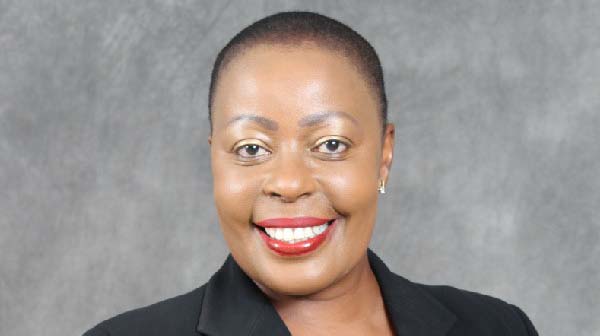
THE Standards Association of Zimbabwe (SAZ) director general, Dr Eve Christine Gadzikwa, is leaving the national standardisation body at the end of this month to assume a new role at a regional body early next month. Our Sunday Mail Senior Business Reporter, Oliver Kazunga (OK), had an opportunity to sit down with Dr Gadzikwa (DG) to share her professional experiences in and outside the national standards body. Having been at the helm of SAZ since 2008, Dr Gadzikwa, who is one of Zimbabwe’s most influential women, said she was leaving the standards body a happy lot to assume a new role in Sadc. Below is an excerpt of the interview conducted in her office in Borrowdale, Harare.
OK: Congratulations Dr on your new regional appointment.
DG: Thank you.
OK: To start off, for 14 years as SAZ director general, so now where are you heading to?
DG: I am actually taking a regional position in Sadc. Actually, I will be the chief executive officer of Sadcas (Sadc Accreditation Service) based in Gaborone, Botswana starting in July. It’s a higher position now and I will still be working with the national standards bodies in the region.
I am a medical laboratory scientist; I did medical laboratory technology through the University of Zimbabwe. At that time, it was still a Diploma course that was a six-year programme. I studied medical laboratory technology then I specialised in microbiology. I am a science student. So, I am a microbiologist, that was my first qualification.
So, having worked for Parirenyatwa Group of Hospitals as a medical laboratory scientist, first as a student and then as a qualified scientist, I enjoyed it very much. But then, I got to a stage in my career where I said l think I need a change now. I then applied for a job actually as executive director of ZINQAP (Zimbabwe National Quality Assurance Programme), this was for medical testing laboratories at Parirenyatwa, that’s where this organisation was based.
I worked there for about six years and that’s where I developed an interest in quality and standards. I continued with my education and decided to embark on marketing and I did that IMM (Institute of Marketing Management) diploma programme. I enjoyed marketing so much.
But I thought I was now branching out of the medical field and I am enjoying this people-based profession. So from there, I went into management and did some stint in the private sector clinical labs what is now called Lancet Laboratories. At Lancet Labs, I was there again for six years, actually it was Lancet first and then ZINQAP and then I came to SAZ in September 2008.
I came in as director general and at that time I had also done my MBA (Masters in Business Administration) with Nottingham Trent University. With my MBA, I applied for this position. At that time my predecessor (Mrs Maureen Mutasa) was also on her way out, she was going to join a Sadc organisation. She was here for 10 years as director general.
OK: So, how do you reflect on your experiences at SAZ?
DG: I am leaving SAZ in a very solid state that I am very confident about. Its strong from the point of view of governance, I have a very strong board. That board is there…and one of my ex-bosses used to say, “all companies can fall down, but SAZ must be the last man standing”, why was he saying that? It’s because he recognised the importance of this institution in terms of setting standards. So, SAZ should never fall. I have been working here thoroughly enjoying this job. It has been an exciting journey for me.
Overall, my experience has been amazing, I can say I have been very fortunate in the sense that when I joined SAZ, it was during the hyperinflation period, things were tough. If you recall the economy went through hyperinflation, we could not even pay salaries, we used to get fuel coupons. A lot of people would ask me why did you apply for this job. You don’t know this is a very difficult position. But I said no, I am ready for it.
For me it was a challenge, to be honest, I came in ready for the challenge. I was up for the challenge and now I needed a higher position having worked as a laboratory scientist and executive director for ZIMQAP. In my mind, the economy and all those things did not even really deter me because I was determined that as a woman I am going to do this and I have to do it.
OK: So, where did you draw your motivation to have the guts to meet the challenge that lay ahead as the director general, who is also an accounting officer for such an entity?
DG: And because there was another lady there before me, so I was following in the footsteps of a woman who had done it for 10 years. So I took the bull by the horns and I then put together a team of professionals. So I am overseeing a team of seven directorates, finance, marketing, technical services, standards development and information director, certification director, procurement management unit and human resources. When I joined SAZ, we had to restructure a little bit to try and accommodate the current realities on the ground.
We were now realising that we needed to upgrade the standards development unit from a management position to a director position because we could see what was going on in the market.
Number one, the region is now integrating and standards are now becoming more and more important so, we needed someone with that acumen because the lady who has been with us, she is still with us.
She was elevated and her responsibilities became many and even at international level. As SAZ, we are a member of the continental standards body and also we are a member of ISO (International Standards Organisation). So all of a sudden we found that there was more responsibility that was coming to this organisation.
OK: What sort of responsibilities came to SAZ as a result of being a member of ISO?
DG: We were expected to pay a bigger part to support the Government of Zimbabwe in terms of standardisation. So, those are the units that I have been working with. And because of the PRAZ (Procurement Regulatory Authority of Zimbabwe) Act, we had to set up and be licenced by PRAZ because we are using public funds.
“Remember, we are supported through the standards development levy for the work of standardisation, so part of our funding comes from the Government of Zimbabwe and we are very grateful for that because for you to run standardisation, you need the support of the government.
And we’ve been very lucky that we have a very good relationship with our parent ministry, which is the Ministry of Industry and Commerce.
We have a very strong relationship with the Ministry of Industry and Commerce to support trade because you cannot trade.
OK: Recently, we understand you were, as SAZ, appointed to be one of those service providers for the Consignment Based Conformity Assessment (CBCA) programme, may you shed light on that?
DG: This is a new development so from the first of this month, we have been mandated to do destination inspection, this is to complement the pre-shipment inspection.
I am sure you appreciate the pre-shipment inspection that was done by Bureau Veritas. To make the system more efficient, they gave us that mandate so that they are doing away with the issuance of exemption certificates.
So, because of that mandate that has been bestowed upon us, companies no longer have to apply for exemptions, you can bring in your product but when you bring in your product, then SAZ can support you by conducting destination inspections.
This is something that we have been lobbying for to be allowed to do because we already have testing labs in- country. We are very excited and it seems to be working very well.
OK: So, how do you comment on the destination inspection service that SAZ has been appointed to undertake for products that enter into the country …..
DG: We are actually getting very busy right now with the destination inspections at all the borders. I think so far we have got six borders offering this service. And as time goes on we are going to expand to other borders of the country as well, but we have stationed ourselves at the busiest ports like Beitbridge, Chirundu and of course at the airport, we are also covering the airports for goods that are coming through air.
OK: Apart from lobbying for destination inspections, what other projects or initiatives have you introduced during your tenure at SAZ?
DG: I have also introduced the solar testing laboratory and that one is based at the Excellence hub here at Manchester because now everything is renewable.
So, if you bring in your solar panels, we will be able to test them to see whether they conform to the standard. I am sure when you came in, you have seen our big solar plant outside there, we launched it in 2018 and this was a way of diversifying our energy source.
You remember there was a time when energy was a big problem through severe power cuts, and we said no, let’s create a benchmark so that people can see what a solar project actually looks like. So it’s been supported by the Ministry of Industry and Commerce, and this building is a green complex with 190kilowatt power.
We are feeding excess power into the grid. So those are some of the projects that I have done. And down stairs here, I also established a specialised lab for HPLC (High Performance Liquid Chromatography) which is for testing things like aflatoxins. Aflatoxins are herbicides or pesticides that are found in crops like peanuts.
If you are exporting into the EU (European Union), you need to ensure that you comply with the EU minimum requirements on your products. Peanuts have high levels of aflatoxin, so you have to test them to make sure that they are safe before you export, if you don’t, the whole consignment can be rejected because it will be having high levels of aflatoxin.
So, we have got a lab in the basement of this building, it was funded through EU money and so we are supporting local industry to confirm their products are safe.
During my term I can say people have been witnessing the growth, relevance of SAZ and the impact that we have had in the market in terms of trying to promote good quality standards, which can help companies trade and export which is very critical.
OK: So, let’s say we have got exporters that want to export agro-processed products, do they have to necessarily come here for testing, are your branches dotted across the country not offering that service?
DG: They can also take their samples to the Bulawayo office but the HPLC is here, that side we can test for water, food stuffs and all sorts of food stuffs, oils, paints, textiles. We are testing textiles, like the fabric that is used by the army, we have got to test it to see if it meets the grade.
Even during Covid-19, the mask that you are wearing, we are testing them, hand sanitizers, we had to test a lot actually.
Remember when Covid-19 came, all of a sudden there were no hand sanitisers, but we are to protect the nation so it was a security issue.
We were given the mandate that SAZ must be testing hand sanitisers, masks, gowns, the ones that are going to the hospitals to make sure that they protect the community especially the frontline people.
So we were very busy, actually we were classified as an essential service, we never closed throughout Covid-19.
OK: As a woman, what motivates you to be a leader taking into account that most women out there are afraid of taking up such positions?
DG: They say 90 percent of what we are afraid of never happens. It’s a fear of the unknown, until you have done something, you continue to be afraid of it. But once you have done it, you realise that there is nothing to be afraid of here. But for me I would say it was a positive experience, I learnt and I drew a lot of very positive experiences in my position.
I not only took this national role but I then was appointed to be the president of the African Organisation for Standards (ARSO) at continental level from 2016 to 2019.
I became president of Africa covering all the 55 countries, so that was a task and in addition to my national role.
I also had to cover the African continent in terms of standardisation to represent the continent. ARSO was formed by the African Union (formerly Organisation of African Union) in 1977.
I think I was the first African woman to ever hold that post and then my successor is from Cameroon, he is still the president.
So it was a joy to take up that role. I stepped down from that role in 2019 and I am now on the ISO board and I have been representing Zimbabwe since 2021 and my term ends in 2023.
OK: Despite this position at SAZ being quite onerous and exciting, what would you say are some of the challenges that come with being the one driving the national standards body as well assuming roles at regional and international standards bodies?
DG: Overall, I think it was good I don’t want to lie, but obviously it really takes you out of your comfort zone. This position if you are going to be in this position, it really stretches you in terms of the amount of responsibilities you take on your shoulders. At national level, you are expected to perform and represent your organisation with distinction, which l did.
With this position, you are not given the opportunity to give an excuse to say “because I was busy with regional work”, no, no, no. My employment contract is with SAZ, so I understood very well that in as much as I have been given the opportunity to lead at an African level, I still have a board to report to and l still have to perform.
I would say one of the biggest challenges is to balance your interest to make sure that whilst you are involved at African level, you are also giving your all back home, and it’s even worse now because I am now on the ISO board.
The fact that you step down as president, does not exonerate you and I am always reminded on the continent that “once president always a president.” The fact that you stepped down as president at the African role and now elevated to international level, does not mean that you are not expected to continue performing.
OK: So, at regional level as ARSO president, what were your responsibilities?
DG: ARSO was formed in 1977, and its key mandate is to harmonize standards on the continent. In other words, I was providing leadership for this organisation as president (non-executive president), you are like a board chair to provide leadership in terms of the programmes that are being run at continental level for harmonisation of standards that’s the key aspect.
Why are we harmonising standards because we want to promote intra-Africa trade. Africa is going through an integration process, one of the issues is harmonisation of standards, but not only that, but also harmonising technical regulations.
ARSO was also creating the framework on which the technical regulators can then adopt the standards for mandatory regulation.
When harmonising standards, it means you have to ensure that all your countries are now on board, otherwise if other countries are not on board, then it becomes a challenge.
There is a lot of work being done to harmonise standards. In Zimbabwe, we have actually adopted 133 of those 207 harmonised standards.
We can actually claim that we have done a lot as Zimbabwe to provide that leadership so that’s what has been going on. And then of course, as a member of ISO we adopted international standards 9001, 1401, those are the certificates for international standards.
We are an accredited national standards certification body, so when we issue a certificate it’s internationally recognised.
OK: And your parting shot?
DG: As women we have got a role to play to teach the next generation as they say, “If l can see far because I am standing on the shoulders of giants”. I have also been mentored by other women that I am very close to. I am not afraid to mention their names, Dr Grace Muradzikwa (Insurance Pensions Commission commissioner), Professor Hope Sadza, and people like Chipo Mtasa (Tel One managing director). These are people whom I look up to as well.



 Online Reporter