Chronicle Editor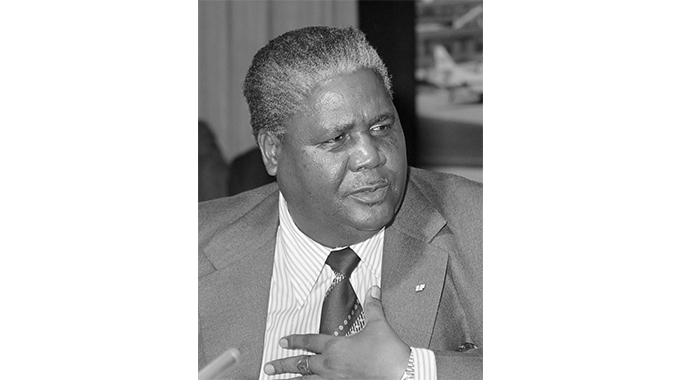
Chronicle Reporter
The late Vice-President Dr Joshua Nkomo, who died on this day in 1999, was one of the founders of not only nationalism but also trade unionism in our country.
He was involved in the earliest struggles against white misrule from the late 1940s. He played a prominent role in the 1948 general strike, which paralysed the whole country. After years of black opposition to white colonialism and appealing for fair labour practice, the nationalists of the time decided to adopt a more confrontational stance. They therefore called the general strike, which brought industry and commerce to a standstill.
One of the prominent figures he worked with in trade unionism in those pioneering days was Grey Mabhalane Bango.
The 1948 strike was essentially a labour protest, in which black workers sought to protest against poor salaries and appalling working conditions they were forced to work under. But there was no way one could really divorce such a national protest from the politics of the time, for it was because of the colonial politics of the day that blacks were paid poor salaries while whites, some doing exactly the same jobs like blacks, earned higher wages.
It was also because of the oppressive and racist politics of the day that blacks were not allowed to advance their education.
Blacks were generally supposed to stop going to school once they attained a Standard Six certificate. Only a lucky few went past that stage to enrol at teacher training institutions or nursing training institutions.
It was also because of the colonial politics of that time that blacks were barred from taking certain professions simply because of their skin colour, not the level of education they had. Essentially, blacks at that time could never dream of working as medical doctors, lawyers or journalists in their lifetimes. Their professions were supposed to be in teaching, agricultural demonstration and so on. The idea was to ensure that blacks took up inferior, low-paying jobs so whites could dominate them economically and socially, and by extension, politically.
At the time of the 1948 general strike, Dr Nkomo was working at the Rhodesian Railways (now National Railways of Zimbabwe) as a social worker. That was a fairly decent post, for blacks, who often got jobs as cleaners, scooter drivers, clerks, messengers and the like.
He had acquired decent educational qualifications during his time in South Africa in the early 1940s.
As a result, Dr Nkomo was a respected professional among his fellow blacks. By virtue of his decent job, Dr Nkomo had managed to save enough to buy a vehicle, one of his contemporaries; Bango told Chronicle a few years ago.
In an interview before he died, Bango told Chronicle that as the general strike took hold, the trade unionists of that time decided to travel to the Njelele Shrine to seek spiritual guidance. However, said Bango, none of them had a vehicle. So, said Bango, they looked around for a car to hire or to get someone to lend them one to enable them to travel to the shrine and back.
They looked and looked around, but failed to get one. That was until they approached Dr Nkomo, who gladly agreed to help them with the vehicle. Together, they went to the shrine where they got the guidance they needed to execute the strike.
He managed to secure support from fellow trade unionists in the late 1940s to be elected to senior labour posts. He was heavily involved in the railways workers union. So apart from being a nationalist, Dr Nkomo was also a trade unionist of note.
The confrontational strategy that Dr Nkomo, Mr Bango and their fellow black unionists used in the 1948 general strike to address their workplace grievances was to transform into a more robust, armed effort to fight for the political independence of the country in later years. So apart from being a politician of note, Dr Nkomo was also a trade unionist in his own right.
The history of the labour movement in Zimbabwe cannot be told without talking about him and his colleagues Benjamin Burombo, Bango and others.


 Online Reporter