Online Reporter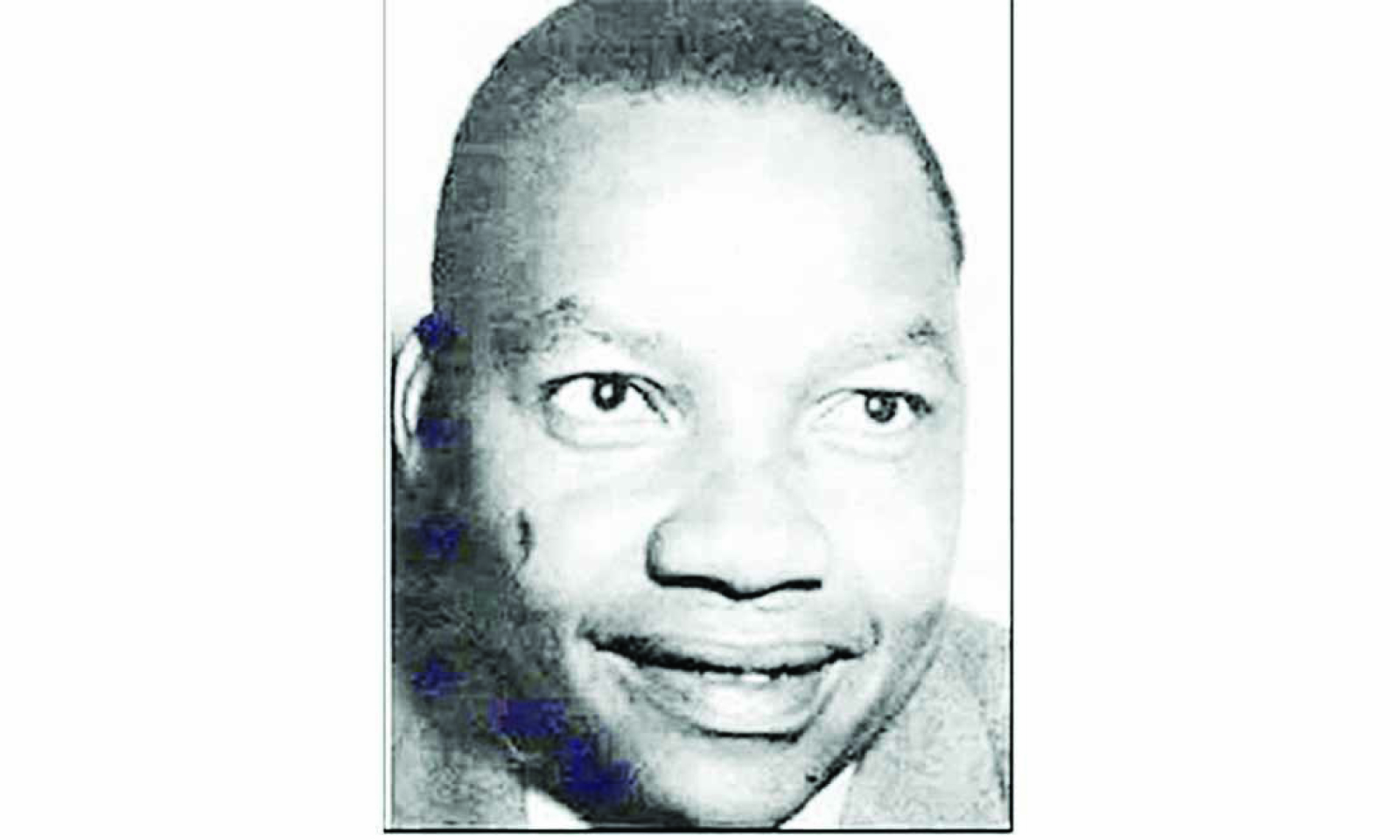
ZIMBABWE’s first black medical doctor was Dr Tichafa Parirenyatwa.
The largest medical centre in Zimbabwe, Parirenyatwa Hospital in Harare, was named after him.
The national hero graduated as a doctor of medicine at the University of the Witwatersrand in 1957, where two of his fellow students and countrymen were Silas Mundawarara and E M Pswarayi.
There was backlash from the white people when he was appointed medical officer in charge of Antelope Mine Hospital in Matabeleland.
Some of the local white farmers were horrified.
Racial tensions were rising between the whites and the black people.
A group of white people wrote to the Chronicle newspaper in protest, the inference not quite spelt out but nonetheless clear that it was unacceptable to have a black man attending to their wives.
When he resigned from Government service in 1961 to go into politics full-time, there was another letter to the Chronicle from local white farmers.
Dr Parirenyatwa was assassinated in 1962 by the security agents of the white minority government, about 15 km from Shangani, while on his way to Bulawayo on a party mission.
The state agents tried to conceal his brutal assassination by staging a car accident at the Heany Junction level crossing.
Dr Parirenyatwa was a man of many attributes; a medical doctor, social worker, politician and revolutionary patriot.
He met his tragic death when he was barely 40 years old.
Yet in that short span of life he had completed a medical degree, making him the first black African doctor in the country, risen to the level of deputy president of ZAPU and was a dedicated medical practitioner.
Dr Parirenyatwa was born on July 17 1927 in Makoni, near Rusape, to Sophia and David Deme Parirenyatwa.
His father had been a cook in the household of a Rhodesian governor.
He had subsequently advanced himself through night school to become a lay preacher and teacher of repute. In 1930 the family moved from Rusape to settle in Murehwa.
Dr Parirenyatwa’s maternal and paternal grandparents were both linked to early black resistance against colonialism.
For his primary education, Dr Parirenyatwa went to Murehwa Primary School.
He later moved to Howard Institute before enrolling at Adams College in Natal, South Africa.
Determined to pursue the career of his dream, he proceeded to Fort Hare University, where he acquired a BSc degree in Biology.
It was at Fort Hare University where his political career started.
He became one of the chief organisers of the African National Congress Youth League in the Thyeumie Branch of the political movement.
Besides being a popular student during his college days, he xhibited dynamic leadership qualities.
He then secured a place at Witwatersrand Medical School in South Africa.
He was among the first few black medical students to enrol at the Medical School.
In 1957 he qualified as a medical doctor and became the first black medical doctor in the then Rhodesia.
On his return home, Dr Parirenyatwa worked at the then Salisbury North Hospital (later Andrew Fleming, now Parirenyatwa Group of Hospitals).
He was the first black doctor in Zimbabwe working among hostile racist whites who stopped at nothing to find mistakes in his work.
However, his dedication to duty, medical prowess and professional approach to work earned him the envy of his white counterparts, who later ended up befriending and respecting him.
Being the only black doctor made him the pride of the black population in Rhodesia.
Dr Parirenyatwa’s name became a household name. He had broken the myth that practising western medicine was a preserve of the whites.− The Herald/100greatestzimbabweansblogspot.com