Louis Mukoma in New York
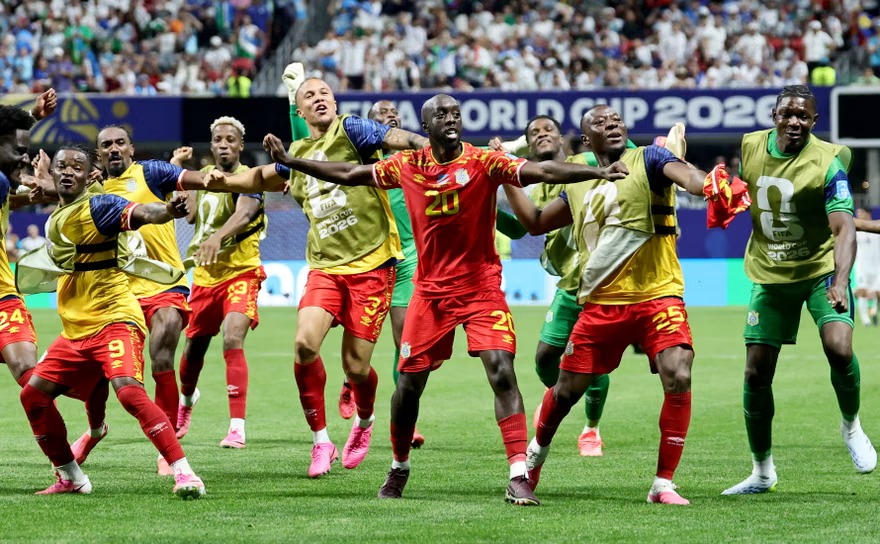
THE Democratic Republic of the Congo (DRC) had waited 52 years to return to the Fifa World Cup finals. Now, in North America, the Leopards are making up for lost time.
A draw against Portugal, a narrow defeat to Colombia and a memorable 3-1 victory over Uzbekistan, inspired by a brace from Yoane Wissa, have already secured their place in the knockout stages. In doing so, they have made history. The next challenge is a daunting one: England.
“We deserve to play England,” Wissa said when the match-up had been confirmed. “We have worked hard for this. You know, it’s not easy in our country. There is war in eastern Congo. Every time we wear this shirt, we think about them.”
It was telling that, after the victory over Uzbekistan, Wissa’s thoughts were not about his goals or personal achievement. Instead, they turned immediately to home.
The 29-year-old Newcastle United striker understands the realities facing eastern Congo. In 2022, he spent part of his holiday in North Kivu, a decision that stood out for a footballer of his profile. Too often, eastern Congo is defined by images of conflict, displacement and the exploitation of minerals from a region scarred by violence. Wissa chose to show a different side of the area.
Through his platform, he highlighted the region’s rolling green hills, dramatic volcanic landscapes, vast lakes and unique wildlife. He reminded the world that Kivu is home to some of Africa’s most spectacular natural beauty.
In many ways, it is a paradise whose people have been forced to endure unimaginable hardship.
That gesture resonated deeply. Across Kivu, Wissa is admired not only for what he does on the football pitch, but also for helping people see that the region is far more than a battlefield. For the DRC, this World Cup has never been solely about football.
From the outside, it is difficult to comprehend the sheer scale of the country. Covering more than 905 000 square miles, the DRC stretches from the Atlantic coast in the west to the volcanic highlands bordering Rwanda and Uganda in the east. It is roughly 10 times larger than the United Kingdom and home to around 116 million people.
The eastern provinces of North and South Kivu, including the major cities of Goma and Bukavu, are partially controlled by the M23 rebel movement, which is backed by Rwanda and operates a parallel administration. Those regions lie almost 2 500 kilometres from the capital, Kinshasa, separated by dense rainforest, rivers and underdeveloped transport networks.
For many people in the east, Kinshasa is a city they have never seen. Equally, many residents of Kinshasa have never travelled east. They often speak different first languages and come from very different cultural backgrounds.
Yet many still refer to the Stade des Martyrs in Kinshasa, where the national team plays its home matches, simply as “home”.
That single word captures the significance of this team.
The DRC is one of Africa’s most diverse nations, home to hundreds of ethnic communities and hundreds of languages and dialects. Four national languages have been adopted to help foster unity, but political, regional and social divisions remain pronounced.
Against that backdrop, the most remarkable story of this World Cup is not a sporting one. It is what the Leopards have done for their country.
For decades, eastern Congo has endured conflict and instability. Many residents have long felt neglected by the central government. Whenever violence escalates, debates around autonomy, federalism and even national fragmentation often re-emerge.
Yet whenever the Leopards take to the field, those divisions appear to fade.
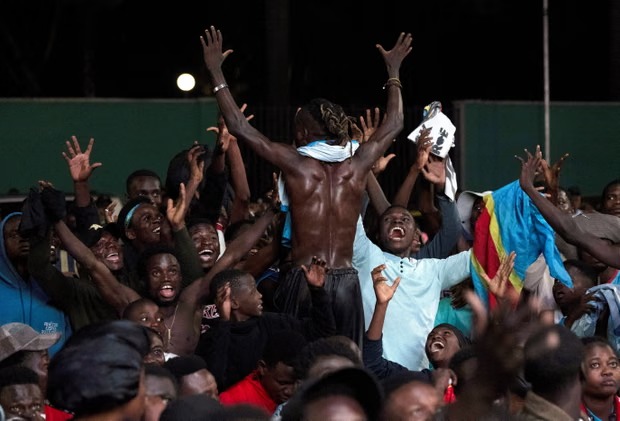
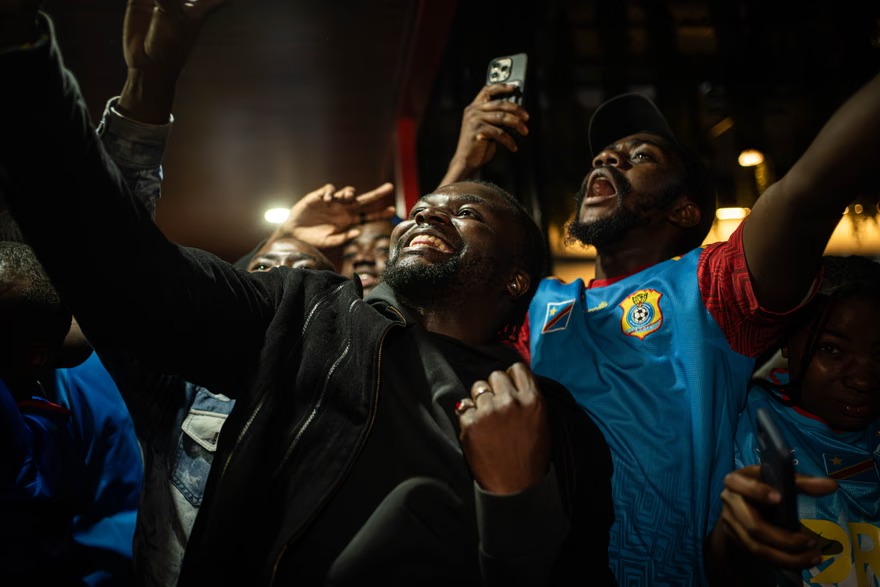
After the draw with Portugal, celebrations erupted across Kinshasa. Similar scenes unfolded in Lubumbashi, in the historically separatist Katanga region, as well as in Goma and Bukavu.
The celebrations grew even bigger following the victory over Uzbekistan.
Veron Mosengo Omba, the newly elected president of the Congolese Football Federation and former secretary-general of the Confederation of African Football, said the scenes had deeply moved him.
“Even in the occupied areas of eastern Congo, you see people coming out into the streets to dance. It’s incredible … What these young players have given us is an unexpected gift.”
DRC President Félix Tshisekedi expressed a similar sentiment.
“Every victory, every flag raised, strengthens our pride, our national identity and the invisible foundations of our unity,” he said.
Across the country, people have sung the national anthem together, waved the national flag and danced late into the night. Whether living under occupation or not, they have embraced their Congolese identity with pride.
For a brief moment, football has achieved something that politics has struggled to accomplish for decades.
Few institutions in today’s DRC command trust across political, regional and ethnic divides. The national football team may be one of the rare exceptions.
The squad itself symbolises the connection between the country and its vast diaspora. Of the 26 players selected for the World Cup, 21 grew up outside the DRC.
Aaron Wan-Bissaka, Axel Tuanzebe and Aaron Tshibola all represented England at youth level before choosing to play for the Leopards. Others were raised in Belgium, France and Switzerland.
For years, members of the Congolese diaspora were criticised for being disconnected from the realities of life back home.
Ironically, they have become some of the team’s strongest supporters during this tournament.
While the players travelled to the United States without difficulty, many supporters who had dreamed for years of following their team at a World Cup were unable to attend.
Visa restrictions introduced under the Trump administration affected several countries, including the DRC, making travel difficult for many fans. Accredited journalists also encountered significant challenges obtaining visas.
As a result, the team has largely been supported by Congolese communities already living in North America.
Houston, where the Leopards established their base, effectively became an extension of Kinshasa. Thousands turned out to support the team. Some drove for hours, while others crossed state lines simply to ensure the players felt at home.
There is something fitting about that image: a team largely composed of players raised abroad, backed by supporters who also live beyond the country’s borders.
Perhaps no image better reflects the reality of modern Congo.
This World Cup has already been a triumph for the DRC. (DRC lost 2-1).
Not simply because the Leopards have reached the knockout stages.
But because, for a few precious weeks, football has reminded millions of Congolese people that despite war, division, politics and history, they remain part of the same story.
A shared nation. A shared identity. A shared DRC. — Guardian Football