admin
admin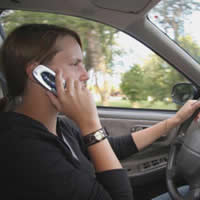
phone, either handheld or hands-free is dangerous.
Many of us, driver or not, at some point or the other, have noticed the distraction that the use of the phone while driving can be.
And it is illegal, too, not only in Zimbabwe but also in other countries across the world.
Driving while using the phone violates Section 116 of Statutory Instrument 199 of 2000.
Zimbabwe Republic Police national traffic spokesperson Inspector Tigere Chigome told the Herald last week that offenders were liable to a fine not exceeding US$20 per offence and more could be exacted by the Courts if it was proved that the use of a phone caused an accident.
Authorities have identified the use of cellphones while driving as amounting to a grave danger on the roads.
Some have pointed out that using your phone is as dangerous as drunken driving leading some crafty jerks to call cellphone-related driving offence as “driving under the influence of a phone.”
The Zimbabwe Republic Police have warned that a blitz on motorists who use phones behind the wheel is coming.
We are still to hear of a code name to that but it might as well be called “Operation Fonera Kumba” or some such catchy title.
Motorists caught using cellular phones while driving will face stiff penalties.
Although the statistics were not readily available, police say cellphone use while driving “is among the major causes of road traffic accidents.”
An increasing number of accidents, both minor and serious, were linked to cellular phone use, which often distracts the driver.
This has forced the police to resolve on checking, when an accident occurs, at the concerned persons’ call records to determine if they were using cellular phones at the time of the accident. Of the forthcoming crackdown on cellphone using motorists, Inspector Chigome says that it is going to be a process rather than an event or operation in the strict sense.
“It is going to be ongoing because we wouldn’t want to do it for a few days and then stop it.
“We are going to make it last like the ongoing demand for certificate of fitness or the “Operation 100 percent CBD decongestion,” he said.
He challenged people to take an interest in what the law says by buying statute books from the Government Printers, saying that many people would be unaware when they commit offences.
“Lack of knowledge of the law is no excuse,” he said.
The use of cellphones while driving, either phoning or texting has become a concern in many countries around the world forcing various jurisdictions to outlaw the practice.
In the United States of America, there is widespread and general outlaw of the practice in different states, while the could be some variations in regulations.
The Highway Safety Association, a 501(c)(3) nonprofit representing the state and territorial highway safety offices that implement programmes to address behavioural highway safety issues states that using hand-held cellphones is prohibited in eight states (California, Connecticut, Delaware, Maryland, New Jersey, New York, Oregon and Washington, DC) and the Virgin Islands prohibit all drivers from using handheld cell phones while driving.
“Except for Maryland,” it says on its website, “all laws are primary enforcement – an officer may cite a driver for using a handheld cell phone without any other traffic offense taking place.”
It states that no state bans all cell phone use (handheld and hands-free) for all drivers, but many prohibit all cell phone use by certain drivers. Novice drivers are disallowed in 28 states and in DC while school bus drivers in 18 states and DC are disallowed to use when passengers are present.
For text messaging, 30 states, DC and Guam ban text messaging for all drivers.
“Eleven of these laws were enacted in 2010,” highlights HAS, while stating that 26 states, DC, and Guam have primary enforcement.
In the other four, it adds, texting bans are secondary.
Novice drivers are prohibited in an additional eight states from texting while two states restrict school bus drivers.
Says the organisation: “Some states such as Maine, N H and Utah treat cell phone use and texting as part of a larger distracted driving issue.
“In Utah, cellphone use is an offense only if a driver is also committing some other moving violation (other than speeding).”
It notes that many states include a category for cell phone/electronic equipment distraction on police accident report forms. Recently proposed federal legislation, it says, would require states to collect this data in order to qualify for certain federal funding.
In Britain and South Africa, similar restrictions are in place. The journal Motor Lawyers reports that “it is a specific offence to use a hand-held phone or similar device, when driving.”
“Most offences will be dealt with by way of 3 penalty points and a £60 Fixed Penalty Notice but if the matter proceeds to a Court hearing, the fine can be as much as £1,000 or £2,500 if you were driving a bus, coach or any heavy goods vehicle.
“In some circumstances, for example if use of a phone has caused or contributed to an accident, the police may prosecute for driving without due care or dangerous driving in order to secure a more severe punishment.”
It notes that hands-free phone equipment is allowed “provided that it can be operated without holding it” – and this also outlaws texting, internet access, video phones. It clarifies: “Pushing buttons on a phone while it is in a cradle or on the steering wheel or handlebars of a motorbike for example is not prohibited by this offence, provided you do not hold the phone.
“But again, should an accident occur, you can still be subject to prosecution.”
And even when one is briefly stopped by a traffic light or held up in a traffic jam, cellphone use is not permitted.
Motor Lawyers say driving includes times when stopped at traffic lights or during other hold-ups that may occur during a typical journey when a vehicle can be expected to move off after a short while.
“In exceptional traffic jams, such as a lengthy stoppage on a motorway, it would be clear that someone wasn’t driving if the engine was off.”
Some exemptions granted to use the phone while driving include emergency calls “in genuine emergencies where it is unsafe or impractical to stop” and two-way radios.
The issue using cellphones while driving has also become a scholarly matter.
In 2003, researchers from the University of Utah in US concluded in a study that talking on a cell phone behind the wheel was more dangerous than driving drunk.
A report on the findings of academics at an auto safety conference in Park City, Utah revealed that the conclusions were based on the performance of 41 test subjects on a driving simulator at the university.
Each subject “drove” on a multilane highway, with and without each type of cell phone and with and without a .08 percent alcohol level – at which a driver is legally intoxicated in most states in the US, said the report. One of the study’s three authors, David Strayer, is cited as saying that “conversation draws attention away from the processing of the visual environment.”
He said: “We found a 50 percent reduction in the processing of visual information when you’re driving and talking on a cell phone.” As subjects were observed as they braked for a slowing car in front of them, then resumed speed, it was the finding that when drivers were conversing on a cell phone, they were involved in more rear-end collisions . . . and took 18 percent longer to return to their initial driving speed than when they were legally drunk.
In a case of knowing the right thing and doing the opposite, a driver with 37 years experience and is an owner of Whispy Driving School in Harare, admitted that cellphone use by drivers was rampant.
“I feel it is one of the major cause of accidents,” he said, “you cannot talk or text and concentrate on the road at the same time.”
He pointed out that there was need for drivers to pull over and answer their calls if they used handheld phones.
He regretted: “But we don’t do that and you see when a phone rings in the pocket a driver might try to fumble for the phone.
“In that moment of distraction you might hit another car from the back.”


 Online Reporter