Online Reporter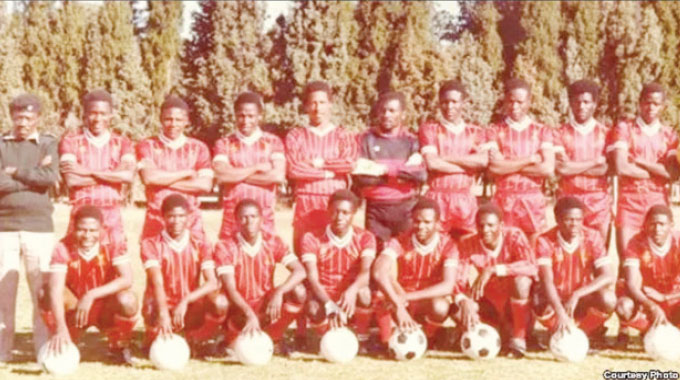
BEFORE the trophies, the headlines, and the roars from the stands, the late Jerry Chidawa was a soldier.
A survivor of the armed struggle, he returned from Mozambique not just with battle scars but with fire in his boots.
What followed was a football career so impactful, it cemented his place as arguably the most successful ex-combatant to ever grace Zimbabwean football.
Chidawa now late, one of the most forceful forwards of the 1980s, built a decorated career that began with a bang, a league and Castle Cup double in his first season at the top. He would go on to add another league title in 1987, making him the most accomplished former fighter on Zimbabwean football pitches.
A relentless striker and a nightmare for defenders, goalkeepers and even rival fans, Chidawa’s rise with Black Rhinos remains a remarkable tale of grit and transformation.
He was part of the first group of players chosen to form Black Rhinos in 1982. The Zimbabwe National Army team came to life through the vision of General Solomon Mujuru and other top military commanders. Inspired by setups from the liberation struggle, where sport was an integral part of military camps, the army moved quickly to assemble a competitive side.
Every unit was asked to send its best players for trials. The first step was finding a coach who could turn this group of ex-fighters into professionals. That man was Shepherd Murape, a former national team defender, assisted by Ashton Nyazika, plucked from CAPS United.
Chidawa was among 40 players who would form the core of Black Rhinos, registering to play in the Northern Region Division One in 1983. Despite the time lost during the war, Chidawa’s football instincts hadn’t faded. Alongside fellow ex-combatants like goalkeeper Charles Ndebele and midfielder Droment Chirova, he helped Rhinos storm to the Division One title.
Graduating to the top flight, then called the Super League, Chidawa made an immediate impact. He struck more than six goals in a dynamic partnership with Maronga “The Bomber” Nyangela.
Nicknamed Dzunguman for his blistering pace and direct play, Chidawa became the heart of the Rhinos attack. His strength and drive were amplified by a brilliant midfield that included Standford “Stix” M’tizwa, Hamid Dhana, Stanley Ndunduma, Simon Machoroni and Jimmy Mbewe.
His debut season in top-tier football, in a league that would later be known as the Premier Soccer League, was unforgettable. Chidawa powered Rhinos to both the league championship and the Castle Cup.
And he wasn’t done.
He remained a key player as Rhinos added more silverware: another league title, the Independence Trophy and the Chibuku Trophy. No other ex-combatant came close to matching his post-war football success.
Whether Chidawa had played competitive football before crossing into Mozambique to join Zanla forces remains unclear. But his talent needed no backstory, it was there for all to see once he laced his boots.
Second only to Chidawa in terms of footballing success post-struggle was Charles Ndebele, Rhinos’ original goalkeeper, though only by accident.
“I was just helping out, cutting crosses during warm-up when the coach walked in and said I was now the goalkeeper,” Ndebele recalled.
Initially pegged as a winger, Ndebele would be the first-choice shot-stopper when Rhinos earned promotion. But with the arrival of elite players like Japhet “Shortcat” Mparutsa, Zimbabwe’s best keeper at the time, Ndebele was relegated to the bench, only featuring during national team weekends.
He would later face competition from Marvellous Munemo and Lazarus Pararayi before moving to Bulawayo Jumbos (now Indlovu Iyanyathela) in 1987, winding down his career in the Zifa Southern Region Division One.
Before joining the armed struggle in 1976 in Zambia, Ndebele had been a promising winger playing Second Division football in Bulawayo.
His switch to goalkeeping, and the rise that followed, remains one of the more unusual transformation stories in the game.
Droment Chirova was another ex-combatant who initially played for Rhinos before moving into coaching. However, the arrival of a star-studded cast in 1983, players like M’tizwa, Ndunduma, Langton Mutimba and Dhana, made it hard for him to break into a midfield brimming with internationals.
Chidawa, Ndebele, and Chirova weren’t the only former fighters to try their hand at football again.
At Highlanders, two returning goalkeepers attempted comebacks. One of them, George Moyo, had been part of the Highlanders reserves before the war, where he played alongside his younger brother, Peter Nkomo, who would later become one of Zimbabwe’s top keepers.
Before Grobbelaar left Bosso in 1975 following his conscription, George had been understudy to both Grobbelaar and Ananias Dube. By the time he returned from the struggle, he was stationed at Gwayi River Mine Assembly Point and turned out for the local team in 1980 and 1981.
After demobilisation, he rejoined Highlanders but couldn’t dislodge Peter Nkomo and eventually faded out, though he was still in the squad that won the 1984 Chibuku Trophy.
Another Moyo, Smart, also returned to football after the war but couldn’t break into the Highlanders setup. Like George, he was edged out by rising stars such as Sydney Zimunya and Sogina “CB” Mahlangu. He opted for Division One football instead.
Smart had also been part of Highlanders until 1976, the same year the entire Bosso Under-16 squad, after winning the Castle Cup final in Harare, left en masse to join the armed struggle, frustrated by unpaid dues.
They left, along with several reserve players who claimed to be headed for a rural match in Matobo District, only to cross into Botswana and begin their journey to the frontlines.
Many of them returned years later with dreams of picking up their football careers where they left off. A few, like Chidawa, Ndebele and the Moyos, made it back into the top leagues. Most didn’t, but still made their mark in army-affiliated clubs like Mbalabala, Rusupuko, Methuen Tigers, Bulawayo Jumbos, Guni United, Tongogara and Cranborne Barracks, all teams that rose in the early 1980s.
Football became a key part of life in army camps. It wasn’t just about competition, it brought structure, fitness, camaraderie and something else ex-fighters sorely needed: purpose. For Chidawa, that purpose became greatness.
From the bush to the pitch, Dzunguman fought with the same spirit and won.