malvernmugadzikwa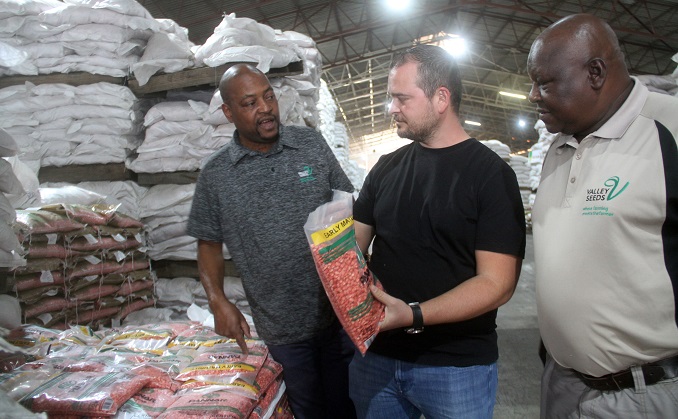
Emmanuel Kafe
THE 2024/2025 rainy season is projected to begin earlier than usual in the southern parts of Zimbabwe, while the rest of the country can expect normal rainfall to start around mid-November, the Meteorological Services Department (MSD) has confirmed.
According to the MSD’s early season rainfall outlook, there is an increased likelihood of normal to below-normal rainfall between October and December, followed by normal to above-normal rains between January and March.
The country’s eastern regions are expected to receive the highest rainfall totals.
The latest forecast comes as preparations for the summer cropping season are at an advanced stage, with the Government having secured all inputs to support the climate-proofed Presidential Inputs Support Scheme.
With the early onset of rains, the Government has set Monday next week as the deadline for farmers under the Pfumvudza/Intwasa programme to complete land preparations.
Over three million rural households and 500 000 urban households will receive input support from the Government this year.
MSD acting director Mrs Rebecca Manzou told The Sunday Mail that, while the exact commencement dates of the rainy season vary across regions and seasons, most parts of the country were likely to receive rains by mid-November to early December.
She said there was also the likelihood of intra-season dry spells.
“The exact commencement dates (of the rainfall season) vary from place to place and from season to season, and are mainly influenced by the smaller-scale weather systems, different from the regional to global systems that are used when a seasonal forecast is generated,” she said.
“This is also coupled by differences in agro-ecological zones, coupled with landforms such as hills and valleys; and necessitates the need for different stakeholders to get regular updates from the Meteorological Services Department as the season evolves.
“For planning purposes, however, the mean start of the season in most parts of the country is mid-November until early December, though the southern parts can have an earlier onset, as early as October . . .
“However, in terms of rainfall totals comparison, the eastern parts of the country should receive most rainfall, while the western should receive the least.”
Agricultural Advisory and Rural Development Services acting chief director Mr Leonard Munamati encouraged farmers to take advantage of the anticipated early rains.
“Inputs for the Presidential Inputs Scheme have already been procured and delivery to GMB (Grain Marketing Board) depots by contracted companies has already begun,” he said.
“Farmers are almost through with holing, striving to make the September 30 deadline for holing the three plots.”
He said registration of farmers under the programme was going on smoothly.
Mr Munamati added that for households to access the inputs, it was a prerequisite for them to prepare at least three plots and mulch them.
“The Government has signed contracts for procurement of all inputs to support the 3,5 million households (three million rural and 500 000 urban households).
“Distribution of inputs will start soon.
“The programme is expected to be officially launched soon.”
Farmers, he added, started preparations in April soon after harvesting the previous season’s crop, when the ground was still moist and easy to dig.
“Farmers are encouraged to prepare early so that they make use of early rains.
“We expect farmers to plant with the earliest rains, or, if they have not received rains by the first week of November, we encourage them to plant with water, adding six litres per basin.”
Early planting, he added, will result in higher yields.
“From the 2023/2024 season, Government has taken the agro-ecological zoning approach in the issuance of seed under the Presidential Inputs Programme.
“Farmers in Region One and Two will receive maize seed for the three plots, while farmers in Region Three will receive both maize and traditional grain seed (sorghum or pearl millet).
“Farmers in natural Region Four and Five will receive only traditional grain seed (sorghum or pearl millet).”
Mr Munamati said all farmers will receive a bag of basal fertiliser, another one of top-dressing fertiliser, as well as fall armyworm chemicals, herbicides and termite control chemicals.
“All farmers will also receive a bag of lime, a legume seed, oilseed seed (sunflower or soya bean, depending on region), as well as a horticulture combo.
“Livestock farmers will also get pasture seed.” The Government, he added, was strengthening the ward and district level input distribution committees to minimise abuse of inputs.
“The multi-sectoral ward input distribution committees and district input distribution committees ensure that no single person has a decision on input issuance.
“Minutes of beneficiary selection and input distribution committees will be required from each committee.
“Agritex staff (secretariat to these committees) are expected to give regular reports to the principals.”


 Online Reporter