Online Reporter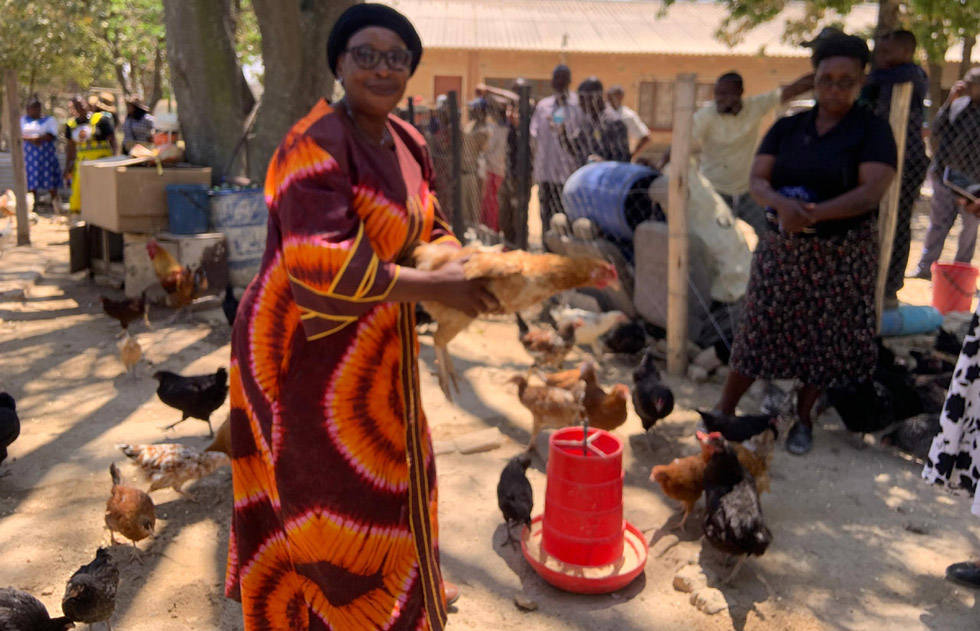
Lovemore Kadzura
Post Reporter
THE ruling ZANU PF party’s economic empowerment initiatives, tailored for women in communal and resettlement areas, are driving transformative change and empowering beneficiaries to participate in the mainstream economy.
The party’s Women’s League is spearheading programmes which encompass – poultry farming in Makoni, Nyanga, and Chimanimani districts; goat rearing in Buhera; dairy farming in Mutasa; sewing initiatives in Zimunya/Marange and Mutare; and integrated poultry and horticulture projects in Chipinge District.
Data gleaned from the Ministry of Lands, Agriculture, Fisheries, Water, and Rural Development, shows that the province boasts the highest number of indigenous chickens at 4 144 862 birds.
Makoni leads the nation with 912 775 chickens, followed by Mutasa with 819 009.
Chipinge and Mutare rank sixth and seventh, respectively, while Buhera holds 10 the position nationally.
This month, the party leadership has been traversing the districts to assess the progress and impact of the projects being implemented by the beneficiaries.
In Makoni, the assessment was conducted at the homestead of the secretary for Women Affairs in the District Coordinating Committee, Cde Agatha Mugomba.
The assessment revealed that, despite encountering some obstacles, the projects have achieved their intended objectives of enhancing the lives of women through viable enterprises.
Cde Mugomba, who initially received 18 chicks to launch her project, has demonstrated remarkable leadership and shown other women that it is possible to thrive with limited capital and resources.
Her project has expanded significantly, boasting an impressive 570 indigenous chickens of various age groups – all stemming from the initial 18 chicks she received in March 2024.
She has constructed standard fowl runs for the chickens, and acquired an incubator with a hatching capacity of 432 eggs.
Although the party allocated a hatchery machine to the province, based in Mutasa District, Cde Mugomba found it economically unviable to have her eggs hatched there due to the distance.
To diversify her operations, Cde Mugomba has also embarked on goat rearing, rabbit and turkey farming, which are currently in their infancy stages.
She disclosed ambitious plans to expand her chicken project to 10 000 birds, aiming to become one of the largest suppliers of indigenous chickens, day-old chicks, and eggs in the province and beyond.
Through her poultry project, Cde Mugomba is also empowering other women in Buhera District by sourcing small grains, such as millet, to feed her chickens, thereby fostering economic linkages and supporting local livelihoods.
“I initiated my poultry project with just 18 chicks, received from ZANU PF under the women’s empowerment initiative. Through determination and hard work, I successfully multiplied them to 570 chickens. The chickens are rapidly increasing in numbers, laying eggs daily. We currently collect at least 30 eggs per day.
“To enhance our operations, we acquired our own incubator, as relying on the one donated by the party to Manicaland, stationed in Mutasa, was not feasible. Our incubator has a capacity of 432 eggs. Given the rapid growth of our chicken population, we will soon require an incubator with a larger capacity.
“My goal is to collect 1 000 eggs per day for hatching, which is achievable. This will expand our business, enabling us to sell eggs, day-old chicks, and chickens for consumption. There is a growing demand for roadrunner chickens, as people increasingly opt for healthier food options. We are heeding the wise advice of the First Lady, Dr Auxillia Mnangagwa, who encourages women to venture into business. I have invited fellow women leaders from Makoni to witness my project and gain insights to implement their own initiatives. It is entirely possible for women to successfully run roadrunner rearing projects and enjoy a decent lifestyle,” said Cde Mugomba.
ZANU PF Manicaland provincial Women’s League secretary for production and labour, Cde Sheila Guri said the pass-on schemes are progressing well, benefiting numerous women who were previously economically inactive.
“We received income for various projects from President Mnangagwa, which was distributed by the national secretary for Women Affairs, Cde Mabel Chinomona.
These initiatives aim to empower women economically and provide a source of high-quality meat for their families. Every woman should strive for economic independence and contribute to the national development agenda, aligning with the aspirations of Vision 2030. Through these projects, women can support their husbands in providing for their families, sending children to school, and acquiring basic necessities. This is a pass-on scheme, and the party is pleased to note that the projects are progressing well in the province, with senior officials like Cde Mugomba setting a commendable example,” said Cde Guri.
Makoni Rural District Council chairperson, Councillor Ellah Hlanguyo said indigenous chicken rearing has taken the district by storm, with women spearheading the initiative, having realised its lucrative potential.
“We have a number of women commercially rearing indigenous chicken breeds. The party has also introduced a chicken pass-on project for women in Manicaland.
Notably, Makoni is home to approximately one million indigenous chickens, mostly under the care of women. This is indeed something to be proud of.
“Women have embraced indigenous chicken rearing due to the low cost of feed and the expanding market. Additionally, women in the district are also into goat,
sheep, and rabbit farming, and are achieving considerable success. The party’s support will further enhance their capacity to expand. Such projects empower women to combat poverty at the household level,” said Councillor Hlanguyo.
Mr Alfred Takaya, an Agritex officer, encouraged farmers to collaborate closely with their extension field officers to acquire technical knowledge on the best farming practices. He also advised livestock farmers to diversify their animals to mitigate shocks such as deaths and fluctuating market prices.
“You cannot go wrong with projects of this nature. These initiatives provide a source of livelihood, and we urge the community to embrace income-generating projects at their homesteads, rather than relying solely on white-collar job opportunities.
‘‘The presence of poultry, goat, and rabbit farmers here demonstrates good diversification, which enhances the financial stability of farmers. Chicken farming is highly profitable, but it is a numbers game. A farmer requires a sizable flock to break even and register healthy profits. We encourage farmers to work closely with extension officers to receive expert business advice.
“The chickens here are well cared for, with standard infrastructure in place. The housing is well-ventilated, elevated to allow air to circulate freely from underneath and from the front. This homestead serves as an exemplary model for aspiring poultry farmers to visit and learn,” said Mr Takaya.