Online Reporter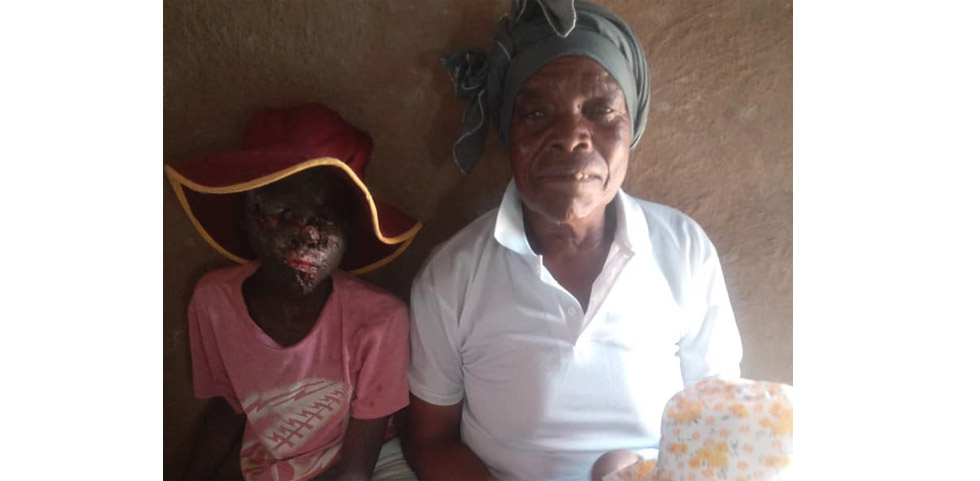
Tendai Gukutikwa
Post Reporter
SIXTEEN-YEAR-OLD Tonderai Mauchaza should be enjoying his teenage years, playing soccer with friends, going to school, or simply soaking in the warmth of the morning sun like other boys his age.
Instead, he lives a life dictated by shadows, where daylight is his greatest enemy.
Tonderai suffers from Xeroderma Pigmentosum (XP), a rare and genetic disorder characterised by extreme sensitivity to ultraviolet (UV) light from the sun and other sources.
People with XP are at a high risk of developing skin cancers, such as melanoma, basal cell carcinoma, and squamous cell carcinoma.
Symptoms of XP include severe sunburn after minimal sun exposure, blistering or freckling on sun-exposed skin, skin discoloration or pigmentation, eye problems, including cataracts, corneal ulcers, and vision loss and neurological problems, including hearing loss, seizures, and cognitive impairment.
XP is caused by mutations in DNA repair genes, which prevent the body from repairing UV-induced damage.
Tonderai’s body bears the painful scars of this cruel disorder — turning him into a night owl — who only steps outside under the shield of darkness.
Born in Chimanimani in 2009, Tonderai’s life changed before he could even make sense of the world around him. His father died in 2011, and his mother, Portia
Mauchaza, left for South Africa shortly afterwards, leaving him and his siblings in the care of their grandmother, Mbuya Jesman Penyu (81), in Ringai Village under Chief Marange.
Until now, his mother, reportedly domiciled in Polokwane, has not set foot back home or sent money for their provisions.
At just one-year-and-eight-months old, young Tonderai skin began to blister whenever he was exposed to the sun. Soon, black spots appeared, spreading across his face and body.
By Grade Three, the blisters had developed into painful wounds, and he could no longer continue with school.
Life slowly closed in on the once-bubbly boy, who had been eager to play and laugh with other children.
Instead of running through the fields or chasing after a ball, Tonderai now spends his days confined to the safety of his darkened home, his body weakened, and his spirit tested by loneliness.
He has been robbed of a normal childhood, his skin burnt by the very sun rays that give life to others. The sun has become his greatest curse.
“Sometimes I see him standing by the window at night, just staring outside.
He longs to go out during the day like other children, but he knows he cannot.
It breaks my heart to see him suffer like this,” said his granny, softly in an interview on Wednesday.
Her frail voice carried, both the weight of years, and the pain of watching her grandson wither away before her eyes.
At 81, she has fought tirelessly to care for him and his siblings, but the burden is heavy, and the resources are few.
Tonderai himself struggles to put his feelings into words, but when he does, the sadness is unmistakable.
“I want to go out like others. I want to play. I want to be free, but I cannot,” he whispered during the telephone interview. His condition has stolen, not only his health, but also his friends, education, and sense of belonging.
Isolation has become his constant companion, and the laughter of other children now feels like a distant echo.
His older sister, 19-year-old Talent Mauchaza, has had to grow up faster than most.
While their mother remains in South Africa, absent for more than a decade, Talent shoulders the responsibility of caring, not only for Tonderai, but also for their younger sister and elderly granny.
She hustles through vending and piece jobs to put food on the table, but her efforts barely cover the family’s most basic needs.
“I have to be strong for him. But it is not easy. There are nights I cry myself to sleep, praying that someone, somewhere, will hear our story and help us,” she said, adding that the diagnosis of Xeroderma Pigmentosum came only last year after a visit to Victoria Chitepo Provincial Hospital.
“By then, much damage had been done. Doctors referred us to Parirenyatwa Group of Hospitals in Harare, where he was given medication, but they also told us that he needed urgent surgery to remove the tumors that have developed on his face and head,” she said.
The required procedures, blood tests, CT scans, X-rays, and surgery come at a cost the family cannot afford.
The estimate stands at US$2 000, an unimaginable figure for Talent, who already struggles to buy food and sunscreen lotion for her brother, while also taking care of the rest of the family.
She said had Tonderai’s condition been detected earlier, the suffering might have been less severe.
“One of his eyes has gone blind, and one of his nostrils has closed, making breathing increasingly difficult. He cannot bear direct exposure to sunlight, and his skin has darkened permanently from years of unprotected contact because all along we did not know that he is allergic to sunlight. His body is a canvas of wounds,” she said.
Despite the challenges, glimpses of his youthful spirit still shine through.
Tonderai has discovered a love for writing and music, often scribbling lyrics in the dark hours when the world outside is asleep.
His dream is to record a song in a studio one day — one that could carry his voice to people who might never otherwise hear his story.
“When he talks about music, he smiles. It is the one thing that seems to give him hope. All I need is to raise some money to pay for his studio time,” said Talent.
But hope alone cannot heal wounds or pay hospital bills.
The family is urgently seeking help, not only to fund the surgery, but also to provide for their daily survival.
Food is scarce, and sunscreen lotion, which is essential to protect his skin, is far beyond their means.
Even among neighbours, stigma and fear have cast a shadow, with some avoiding Tonderai as though his condition were contagious.
“For me, this rejection cuts as deeply as my brother’s physical pain. I sometimes ask myself what will happen to him if something happens to me. I already have a heart problem because of the stress. I am scared to leave him behind in this world with no one to help him. We are all he has and our grandmother is now very old,” confessed Talent, while appealing to well-wishers for assistance.
“Any contribution, no matter how small, could bring hope to my brother who has known little, but pain and rejection,” she said.
Donations can be made through Ecocash and Innbucks to Talent Mauchaza, on +263781484509.