


 tawandamusarurwa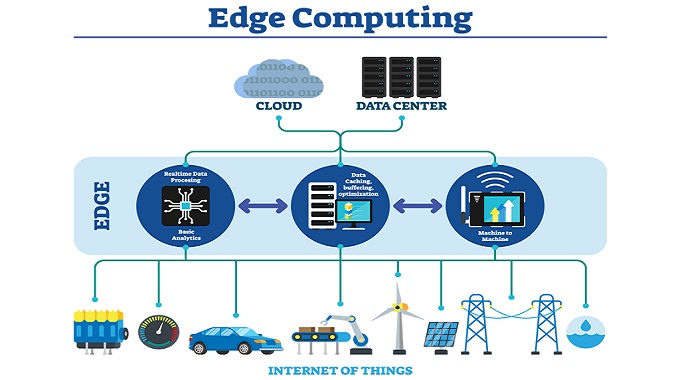
THE first programmable, electronic, general-purpose digital computer was completed in 1945.
It was called the Electronic Numerical Integrator and Computer (ENIAC).
4IR Simplified
John Tseriwa
THE ENIAC weighed approximately 30 tonnes and occupied about 170 square metres.
It used around 18 000 vacuum tubes. These were the primary components used for electronic computation before the advent of transistors.
These vacuum tubes were responsible for performing calculations and executing instructions in ENIAC.
The reported cost of ENIAC was approximately US$500 000.
This amount was considered extremely too high given the period when it was created (1943-1946).
Adjusted for inflation, $500 000, in the 1940s, would equal several million dollars in today’s currency.
The ENIAC represented a significant milestone in computing history and laid the groundwork for subsequent advancements in electronic computer technology.
This illustrates how, over the years, devices grew smaller, while their computing and processing powers have exponentially grown.
Data warehouses and server farms were once considered the pinnacle of computing speed.
However, there has been a rapid shift towards adopting cloud computing or “offsite storage”.
Netflix, Spotify, Salesforce and various software as a service (SaaS) providers have based their business models on cloud computing.
Nevertheless, cloud computing brings along some limitations.
The primary challenge is latency caused by the geographical separation between users and the data centres housing the cloud services.
In simple terms, latency is the “waiting time” between sending a request or command and receiving a response.
It refers to the time delay that occurs when data is sent from one point to another in a computer network or system.
It can be thought of as the time it takes for information to travel from its source to its destination and back again.
Edge computing seeks to strategically position computing resources closer to end users, thereby mitigating delays inherent in traditional computing architectures.
Gartner, an IT research and consultancy firm based in the United States, defines edge computing as a component of distributed computing architecture, where data processing occurs near the information generation or consumption source.
It involves placing computational capabilities at the “edge”, where devices and individuals generate or interact with data, allowing for localised and efficient information processing.
By minimising the distance between data processing and its origin, edge computing enables faster response times, enhanced real-time decision-making and improved information privacy and security.
In our increasingly connected world, where data is generated exponentially, the need for faster, more efficient processing has become paramount.
Edge computing works by using edge devices or edge servers that are located near the data sources.
These edge nodes can perform data processing, analysis and filtering locally, and send only the most relevant or aggregated information to the cloud or data centre.
Edge devices — including sensors, cameras, smartphones or wearables — are the hardware that provide an entry point to a network, such as routers or switches. They can also be smart devices that generate or consume data.
Edge computing drastically reduces the time it takes for data to travel back and forth between devices and the cloud, enabling near-instantaneous processing and analysis.
This is crucial for applications like autonomous vehicles, where split-second decisions can be a matter of life and death.
By processing data at the edge, edge computing minimises the amount of information that must be transmitted to the cloud, resulting in optimised bandwidth usage and reduced costs.
Edge computing enables applications to function even when cloud connectivity is limited or disrupted.
This is particularly important in remote areas or during natural disasters.
Most importantly, edge computing provides enhanced security and privacy by localising sensitive data and limiting its exposure to the cloud.
Edge computing plays a pivotal role in developing and operating autonomous vehicles.
These vehicles generate enormous amounts of data from sensors, cameras and other sources, requiring real-time processing for critical decision-making.
With edge computing, the information can be processed locally within the vehicle or at nearby edge nodes, reducing the reliance on cloud connectivity and ensuring rapid response times.
This capability is essential for object detection, collision avoidance and navigation tasks.
Edge computing has the potential to revolutionise manufacturing processes by enabling real-time monitoring, analysis and control of industrial machinery and operations.
By deploying edge devices within factories, manufacturers can collect and process data at the edge, optimising production processes, improving quality control and minimising downtime.
For example, edge computing enables predictive maintenance, where machines can analyse their performance data in real-time, detecting anomalies and potential failures before they occur, thus preventing costly production disruptions.
The widespread adoption of internet of things (IoT) devices generates massive amounts of data that requires efficient processing.
Edge computing brings intelligence closer to IoT devices, allowing data to be processed locally and reducing the need for constant cloud connectivity.
In smart homes, for instance, edge devices can process sensor data from connected devices like thermostats, security systems and voice assistants, making quick decisions without relying on a distant server.
This enhances responsiveness, improves user experience and ensures privacy by reducing the need to send sensitive data to the cloud.
Edge computing is also reshaping the telecommunications industry, particularly with the rollout of 5G networks.
With the increased bandwidth and low latency offered by 5G, service providers leverage on edge computing to deliver content and services more efficiently.
Edge computing is a transformative technology with immense potential to transform industries across the board.
By enabling real-time processing, reducing latency, enhancing security and optimising bandwidth usage, edge computing is paving the way for exciting advancements in autonomous vehicles, smart manufacturing, IoT, telecommunications and beyond.
As we move into a future increasingly driven by data, edge computing will play an indispensable role in unlocking the full potential of our interconnected world.
Embracing this technology will empower businesses to thrive amidst growing demands for instant data processing, improved efficiency and enhanced user experiences.
John Tseriwa is a tech entrepreneur and a digital transformation advocate focusing on delivering business solutions powered by 4IR technologies. He can be contacted at: [email protected] or +263773289802.



 Bongani Ndlovu
 Online Reporter