Online Reporter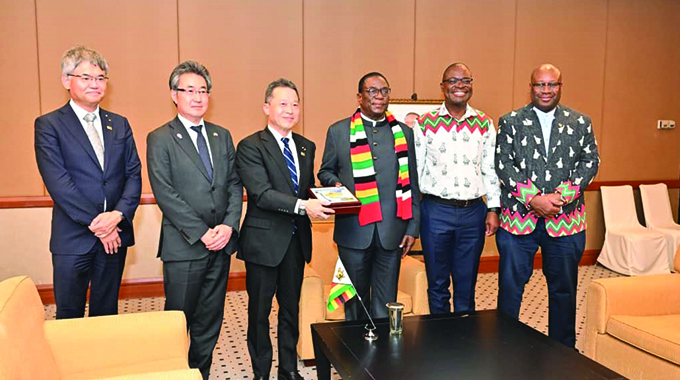
ONE of the major economic planks of the Second Republic has been a consistent policy of encouraging investment, with a lot of practical support from Government for investors and those who wish to trade with Zimbabwe.
This openness is built around the recognition that we can accelerate our economic growth by inviting outsiders to invest and by seeing more of what our farmers, miners and manufacturers can sell outside the country. The rules are fairly simple, implying fairness and honesty.
Generally speaking, almost all external investors are more than happy to hire as many Zimbabweans as possible, without any prodding, since they can find well-educated men and women willing to work hard and accept training. While local labour law has to be followed, including the agreements negotiated by the relevant national employment council, the foreign investor is treated identically to a local business person and a great deal of work has been done to streamline labour law.
Foreign investors have to follow our environmental law and pay their taxes. A lot has been done to simplify both codes and again the outsider is treated identically to the local company. These pro-business and pro-investment policies have led much of the economic growth we have seen under the Second Republic for everyone’s benefit.
President Mnangagwa has been a trailblazer for both these policies of investment and trade, going out of his way to meet potential investors and companies who could be possibly interested in doing business with Zimbabwe. Most of his foreign trips are often centred on investment and trade, and when he makes a visit for other reasons he almost always makes time to meet those interested in doing business in Zimbabwe.
We have seen this sort of major effort this week at the Zimbabwe Day for the World Expo in Osaka, Japan, the time when expo activities could be concentrated on a particular country, with Zimbabwe’s turn now having come up.
Japan is one of the top economies in the world, fourth in terms of Gross Domestic Product and a country that has shown remarkable consistency over the decades in its support for Zimbabwe plus a willingness to maintain good relations. Investment and trade are present, but at lower levels than might be expected despite the advantages that both Japanese and Zimbabwean businesses might reap from more detailed ties.
The opportunities for rectifying that were so great that President Mnangagwa decided to make one of his special efforts and made sure his high-powered delegation included representatives from the private sector, both to cement any deals that might emerge, but also to allow Japanese business people to talk to and question similar people from Zimbabwe.
While Presidents, Ministers and officials can explain their policies and make promises, it is always useful to get the word that what is being said is actually true and that Zimbabwe is a really good place to do business. So having the President himself issuing the invitation, and then having others who can fill in details or confirm these is a useful double approach.
The world is undergoing a major reset in investment and trade this year, so opportunities for Zimbabwe are greater as investors will be looking further afield for safe and secure opportunities and businesses will be seeking to widen their supply chains.
In addition, Africa is moving, carefully and deliberately, towards a single market under the African Continental Free Trade Area. This is important for outside investors and suppliers. The rules of origin will have a lot to say about the percentages of African raw materials and value addition for products that trade freely, but there is no bar on ownership of the businesses in Africa that will win.
This provides an incentive for outside businesses and investors to do their production and manufacturing within AfCFTA when they want to serve African markets. Japanese companies have been among the world leaders in investing outside Japan and having their stake within trading blocs, and while much of this has been nearer home in Asia, plus in the European Union and in the USA, we can expect Japanese companies to start looking a lot harder at Africa.
And here Zimbabwe can present a good sales pitch for hosting your African base. A calm and functioning democracy, an ever improving education system designed to build up a huge skills base, a wide range of raw materials, reasonable and rapidly improving infrastructure, and a Government that goes out of its way to be a friend to all and an enemy of none. It is these advantages that the President has been relentlessly stressing. His anti-corruption stance will be known and appreciated.
At the same time Japanese companies can be looking at the experience of their Government, and here Japan has a very good record within Zimbabwe as a development partner that likes backing solid practical programmes that are well administered.
The Japanese aid programme, such as the very difficult Chirundu-Makuti road climbing up the Zambezi escarpment, has seen local contractors brought in, although they obviously needed to meet some exacting Japanese standards. But the fact that Zimbabwean concerns could meet those standards is another plus when you are looking at investing in the country.
Japanese businesses built their reputation on quality, precision and meeting exacting standards. Their home market is similar, so Zimbabwean exporters need to be equally quality driven, and as we start seeing Japanese investors taking up the opportunities we offer, we will learn a lot from adopting many of their methods and standards.
After all, it was that which took a country bombed into ruins in a world war into the top ranking nation we see today and that seems could be a good route for us to push ahead faster.