Online Reporter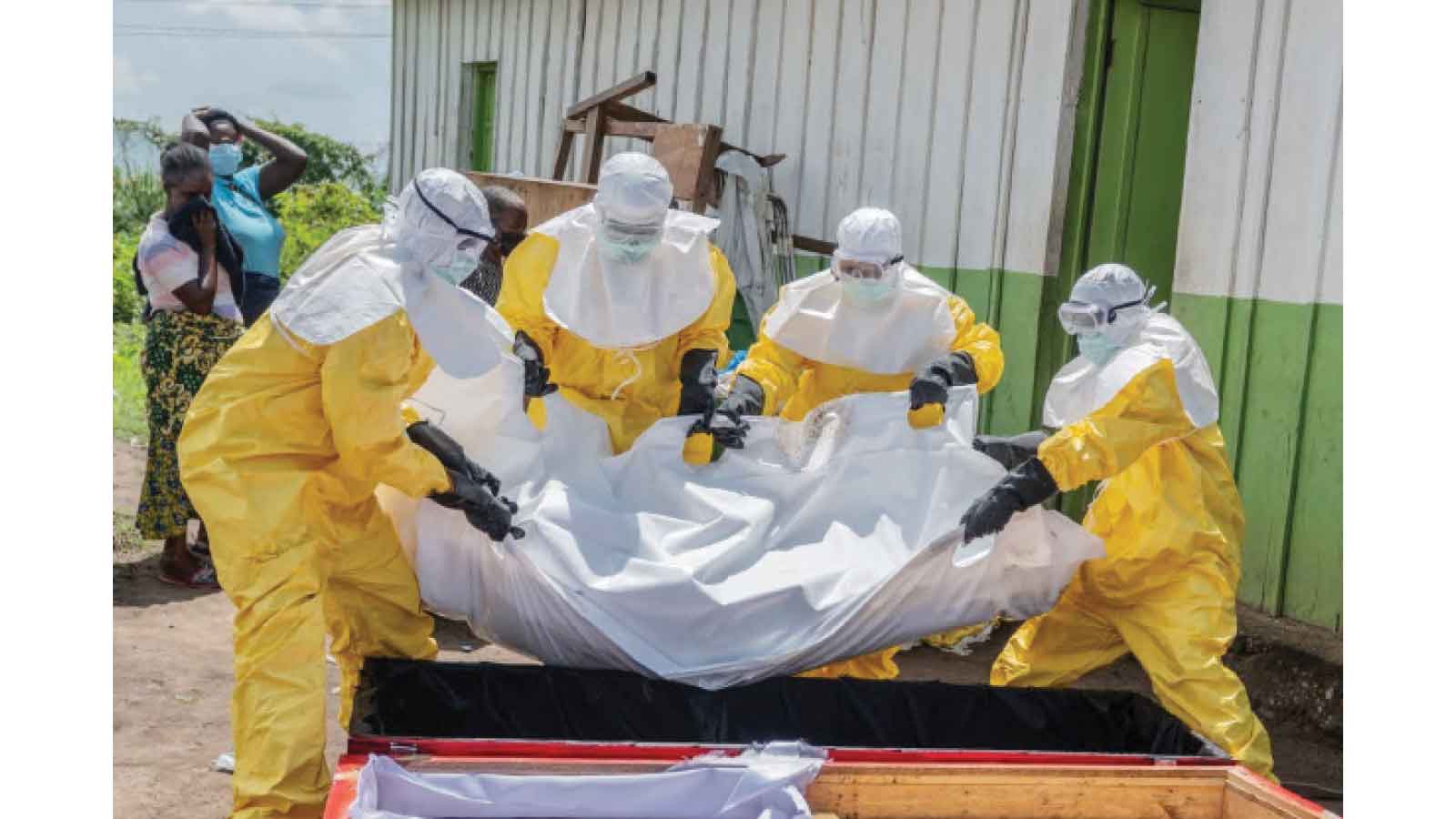
AFRICA must become a lot more reliant on its own resources to fight disease and build up health networks accessible to all.
Zimbabwe’s pledge of US$1 million to the Africa Centre for Disease Control to help fight and contain the new wave of Ebola virus in the Democratic Republic of Congo and Uganda is part of that effort, showing its solidarity with other Africans.
The continent had become excessively reliant on inflows of aid from development partners, and still needs substantial outside funds, especially when emergencies such as an Ebola outbreak surface. But we should not, and cannot, rely on outsiders to do what we must more and more being doing ourselves.
Aid flows, even for health which had the highest priority, are diminishing and in some cases drying up. There is unlikely to be a return to past levels. Most African countries have been taking national steps to shoulder more of the load in their own countries, and Zimbabwe is one of these, spending more of its general tax revenue on public health and introducing some special taxes on less healthy food to raise more health money, especially for capital equipment.
But we and everyone else in Africa need to be ready to make our contributions to continental emergencies beyond the resources of the countries affected. President Mnangagwa recognised this duty when he committed the US$1 million to the Ebola battle.
The CDC and the World Health Organisation have launched a US$18 million appeal to be spent over the next six months on helping the affected countries contain this latest Ebola outbreak. Zimbabwe’s contribution is a useful 5,5 percent of what is needed. Perhaps more importantly it is an example to others, to convert a general support for Pan-Africanism to something practical.
Our President is now well-known for wanting to see words, however magnificent, to be turned into practical action, where they count.
Some African countries may be able to chip in with more, many will only be able to come in with something. But if as a continent we are willing to get stuck in, we can, between us, raise a decent share of what is needed.
We will probably still need resources from outside the continent, but the outsiders are also likely to be far more interested and willing to contribute when they see Africans pulling their weight and becoming involved. It is easier to help those helping themselves. We in Zimbabwe have already seen this in the past, such as with the battle against HIV, even though we now need to largely fight that battle with our own resources.
Greater financing within African countries and by African countries can be far more efficient than some external aid funding. There was a time in Zimbabwe, and still is perhaps in some countries, where a lot of the health aid flows were channelled through non-government organisations. This actually led to the creation of many of these, with the aid flows providing the organisers with income, a sort of local NGO industry.
Most national health ministries are now set up to handle public health efficiently, and Africans are no longer shy about demanding decent accounts and conscientious public servants, with Governments generally tightening up on their controls and spending. This should mean we can get more for our money, important when that money comes from our own and rising number of taxpayers.
The Ebola health emergency, and the drying up of many aid flows, highlights the need for Africa to also build up its own institutions and the capacity to cope. The African Centre for Disease Control is one of these, and obviously can play a greater role if more African countries give full backing. It can easily be accountable to members, since that is what Africans expect.
Diseases cross frontiers, and most African frontiers are remarkably porous, frequently just being a line on a map cutting through societies, communities and sometimes even villages. So we need to be able to cope as regions and as a continent.
Once again, we are back to that Zimbabwean position, that Pan-Africanism is not just a slogan, but rather the map for concrete action by the whole continent, with all other Africans being our sisters and brothers.
Practical considerations demand this sort of approach. We saw it in the liberation wars that freed southern Africa, so we know it is possible and that it works.