

 admin
admin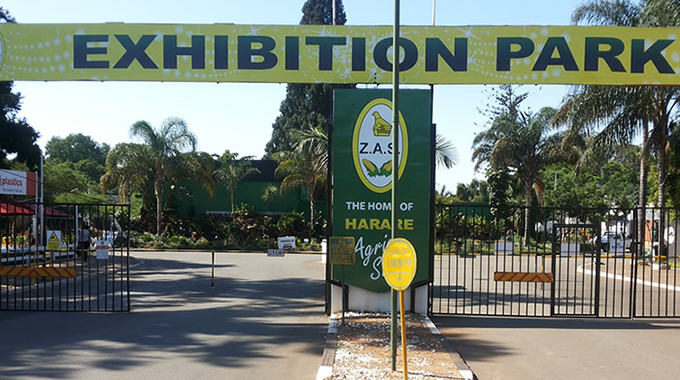
THE 114th opens its gates to the public today, with this year’s show continuing the welcome return in recent years on an emphasis on farmers and what the best of them are doing, although the commercial “town” show will still dominate.
Major efforts have been made to make the Zimbabwe Agricultural Show what its name entails, the premier agricultural show in the country, where the best farmers exhibit. A formal chain of district and provincial shows has been established to ensure that provincial winners now come to Harare and that accumulation of old trophies now go to the best farmers nationally.
The Zimbabwe Agricultural Society has successfully performed the transition from the colonial days, largely perpetuated up to land reform of the farming part of the show being run by and for large-scale commercial farmers, to the present shows where all farmers can participate.
This is important for farmers, since it provides the environment and culture for continual improvements in farming, so essential as we have to make best use of our limited land.
While continuous research helps, in the end the state of our agriculture depends on the actual farmers who sow and harvest the crops and look after, breed and nurture the livestock.
This side of the show has always been there, and much of the oldest development of The Business Hub, formerly Exhibition Park, formerly Harare Showgrounds, relates to what the farmers are doing.
There are all those byres and stables and other farmer facilities in the southwest of the grounds, and for farmers the Smithfield Arena, where livestock is paraded and judged, outranks the entertainment of the Glamis Arena.
The exhibition space for crops and for what is called home produce, things processed and made on farms, tends to be towards that side of the grounds, and we hope that far more towns people will take the trouble this year to take a good look at this farmer side of the show and not just limit themselves to the more commercial exhibitors on the north and east of the grounds, and the general entertainment in the central Glamis Arena.
For the show was established by farmers, both to link them with each other and offer them the opportunity to learn from the best through the competitions, and then to link the farming communities with the commercial sectors who bought what farmers produced and sold the equipment and machinery they needed.
While the Zimbabwe Agricultural Society was founded in 1895, it took a few years before the first show in Harare at the turn of the last century.
It was a very small affair, a few score colonial farmers competing over the quality of their crops and home produce, what was processed on farms, as livestock movement was then banned because of disease.
But since then the show has continually grown, and the only times when it has not been held was during the world wars, which is why this year’s show is only the 114th. The first nine or 10 shows were held in a mini venue, a wood and iron building roughly where the main classroom block of Harare Girls High School now stands.
This was grossly inconvenient and the society and the farmers were extremely worried about how cattle exhibits could be arranged as the quarantining and movement restrictions were lifted as East Coast fever retreated.
The farmers and their society wanted a venue close to the railway line, out of town, but not far out of town, just a walk for most townsfolk, and thought the initial offer of land near where Harare Sports Club now stands was not really suitable.
So eventually the new municipality offered land to the west of the built-up area in what would one day be Belvedere, and there the show has stayed. A bit more land was allocated in the first few years, but as Belvedere suburb developed the show society was told to make best use of its land grant, which it has.
The traditions of the show were established in those first few years in Belvedere. The farmers were the founders and the reason for the show, and largely set the tradition of the August date in that gap between harvest and planting and combining it with the trip to town to drop boarders off for the third term.
But the other traditions, of the urban dwellers being able to see what farmers did, and the commercial sector wanting to make sure farmers knew who the suppliers were, and who would be interested in buying their crops and livestock, meant that the show became an urban event as well as a farmers event.
RELATED STORIES
At one time grocers and butchers would advertise “show beef” and “show cheese” and “show jam” after the shows as the fact that these were the top end of the farming world, since having been brought to be exhibited, that tended to prove they were of better than average quality. The gathering also allowed a number of non-agricultural events. A lot of farmers and some urban people were interested in the complexities of horsemanship, so some of the oldest events at the show were the dressage and show jumping.
Other sorts of events were brought in over time, to create that almost continuous use of the central arena.
At the same time, the commercial and industrial sectors started building up their exhibits for the non-farming population, as the majority of those attending the show became the urban dwellers. This reached the stage where it was possible, and still is possible, to spend the day at the show without seeing a cow or a cob of maize, or for that matter meeting a farmer. This sort of urban visitor misses a lot and they miss the reason why the show exists in the first place.
Of course the urban visitors and the urban exhibitors tend to produce a lot of the funding that the show requires, and the society has continually upgraded the facilities to make sure these groups still come. In any case they should be able to interact with the agricultural world; that after all was the other main reason for having the first show.
The significant stress of the Zimbabwe Agricultural Society to return the show to its farming roots must be applauded, and town dwellers should take the trouble and the time to see the farming parts of the show, for our farmers are rather remarkable and are producing ever better and ever higher quality crops and livestock.


 Online Reporter