admin
admin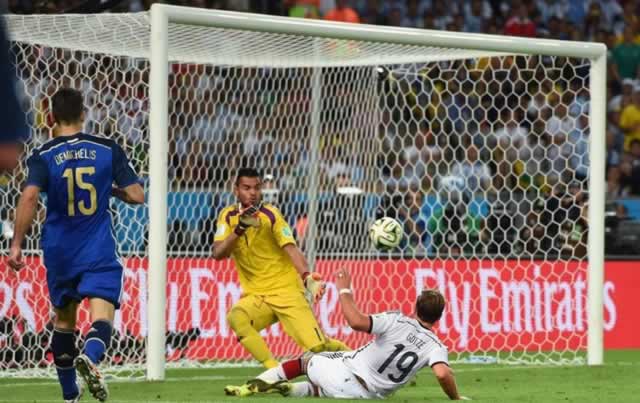
THE FIFA World Cup is the biggest football tournament on the globe and winning it represents the ultimate success story for a nation.
It’s the pinnacle of achievement, the Holy Grail, and it has defined the careers of the game’s greatest stars.
Pele won it three times with Brazil, during a 12-year period in which, to many, he transformed himself into the finest footballer ever.
His first triumph, as a mere 17-year-old in Sweden in 1958, was a fairytale, while his final chapter, as a 30-year-old in Mexico, was vintage stuff.
Diego Maradona imposed himself on the 1986 World Cup, in a way no other individual footballer has done, and dragged his country to victory.
His magnificent goal against England, in the quarter-finals, is still being celebrated as the greatest goal at this showcase and turned Maradona into a cult-hero, at home, and throughout the football world.
It’s a measure of the importance of the World Cup that the English footballers, who won it in 1966, are still being celebrated as national heroes in their country.
And, in Uruguay, the smallest nation to win the tournament, those who won it in 1950, are still treated as superstars.
The men who set the ultimate example, for this South American nation, of what it means to serve their country with distinction.
Of course, not every country really fancies a chance to win the World Cup.
After all, only 13 countries have won this tournament since the first World Cup was held in 1932.
So, for many countries, just being at the World Cup represents a grand achievement and, as Angola showed in 2006, it’s a dream that is worth pursuing.
The Negras Palancas were not expected to qualify for that World Cup, in a group that featured the heavyweights of Nigeria, but the Angolans refused to be bullied by the challenge.
In a way, they set an example for many of the so-called unfashionable football nations that it’s a mission that can be accomplished, if everyone pulls in one direction.
Reinhard Fabisch and his Dream Team also showed us that it can be done as we charmed the globe and came within winning one game of going to the ‘94 World Cup finals.
For many, this remains our finest ever football campaign, and dwarfs qualifying for the AFCON finals, a tournament we will be going to, for a fifth time, in Cameroon, in January.
One can understand that argument because the Dream Team beat an Egyptian side which, just three years earlier, had featured at the 1990 World Cup, as we topped our group.
We then beat a Cameroon team, fresh from becoming the first African team to reach the World Cup quarter-finals, in one of our final four qualifying matches.
Of course, we lost to the Indomitable Lions in Yaounde, in that controversial winner-take-all showdown, for a place at the World Cup finals in the United States.
But, although we didn’t eventually qualify, the Dream Team united our football community like no other Warriors side has ever done and created memories, during that campaign, which will last a lifetime.
It’s what sport should be all about and we find it unacceptable that our quest for the 2022 World Cup finals should be crippled by the enforced absence of our best players.
We are set to get our group campaign underway against Bafana Bafana in Harare on Friday but it’s very likely we might not have the services of about eight of our possible first team players.
The decision by the UK clubs to bar their players from going to countries where they will require a 10-day quarantine, on their return from national duty, as per the British Covid-19 protocols, has driven a dagger into our hearts.
It’s like punishing us for having good players, who have managed to break into the English clubs, including the Premiership where Marvelous Nakamba plays, given it’s virtually the dream of most of the African players, to make the grade there.
But, more importantly, it’s tilting the playing field, giving other countries, whose players either have failed to make the grade to play for the English clubs, or their nations are not included on that red-list, who can field their strongest possible sides.
The Percy Tau case, in particular, brings the whole charade into real perspective.
He is South Africa’s best player, right now and, for the last three seasons, he has failed to break into the squad for modest English Premiership side, Brighton & Hove Albion, who kept loaning him out to Belgian clubs, hoping it would help him make their grade.
On Wednesday, Tau, just like the Zimbabwean players based in England, was set to miss the opening 2022 World Cup qualifier between the Warriors and Bafana Bafana, because of the strict Covid-19 protocols, in the United Kingdom.
However, the following day, Tau left Brighton & Hove Albion and signed for Egyptian side, Al Ahly.
And, suddenly, he is now available to take on the Warriors, in that crucial opening match, next week.
This scenario paints a very bad picture, for the very integrity of the World Cup itself, because it creates the real possibility of countries, who would not have made it to Qatar, benefiting from a playing field, which is not level.
It also makes it possible for countries, which probably would have made it to Qatar, failing to do so because, in some big matches, they were affected by the absence of some of their key players, who were caught up in this complex web.
It’s not only unfair but it makes a mockery of the World Cup itself.


 Online Reporter