Online Reporter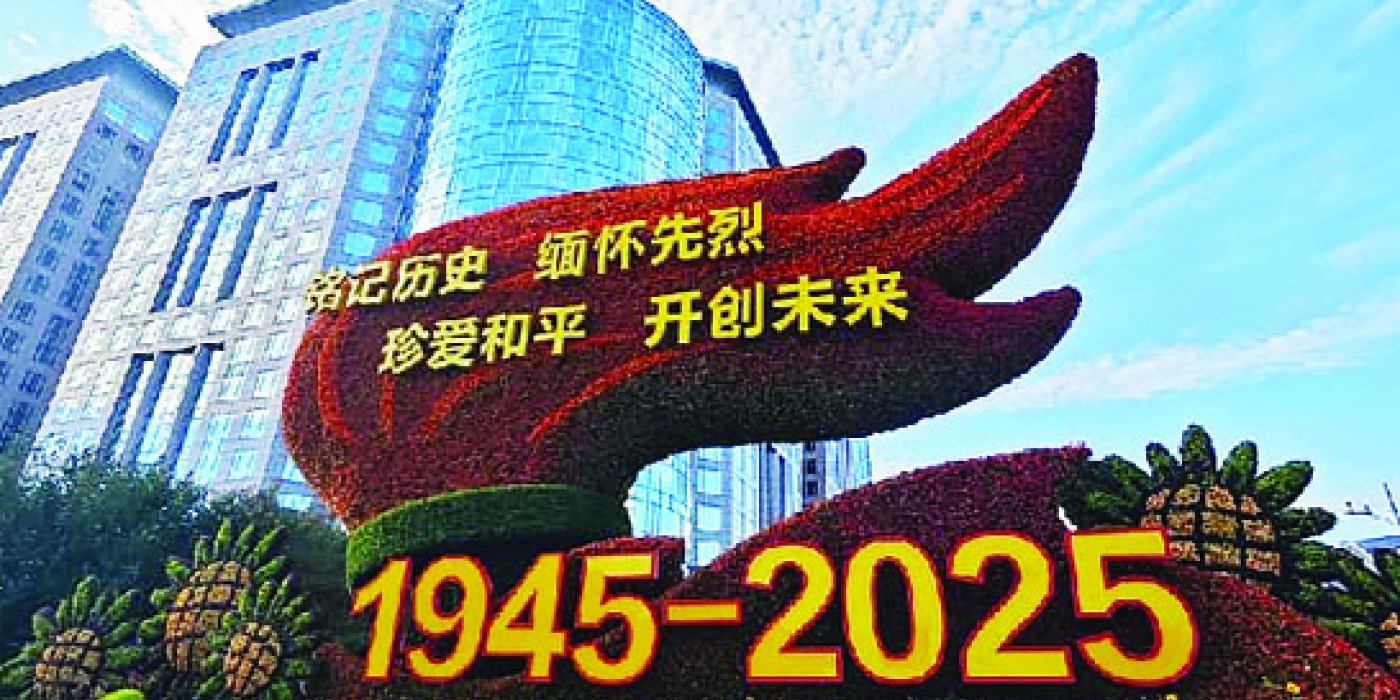
THE Second World War was the most brutal war in history in terms of deaths and destruction and ended in 1945 with the total defeat and unconditional surrender of the fascist countries that had launched wars of aggression that caused so much suffering, with that victory heralding the creation of the New World Order under the United Nations system that still governs the way we live.
Easily the longest of these series of wars was the Chinese People’s War of Resistance Against Japanese Aggression. This started with the invasion of Manchuria in 1931 and spread to the rest of China in 1937.
This was two years before the Nazis launched the war in Europe in 1939 and four years before the Germans under Adolf Hitler invaded the Soviet Union in 1941 and the United States was brought in at the end of that year with the bombing of its Pacific fleet.
This continuous and successful war ensured that China would be one of the five permanent members of the new UN Security Council, the only one outside Europe and North America and started the process, accelerated after the ensuing revolution and the proclamation of the Peoples Republic of China, of ending systems of unequal treaties and colonial rule across much of the world.
The victory also inspired many others across the global south, by showing that it was possible for those who had been victims of aggression and colonialism to rise above these and then fight and win. So while the celebration of victory over the fascist states will be seen in many countries this week, with the war ending on September 2, 1945, China has more reason than most to mark the ending in total victory of so many years of suffering.
President Mnangagwa is one of 26 invited Heads of State from around the world going to Beijing for the formal parade and other events. The President is also one of the very few invited from Africa, showing the importance now given to Zimbabwe as it builds its economy and the long history of ties between Zimbabwe and China.
China is Zimbabwe’s largest trading partner, with Harare actually having a modest positive balance of trade, exporting a bit more than it imports. Just as importantly, Zimbabwe has become a major destination for some serious investment by the Chinese private sector.
This has been exceptionally marked since the creation of the Second Republic and the advent of both a pro-business environment, which includes careful simplification of the essential rules that investors must follow, and the crushing of the corruption that was most off-putting to well-intentioned investors.
There has been substantial Chinese assistance, with the extensions to the Kariba South and Hwange power stations and the support for expanding and upgrading facilities at modern airports. Technical co-operation has been rising, with a new US$55 million agreement last month, largely because Zimbabwe has shown it can make very good use of this sort of support.
But the numbers in the official ties have been dwarfed by the growth in trade and the investment that have been built on the long political and diplomatic ties that linked the two countries, starting from the days when the Chinese Government decided to give solid and practical support to the liberation movements that fought and eventually defeated settler regimes and colonialism.
President Mnangagwa himself received his early military training in China.
But while those political and diplomatic ties are important, they simply ensure that doors are open and opportunities exist. The growth of trade, investment and commercial ties has arisen because many outside.
Governments decided that the open doors and the opportunities were inviting.
Trade has been growing fast, reaching US$3,8 billion last year, a growth of 24 percent even in a drought year that would have restricted some Zimbabwean exports and Chinese investment in Zimbabwe rising to US$4,4 billion, with US$400 million in just the last year.
And China has made it clear that despite moves in some areas of the world to diminish globalisation and restrict trade, it sees the advance of both the global economy and the need to bring in the global south into that economy fully, as vital for the future prosperity of everyone.
With trade restrictions coming from some quarters, China made the decision to open its own markets to zero tariff imports from Africa, and as Zimbabwe has already seen even when these imports are agricultural goods that have to follow health standards, the Chinese are actively involved in making sure that the suppliers can meet those standards.
While President Mnangagwa will have formal talks with President Xi Jinping, building on his State visit to China last year, he will also be seeing the companies that have made major investments in Zimbabwe and be building up Zimbabwe’s contacts with the business community.
China is already on the global centre stage, with its examples that include the victory being celebrated this week, but also because it has shown that economies can be built from low levels to high and sophisticated levels through the correct policies, hard work and an insistence on integrity. And most importantly, China is willing to support others who are willing to put in the hard work.


 Bongani Ndlovu