Online Reporter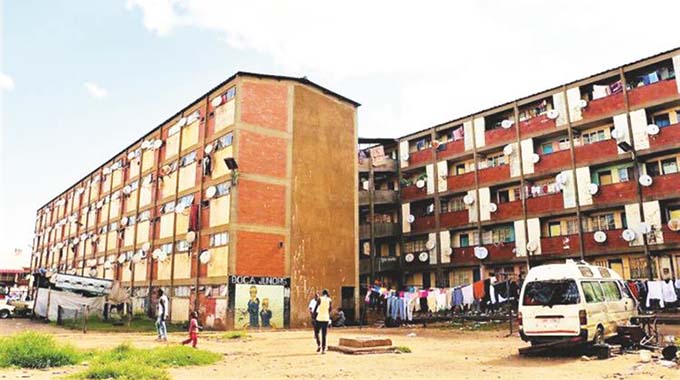
IN the latest public health problem in Harare, bed bugs have invaded Mbare Hostels and once again, the Health Department is having to step in and sort out a mess that should never have happened in the first place if there was no gross overcrowding and sub-standard conversions of living space.
The city’s health department, despite all the problems it faces, is one of the more functional units in the municipal administration, starting with the fact that it actually has retained its substantive head since he was never involved in the sort of shady deals the pile of suspended heads were suspected of running.
But a lot of its work is not just the routine management of the public health of a large city, making sure that there is a decent public primary health care system in place and that everyone selling food is following the laid down standards.
The health officers are also the ones who have to deal with the results of failure in the rest of the administrative machine, from cholera outbreaks caused by the deficiencies in sewers and water supplies downwards.
The health workers did well in the last cholera outbreaks, calling for Government backing very early when necessary but they should not, in the 21st Century, be having to do anything more than monitor the quality of drinking water and enforcing public health hygiene standards when it comes to such preventable illnesses.
The bedbug problem in the hostels is another symptom of municipal inadequacy.
These pests are not dangerous, but they make life a misery and can spread easily, especially when there are no proper walls between living units, as is the case in the hostels with their temporary partitions, and when there is gross overcrowding at what amounts to slum levels.
This is not something new. All the hostels are relics of the colonial administration.
They were built as dormitories for thousands of single men by a city council that even by the standards of the time was considered old-fashioned and antiquated.
Bulawayo does not have such municipal hostels simply because a far more enlightened council allowed families buying and renting houses in its high-density suburbs to have a lodger solving several potential social problems instantly.
The families had an extra source of income, important if they were buying their houses as Bulawayo, unlike Harare, thought was a good idea.
Secondly, the average family was likely to have fairly strong rules about acceptable behaviour by a lodger, especially when there was usually some sort of family or community tie between landlord and tenant.
Independence saw Harare City Council dragged into the modern world from something that might have excited Cecil Rhodes in his mining camps.
And there was a pile of well-built if exceptionally spartan hostels.
As a temporary measure those living in them were allowed to partition off the huge dormitories as family accommodation while measures were worked out for the permanent conversion of the structures into proper blocks of flats by masonry partitioning and adding the extra small bathrooms and kitchenettes.
Somehow the permanent conversions never happened, despite the plans that were drawn up and the ideas that were floated.
The conversions, because of the fairly rugged structural frames, would have cost a lot less than building new low-income flats from scratch, and so after decades of city council inaction we are still lumbered with these now deteriorating relics of some of the worst colonial social engineering.
Health hazards abound with communal bathrooms, temporary partitions and gross overcrowding.
The bedbug invasion, while a major nuisance rather than a critical health risk, is still a sign that something a lot more serious could happen unless there is a determined effort to sort out the problem.
The next outbreak of something might be a lot worse and dangerous.
And there will be an outbreak of something unless they city council decides to stop closing its eyes and pretending that if it does nothing the problem will go away.
It has a time bomb ticking and needs to take up its responsibilities.
There are now schemes for upgrading Mbare with decent, if low-cost and fairly plain, flats. Some of these schemes will be funded in public-private partnerships.
These need to be accelerated with the hostel occupants given first option to move out.
The structures of the hostels need to be properly examined.
If they are still sound, then proper conversions can be worked out, again probably involving Public-Private Partnerships, to save costs of housing families in some decency.
If, as might be likely, there has been such serious structural damage from lack of maintenance that it will be cheaper to replace the buildings rather than repair and convert them, then the land they occupy can be freed for something better.
And meanwhile, the council needs to reform and rebuild its administration and services so that they are working the way they should in a modern African capital city, rather than collapsing and causing the sort of health hazards and disasters that the council expects its medical staff to sort out.