

 admin
admin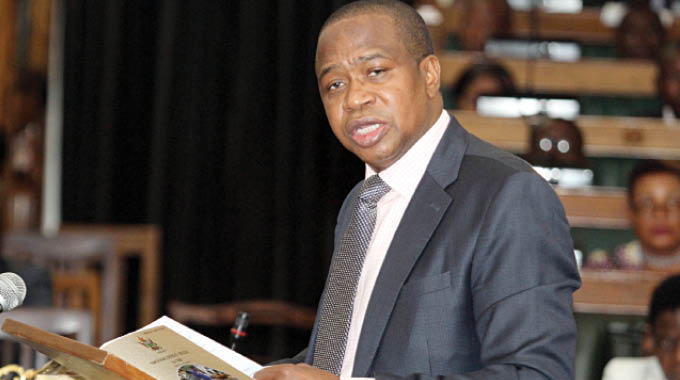
Having noted that most urban councils are struggling to provide potable water to residents and to legally dispose of waste, the Government has chipped in with a package to address the shortcomings.
Basically all councils have failed to expand their sources of water to keep pace with growth in demand caused by rising populations and expanding industrial and commercial customers. In addition, the local authorities have not invested in adequate infrastructure to pump, store and clean the water and deliver it to clients. Because councils are not pumping enough water or are pumping filthy water to homes and business premises, their customers are coming up with alternatives which include drilling boreholes and digging shallow wells at their premises or buying the commodity.
In respect to waste management, councils across the country have not invested much in the required infrastructure to collect, move and treat garbage or human waste before disposing it safely.
This week, Harare City Council had to take an extraordinary decision to cut water supplies to the entire metropolitan area as the local authority did not have sufficient water treatment chemicals.
Put together, the gaps in water and waste management have made towns and cities not only dirty but also thirsty, in some cases, sick too. In Harare, Chitungwiza and Gweru, for example, hundreds of residents have, in recent years died or have been sick because of water-borne diseases such as cholera and typhoid.
With councils evidently overwhelmed by the task at hand, the Government took the responsible position to intervene with a $72,3 million package to be allocated to 16 municipalities.
This came shortly after the Government provided Harare with $37,4 million to address its water supply challenges.
“Following Government’s recent interventions in the City of Harare, it has come to our attention that other local authorities face similar problems with regard to water and sewer provision within their localities,” said Finance and Economic Development Minister Professor Mthuli Ncube announcing the disbursements on Wednesday.
“Lack of investments by councils towards maintenance and rehabilitation of infrastructure assets has resulted in high water losses along the distribution networks with some local authorities such as Harare, Chitungwiza and Mutare having water losses above 60 percent. Additionally, most councils are failing to collect billed amounts from residents hence have accumulated huge bills for water treatment chemicals which has resulted in suppliers suspending services.”
Waste disposal, the minister said, remained a “huge challenge” for most local authorities because of the proliferation of illegal solid waste dumps in most locations.
He said if the situation was left unchecked, there is a real threat of the “re-emergence of water-borne diseases such as cholera and typhoid, which caused untold suffering to our people”.
Bindura Municipality is getting about $5,6 million, Gweru ($7 million); Norton ($450 000); Chinhoyi ($4,8 million); Shurugwi ($3,5 million); Epworth ($3,8 million); Kadoma ($2,7 million); Marondera ($6,6 million); Rusape ($612 000); Ruwa ($248 000); Chipinge ($694 900); Mvurwi ($1,5 million); Plumtree ($1,8 million) and Mutare about ($9 million).
Bulawayo residents, who are facing water shedding once again this year, would be delighted that their city has been allocated about $18,3 million for water production and sewer.
The city, which prides itself in having the cleanest water in the country, will use $14,4 million of the sum to rehabilitate 77 boreholes at Nyamandlovu aquifer, construct a pump house, pipeline and reservoir. It will also use $288 000 for the replacement of pressure reducing valves while $3,6 million is designated for sewer rehabilitation of collapsed outfall sewer for Aisleby Farm.
Probably the country’s most chaotically and corruptly-run local authority, Chitungwiza, has been allocated $6,4 million for drilling and equipping 25 boreholes.
The rescue package could not have come at better time for Harare, Bulawayo, Chitungwiza and Gweru. The councils would be able to revamp their water supply and waste disposal systems, tasks they would not have been able to do using their own funds.
We are hopeful that the money would be used for the intended purpose. We are saying this because Harare City Council was a few years ago exposed for abusing US$144 million it had secured as a loan from the China Export Import Bank in March, 2011. The loan was for the rehabilitation of the Morton Jaffray and Prince Edward water treatment works, and the Crowborough and Firle sewage treatment plants but council management and MDC councillors connived to spend some of the money to buy vehicles for themselves. Chitungwiza town council has also attracted much criticism for being poorly run and corrupt.
We are, thus, urging the Government to make sure that all loopholes that have resulted in abuse of funds for water and waste management in the past are plugged this time around.
While we commend the Government for providing the money, we are sure that the councils concerned appreciate that this is only an interim measure. The local authorities themselves must work harder to secure funds to build new, bigger dams, redo their water treatment and distribution infrastructure to meet demand. The same goes for their waste collection, treatment and disposal systems. These are huge, long term projects which need billions to be undertaken.
While this is so, the councils are there to provide reliable services to their clients. As such they must be up to it.


 Online Reporter