Online Reporter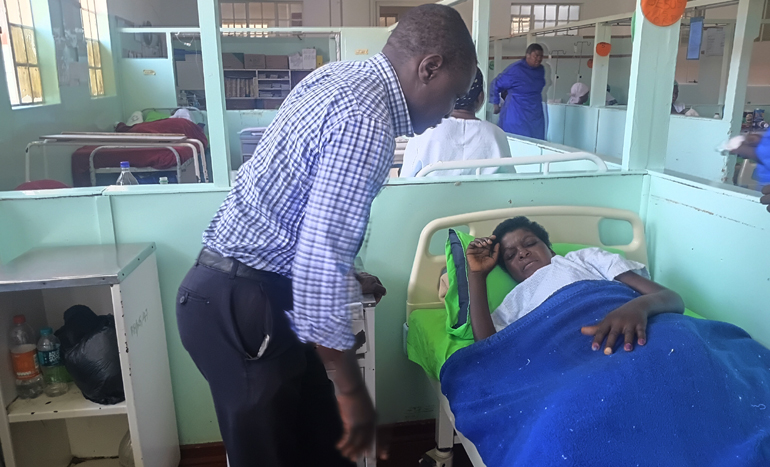
THE recent medical triumph at Rusape General Hospital, where a team of dedicated surgeons successfully removed a 25 kilogramme tumour from a patient, is more than just a clinical achievement—it is a powerful symbol of Zimbabwe’s ongoing transformation in healthcare delivery under the guiding vision of President Mnangagwa.
This milestone resonates deeply with the national mantra of “leaving no one and no place behind,” a principle that underpins the country’s march towards Vision 2030, where Zimbabwe aspires to become an upper middle income economy.
It is a story of resilience, devolution, and the tangible benefits of expanding medical services to every corner of the nation.
For decades, specialised surgical procedures of this magnitude were often associated with central hospitals in Harare or Bulawayo.
Patients from smaller towns and rural districts had to endure long journeys, financial strain, and emotional stress to access advanced medical care.
The successful operation in Rusape demonstrates how devolution is reshaping this narrative.
By decentralising resources, expertise, and infrastructure, Zimbabwe is ensuring that world-class healthcare is not confined to metropolitan centres, but is accessible to citizens wherever they live.
This is the essence of inclusive development, bridging the gap between urban and rural, between privilege and marginalisation.
The removal of such a massive tumour is, not only a testament to the skill and courage of the medical team, but also a reflection of the growing confidence in provincial hospitals.
It signals that these institutions are no longer peripheral, but are becoming central pillars in the national healthcare system. This achievement should inspire trust among communities who may have previously doubted the capacity of local hospitals to handle complex cases.
It also underscores the importance of investing in training, equipment, and facilities at the grassroots level, so that every Zimbabwean can access quality healthcare without being forced to migrate to distant cities.
Devolution, as championed by the Second Republic, is proving to be more than a political slogan. It is a practical framework that empowers provinces to take charge of their development priorities.
In the health sector, this means equipping hospitals like Rusape General with modern surgical theatres, diagnostic tools, and specialised personnel. It means fostering partnerships between Government, private sector, and international organisations to strengthen capacity. It means recognising that the dignity of a nation is measured by how it treats its most vulnerable citizens, regardless of geography.
The Rusape milestone also speaks to the broader vision of President Mnangagwa’s administration. Vision 2030 is not merely about economic indicators—it is about human development, about ensuring that prosperity is shared equitably. Health is a cornerstone of this vision.
A nation cannot aspire to industrialisation, innovation, and growth if its citizens are weighed down by preventable illnesses or lack access to life-saving interventions.
By decentralising healthcare services, Zimbabwe is laying the foundation for a healthier, more productive population that can drive the economy forward.
Moreover, this achievement should be celebrated as a triumph of hope. For the patient whose life has been transformed, the operation represents a new lease on life. For the community, it is a reminder that their local hospital is capable of miracles.
For the nation, it is evidence that progress is not abstract, but real, visible, and measurable. It is a story that should inspire other hospitals across Zimbabwe to aim higher, to innovate, and to embrace the spirit of service.
As Zimbabwe continues its march towards Vision 2030, the lesson from Rusape is clear: development must be inclusive, and healthcare must be universal.
The mantra of leaving no one and no place behind is not just rhetoric—it is being lived out in operating theatres, in rural clinics, and in the lives of ordinary citizens.
The successful removal of a 25kg tumour in Rusape is a beacon of what is possible when vision, policy, and commitment converge.
It is a reminder that the journey to an upper middle-income economy is, not only about Gross Domestic Product (GDP) growth, but also about the health, dignity, and well-being of every Zimbabwean.
In celebrating this milestone, we honour the surgeons and medical staff whose skill and dedication made it possible.
We acknowledge the Government’s commitment to devolution and inclusive development. And we reaffirm our collective belief that Zimbabwe’s future is bright, not because of abstract promises, but because of tangible achievements like this one. Rusape General Hospital has written its name in the annals of national progress, and its success is a clarion call: in the Second Republic, no one and no place will be left behind.