Online Reporter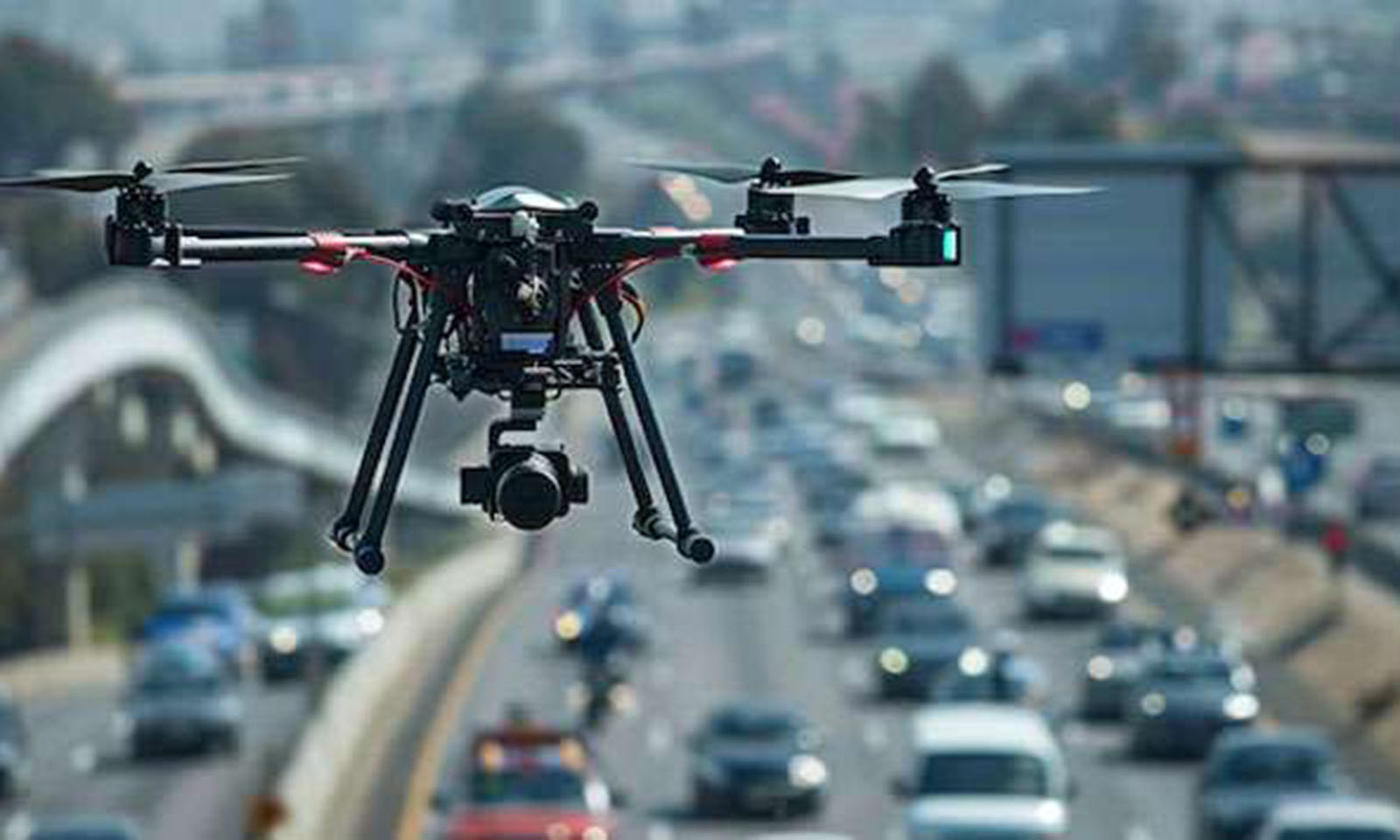
THE rapid upgrade in city centre traffic management through the new Electronic Traffic Management System (ETMS) in Harare and Bulawayo now being backed up with police drones will not just make the roads safer as traffic law is better enforced, but also allow traffic to flow more smoothly.
Road laws and rules are not arbitrary. They are a careful mosaic of regulation designed to prevent collisions and to allow large numbers of drivers and pedestrians, all with different routes and objectives, to co-exist safely and fairly on the roads.
We would all like to drive unimpeded but we need to share the roads, and the road rules allow this to be done efficiently, fairly and safely.
If we all obeyed the rules then there would be no accidents, or at least hardly any, and that would not just boost safety but in time allow insurance premiums to fall as these are based entirely on statistics, the percentage of insured vehicles that will need repair or replacement each year. If those numbers fall, then premiums must fall.
The surveillance cameras now deployed in Harare allowed police in the first few days of the new system to detect very easily 290 traffic violations, such as dropping off passengers away from bus stops, ignoring stop signs, driving against the flow of traffic and creating imaginary traffic lanes. The drivers have almost all now been tracked down and called in to pay their fines.
The system is not only far more effective than having police officers wandering around looking for violations, it also removes the temptations to offer or accept bribes to overlook offences. This, despite the major efforts in recent years, was still seen as a problem.
Patrols are still needed, but largely to hunt down those who refuse to mount number plates, and we can raise the fines and penalties for that to cover the extra cost, but the majority of traffic offences can be detected and as people come to realise that they cannot rely on inefficiency or just driving correctly when they see a police officer.
With everything now on record from the moment the electronic pictures and video are taken, the mills of the police can grind very finely and bring in the offenders, with the picture evidence being rather conclusive.
We hope that the police will keep the small team needed to continually monitor their system deployed and will follow up. Drones, as the police have noted, simply make the system more efficient.
Once most drivers realise they cannot escape, we should start seeing most agreeing to drive legally and safely, and the advantages will be so obvious that this should become the norm.
At the same time, with far better and more certain enforcement, Harare City Council needs to play its part.
The continual problem before was that the council became determined to create every possible parking space for hire.
While bus stops must not be used to park buses or kombis, an undesirable trend some years ago, monitoring can stop that. Bus stops are needed so a bus or kombi can pull out of the traffic lane, drop off passengers or pick one or two up, and drive on without blocking other vehicles.
Broken and inoperative traffic lights are the bane of almost every driver entering the city centre with the lights often left for months before even a broken bulb is replaced, let alone a proper repair being done. This causes more congestion and more accidents than almost anything else, and makes it very hard for pedestrians seeking a safe crossing to get enough time to cross a busy road.
At the same time the city council needs to replace as many suburban traffic lights as possible with roundabouts which are far more efficient where there is enough land. Often the space exists thanks to colonial planners who chopped the corners off stands at intersections of what were thought to be future major roads and all that has to be moved might be some informal business shack.
Some years ago it was reported by an activist mayor that the cost of a roundabout was roughly the same as the cost of a set of traffic lights, so it is difficult to understand the fascination lights have where alternatives are possible. Roundabouts are inherently safer, mean very few vehicles have to stop when traffic is light, are largely vandal-proof and are not seriously damaged by reckless drivers causing accidents.
At the same time, as they bring in drone technology, the traffic police and highway patrol should be looking at the use of drones along major highways.
They cannot check offences like drinking and driving but they can check on most others.
Yesterday’s accident near Kwekwe where a mushikashika and fuel tanker collided killing 12 people shows how better monitoring of highways can make such dreadful accidents far less common.
The advantages of CCTV, electronic monitoring and drones is that it makes it easier and far cheaper for proper monitoring and control of traffic by knowledgeable police officers, who can take action in both real time and in following up the more common and less critical offences.
Earlier implementation experience has shown the effectiveness of the new measures, and where infrastructure needs to be repaired, replaced or upgraded by road authorities such as Harare City Council.
The electronic and drone monitoring is not an invasion of privacy, since the roads are a public utility and whenever we go on a public road we are, in effect, contracted to follow the laid down conditions, which means obeying the road rules. And that means we accept being watched and monitored and controlled.