

 Online Reporter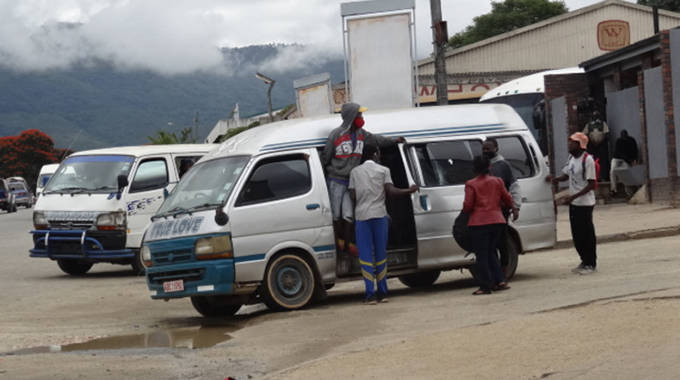
PUBLIC transport in Harare has long been seen as a large mess, partly the fault of kombi operators and drivers and partly the fault of Harare City Council and its dismissal of the needs of those who use public transport.
Many blame kombis for congestion in the city centre, ignoring the growing number of private cars and the very poor town planning that concentrates all traffic in and around Harare on arterial roads that terminate in the city centre, with very little in the way of by-passes and ring roads that would keep those moving between suburbs and industrial areas out of the city centre.
A final severe challenge is the lack of a central bus and kombi station. Instead there are a number of terminuses ringing the main city centre, some quite a long way apart, which encourages kombis to take a circular tour of the city centre to visit several for the benefit of their passengers who do not want to walk 10 blocks on arrival.
So the indiscipline of kombi drivers, which we agree is hindering rather than helping solve the problem, cannot be seen as the sole cause of city centre traffic problems.
We need to remember that each kombi is carrying around 18 passengers when it arrives, and if all those were using a private car, even if sharing, the city centre congestion would be near gridlock.
What has long been needed is a sensible system with rational rules, proper terminuses, carefully selected bus stops for those wanting to get off or on outside a terminus, a modest but compulsory entry fee at terminuses, with this cash ring-fenced for infrastructure and decent terminus management rather than general council funds. Then we need the whole package enforced, fairly.
Bulawayo, as usual a leader in effective town planning and creating workable solutions, fares a lot better. The reasons go far beyond wider streets, though that can help when we consider the narrow streets in the Harare Kopje area.
It largely starts with a single representative body for all kombi operators, with everyone forced to join. That at least gives an excellent starting point for hammering out workable and rational routes that the passengers need, plus strict enforcement of the system so that everyone is on board and using the resultant and agreed system.
It is vital to note that the system was the result of agreements taking into account different and often conflicting needs, not just imposed. As everyone is on board a lot of the enforcement is internal.
At long last Harare is now looking at something very similar, and is aware of the successful Bulawayo model. It started with an approach to the city council by the very loose association of the 20 or so operating associations that many, although far from all, kombi operators have formed. The city council, through the Mayor, thought this was an idea whose time had come.
The functioning kombi associations range from small ones, with a handful of members, to two large groups that at least allow each kombi to be identified.
The city council wants these to combine into one association with muscle, although perhaps up to half a dozen affiliates who can handle day-day problems and enforce agreements.
This would give the council someone to talk to, and kombi operators a functioning team that could sit down at the negotiating table and hammer out a deal.
We would also like some passenger voices included; some of the weirder actions of kombi drivers are driven by passenger needs, although the desire of many drivers for a quick buck and the presence of touts are major factors.
Bringing in town planning experts and police traffic officers as the backup technical team, it should be possible to quite quickly hammer out a system that makes best use of the limited infrastructure and road network.
This can be amended in future as more money from terminus entry fees finally allows the upgrade of terminuses, the expulsion of touts, and far better management.
One point the interim deal must include is properly set up and marked bus stops. Terminuses are useful, but many want to get out sooner and some want to be picked up at a different place.
Harare used to have these, and if you know where to look you can quite often find the vandalised remains of a sign.
A bus stop requires perhaps two or three parking bays set aside for the bus or kombi so it does not block traffic, and total enforcement of a rule that the stop is just for a couple of minutes, and is not a rank for parking.
Once the deal is hammered out then the council can make the necessary by-laws to compel enforcement. All kombi operators will be compelled to belong, the membership disc being as important as all the other licencing requirements.
The association will do most of the enforcement, but backed when necessary by police and municipal police.
The first flows of cash from terminuses must be used to expel the touts, fund a few respectable marshals to keep order, improve rubbish collection and start the long process of putting in the shelters, upgrading public conveniences, fixing the drains, erecting destination signs and all the other things users of public transport need in any country, let alone one aspiring for upper-middle income status.



