Online Reporter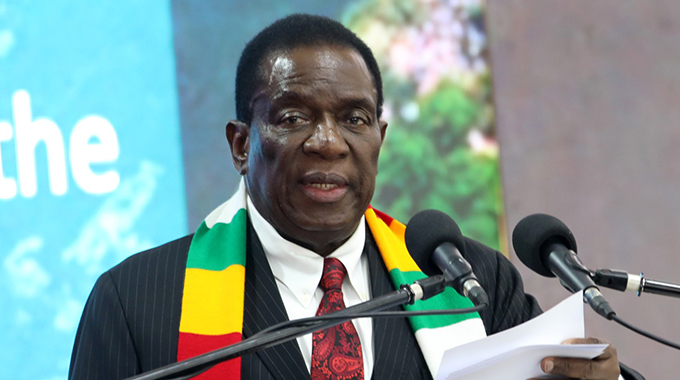
AFRICAN efforts to end more than 30 years of violence and war in the eastern Democratic Republic of Congo, now in their final lap with the consolidation of all regional and continental efforts and the appointment of a team of top-end facilitators, must succeed and produce durable peace.
Outsiders can help and have helped, but in the end sustainable peace requires an African initiative with all countries and regional associations neighbouring the eastern DRC making sure that an effective arrangement is struck and everyone involved commits to both the letter and spirit of this arrangement.
A final peace deal is expected by August 18, just two weeks away, so the work is cut out for the five-person team of facilitators formally and jointly appointed by SADC chairperson President Mnangagwa of Zimbabwe and East African Community chairperson President William Ruto of Kenya at the end of last week.
The African Union will be fully backing the joint regional initiative, and as all African peace efforts are consolidated, the SADC-EAC team will be joined by the AU facilitator and the SADC, EAC and AU technical teams will be combined.
This brings the maximum African cooperation and resolve to finalise the peace process and then work on the long and difficult process of getting everyone involved to maintain the peace process and learn how to work together as they move from war to peace.
This follow-up will be required if the peace process is to remain successful.
Signing peace treaties or other documents can only be a first, if decisive, step in the transition to peace.
The follow up will be critical as promises and agreements are turned into the reality that those who live in the eastern DRC want and need, a peaceful environment that allows them to then move ahead economically and socially as they rebuild their lives and move into the sunlight.
And this can only be done when Africans are in charge and are showing that they are the most capable of achieving what is the dream of all Africans.
The present set of efforts now moving towards their culmination started with the EAC and SADC setting up negotiating and peace processes. It became apparent that to make these more effective and to prevent any of the parties trying to slide through the gaps, that the two regional processes needed to be combined.
This has already led to what the AU sees as effective agreements between DRC and Rwanda in Washington and the recent agreement between the DRC and the main rebel group, M23, in Doha Qatar.
The regionally and continentally endorsed team of facilitators now need to convert these intentions and ceasefires into long-term peace deals. A ceasefire is needed to stop fighting, but the causes of the fighting then need to be sorted out.
The violence in the area was ignited in 1994 when a lot of Rwandan refugees, many of whom bore responsibility in one form or another, for the Rwanda genocide, fled into eastern DRC. So Rwanda has always had legitimate security concerns, but these can only be permanently addressed by making sure the DRC has effective control of its own territory and can then offer and guarantee that secure eastern border.
At the same time, the DRC does not need imported rivalries and conflicting support among its own population.
The DRC has made a great deal of progress, politically and economically, since democracy was restored and most Congolese put away arms of war and instruments of dictatorship and took up the ballot boxes to settle their differences.
That progress needs to become the norm in the last remaining corner, the eastern DRC.
This would also settle the main security concerns of the DRC, again a recognised and secure border with democratic institutions on both sides.
With so much support for the mediation efforts being led by SADC and EAC, and the united front that the region and the continent are presenting to all parties, we are reasonably confident that the final peace deals can be signed off in a fortnight.
Then this united front must remain, as those peace deals are implemented and the difficult process of converting ceasefires into peaceful co-existence continues, in some ways the tougher process since so many will be involved and have grievances stretching back decades.
But Africa has a lot of experience in putting together the bits after liberation struggles, insurgencies and civil wars, and that experience will be needed in eastern DRC and its immediate neighbourhood, hence the appointment of a group of retired presidents of high standing as facilitators.
They have seen and dealt with the sort of problems now involved in the eastern DRC and so can both give the necessary advice to those of good will and, importantly, decline to be taken in by those wanting to side-track peace.
Africa has the experience and the resolve to sort out its own crises, when we all unite in the decision to do so, and the eastern DRC is a clear place where our joint efforts can achieve the desired goals.