admin
admin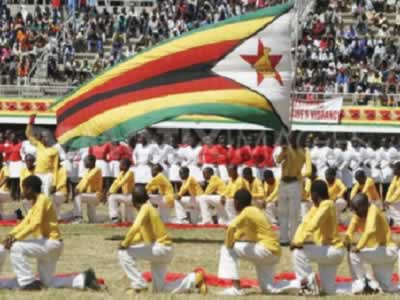
We celebrate our 35th Independence Day on Saturday.
This is an important day for the country, as it is a testament of our freedom from colonial bondage, a day when Zimbabwe marks her nationhood. We celebrate the political independence that we attained on April 18, 1980, at a time when the Zanu-PF government is leading the country towards economic independence.
In 1890, Zimbabwe was colonised by Britain. But blacks did not give away their independence easily; they fought against the invading forces. However, with their spears, bows and arrows they were no match against whites’ guns, dynamite and so on. They rose in 1893 and later in 1896; both uprisings ending in crushing defeats. Having won the initial wars, the settlers went on a frenzy, gobbling up all of the country’s fertile land and forcibly pushing the rightful owners of the land into arid, infertile and rocky strips of land. They pillaged locals’ cattle and minerals as well. They took away their freedom and humanity.
For almost 100 years, we had to endure some of the worst brutality mankind has ever seen. Extortionate taxes and draconian laws were imposed on the indigenous people to entrench white domination of this land.
Yes the whites took away all of the blacks’ material riches, broke their limbs and massacred hundreds of thousands, but they didn’t break their spirit.
Thus resistance to settler rule resumed in the 1940s. The movements first articulated workers’ rights but later started advancing harder political demands for independence, equal voting rights and so on. The 1948 general strike showed what blacks could do if they worked together to confront the evil political dispensation of the day.
Political parties like the Southern Rhodesia African National Congress, National Democratic Party, Zapu and Zanu followed in the 1950s to 1963 as black anger over white domination intensified.
They started discussing the possibility of an armed struggle in that period. Under the leadership of Cdes Robert Mugabe and Joshua Nkomo, Zanu and Zapu started recruiting youths for military training in countries such as Angola, China and Russia. They launched a just war, a war for liberation that had total national support. The minority system had no chance despite the facts that their security forces had better arms and enjoyed the advantage of controlling all formal systems in the country.
Seeing that a straight military loss was imminent, Rhodesian Front leader, Ian Smith, lumbered to the negotiating table and discussions were held at the Lancaster House in Britain, not on his terms, but on the liberation fighters’.
The first democratic elections were held in early 1980 and were won by Zanu with 57 seats, Zapu coming second with 20 after both were elected on the common voters’ roll. Smith’s Rhodesian Front which was elected on a separate white voters’ roll got 20 seats. Independence came on April 18, 1980.
Despite the fact that the liberators had convincingly won through the bullet and the ballot later, the leader of the winning party, Cde Mugabe, as Prime Minister was magnanimous in forming a unity government that included Zapu cadres and, of all persons, Rhodesian elements.
It has been a long, happy 35 years for Zimbabwe since then. Blacks are now politically independent and the struggle now is on attaining economic freedom to make the independence truly meaningful, enduring and total.
With Zanu-PF in charge, the government launched the first real step towards economic independence in 2000 when the fast track land reform and redistribution programme was launched. That was after the landless majority had occupied white-owned farms countrywide. Now, 15 years on as many as 300,000 blacks are proud land owners. Most are doing exceptionally well on the farms but a few aren’t doing that well. The reasons why some aren’t doing well are many, among them lack of long-term affordable financial and technical support and recurrent droughts.
The revolutionary land reform programme attracted an angry response from the landed whites and their cousins in Britain, America, Canada and Australia who sought to reverse it by sponsoring the formation of a stooge political opposition in the form of Morgan Tsvangirai’s MDC. Illegal sanctions were imposed too to bring down the Zanu-PF government and with it the party’s revolutionary policies and ideals. That has failed, dismally.
The fight for economic independence went a gear up on March 9, 2008, when President Mugabe signed into law the Indigenisation and Economic Empowerment Act. The law prescribes a 51/49 percent threshold in ownership of investments in natural resources in favour of locals. This policy, which is standard practice in countries in the Middle East and other formerly disenfranchised nations, should take Zimbabwe towards greater and sustainable socio-economic development.
Therefore, we celebrate our 35th Independence Day with pride, after an electoral victory by Zanu-PF in 2013. The victory was so convincing that even the detractors of the party and country are beginning to warm up to us. We look forward to a big occasion on Saturday, and better economic fortunes as we move ahead.


 Online Reporter