admin
admin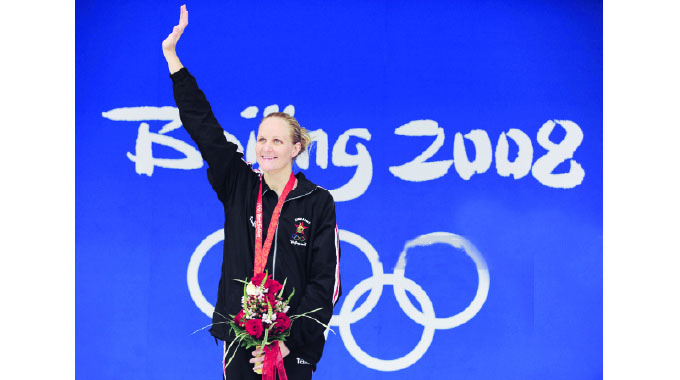
WHEN the Golden Girls struck gold in the hockey tournament at the Moscow Olympics, it was a milestone moment for our country.
It was a monumental triumph given the invitation for the team to feature at the 1980 Olympics, only coming just 35 days before the global showcase got underway.
This meant there wasn’t enough time for the team to prepare for their maiden appearance, but through the sheer power of their indomitable spirit, the passion to fight for their country and their collective talents, they found a way to win the gold medal.
It’s a fairytale because the player/coach Anthea Stewart had, in fact, played for South Africa and even went into retirement, six years earlier, only to come back and lead her team to Olympic glory.
The timing of their success, too, could not have come at a better time, with the country celebrating its Independence that very year.
And, the team made entirely of all-white players, was a symbol of how this nation had found a way to move away from the racial divisions that had torn it apart, in the past.
The general feeling back then was that this was just the start of success stories, which our athletes were going to write, on the big stages like the Olympic Games.
However, those expectations were largely misplaced as, now and again, our representatives kept finding the going tough, especially at the Olympics, which brings together the best athletes in the world, for the ultimate battles for glory.
While some, like Nick Price, succeeded in their individual pursuit for global dominance, with the golfer even reaching number one on the global rankings, in the early part of the 1990s, our athletes could not match the achievements of the Golden Girls.
That is, until iconic swimmer, Kirsty Coventry, arrived on the scene and won three medals, including gold in the 200m backstroke, at the 2004 Olympic Games.
She also won silver, in the 100m backstroke, and bronze, in the 200m individual medley.
Four years later, at the 2008 Olympics in Beijing, China, Coventry once again demonstrated her class, by winning gold, in the 200m backstroke, and silver in the 100m backstroke, silver in the 200m individual medley and silver in the 400m individual medley.
She is now Africa’s most decorated Olympian, something which gives a sense of pride to everyone who calls himself or herself a Zimbabwean.
The next Olympics are set for Tokyo, from July 23 to August 8 and, unfortunately, the chances of anyone, representing us, winning a medal at that global showcase, are very remote.
What has become very clear is that, as a nation, we are now struggling to produce elite athletes, who can go to such grand global competitions, like the Olympics, with a realistic chance of winning medals.
In the past few months, we have seen a number of our athletes trying, and failing, to just make the qualifying times, for them to compete in Tokyo.
If they are not good enough, just to qualify for the Games, the message becomes very clear that, even if they are invited there, they are not going to be in a position to produce a miracle, and win a medal.
Three of the five athletes likely to make up Team Zimbabwe — sprinter Ngoni Makusha and swimmers Donata Katai and Peter Wetzlar — had their names submitted to take up universality slots.
The National Athletics Association of Zimbabwe were offered a slot to the Games by the World Athletics.
The Zimbabwe Aquatic Union got two slots, one female and one male, from FINA.
Makusha is expected to compete in the 100m.
With a personal best of 10,17s in the event, he will be there to make up the numbers, rather than fight for a medal.
South Africa’s Gift Leotlela qualified for the Olympics, with a time of 9,94sec, and his fellow countryman Akani Simbine clocked 9,99sec.
Ghana’s Benjamin Azamati clocked 9,97sec and Kenya’s Ferdinand Omanyala Omurwa clocked 10,02sec.
For all the sensitivity of this subject, we believe it’s one that we should confront, as a nation, and discuss why we are now failing to produce athletes who can qualify for the Olympics.
It’s a subject which veteran sports administrator, Robert Mutsauki, touched on recently when he pointed out the need for the country to push, not just for qualification, but to try and win something at the Olympic Games.
“The primary objective should be to send competitive athletes (and not just qualifiers) to represent the country at the Games,” he said.
“And, clearly, athletes who are struggling to qualify cannot be described as competitive.
“We need to select Team Zimbabwe from a pool of world-class athletes.
“This will ensure, not just easy qualification, but also competitiveness during the Games with our athletes, once again, getting to semi-finals, finals and also winning medals.”
We can’t be a nation which accepts sending athletes to the Games just to make up numbers, but we have to find ways of producing elite athletes who, just like the Golden Girls and Coventry, can stand toe-to-toe against the best in the world.
Tendai Chimusasa showed we have the capacity to take on the world’s best and it’s something which our sports administrators need to seriously look at and find ways of getting us into a position where we can compete against the globe’s finest.
Chimusasa came 13th, in the marathon at the ’96 Atlanta Olympics and, four years later, in Sydney, he came ninth, over the same distance.
This shows we have the potential but converting it, so that we get elite athletes, has been our Achilles Heel.


 Online Reporter