

 dyton mupawaenda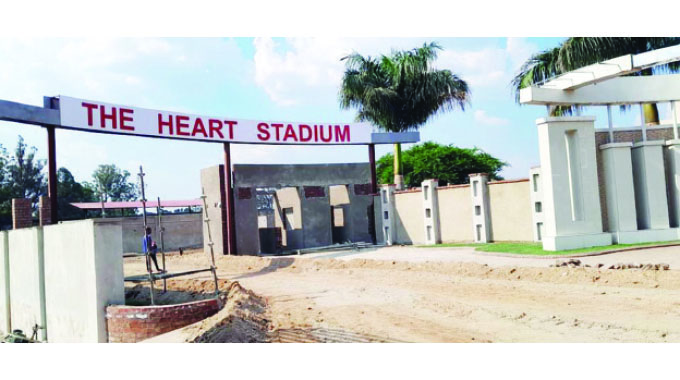
FOOTBALL stakeholders will tomorrow gather at Yadah Hotel in the capital for the official opening of Heart Stadium.
The stadium will initially have a sitting capacity of 5 000 while plans are there to double it within the next year.
Crucially, the first phase of the Heart Stadium has been done in compliance with minimum requirements set by the Confederation of African Football, CAF.
This means when the official inspections and processes are done, the Heart Stadium might become the first venue to be approved by CAF for international matches.
The senior national team, the Warriors, had to play their home game of the 2026 Fifa World Cup against Nigeria away in Rwanda as the country does not have a CAF certified venue.
While the match ended in a 1-1 draw against the fancied Super Eagles, Zimbabwe and the Zimbabwe Football Association missed out on home advantage the Warriors needed for such a game.
The artificial turf at Huye Stadium was not friendly to either side and a number of our Warriors had their injuries compounded and are currently sidelined at their respective clubs.
These include captain and midfielder Marvelous Nakamba of English Premier League side Luton Town and striker Admiral Muskwe also of Luton but on loan at League One side, Exeter City.
Zifa missed out on the potential revenue expected from a home match against continental heavyweights Nigeria.
It is a game that would ordinarily attract a full house at venues like Rufaro in Harare and Barbourfields in Bulawayo all things being equal.
Apart from generating the much needed revenue for Zifa, a full house against Nigeria would have helped in motivating the Warriors on occasions chips were down.
The use of Rwanda as home for the Warriors is, no doubt, one of the lowest points in the history of football in the country.
This is why the government has committed to upgrading at least the National Sports Stadium to ensure that Zimbabwe will be back on home turf when 2026 World Cup qualifiers resume next year.
The National Sports Stadium need bucket seats and electronic turnstiles among other few things to be certified fit to host international games.
Premier Soccer League Champions Ngezi Platinum and Chibuku Super Cup winners Dynamos have earned tickets to represent Zimbabwe in the CAF Champions League and CAF Confederation Cup next year and would need venues.
The matches start in August next year and there is good time to have venues ready although inspection and approval has to be done much earlier for purposes of planning fixtures on the part of CAF.
For Dynamos their first choice is Rufaro although the National Sports Stadium has always been their more useful venue for the African safari for decades.
A $136,2 billion budget for 2024 allocated to the Ministry of Sport, Recreation, Arts and Culture will go towards sporting activities and rehabilitation of stadiums.
Speaking at the 2023 Soccer Star of the Year banquet, Deputy Minister of Sport, Recreation, Arts and Culture Emily Jesaya reaffirmed the Government’s position.
She said sport infrastructure development is one of her ministry’s key focus areas in 2024 and they will be working tirelessly to ensure that our facilities meet the FIFA standards.
Deputy Minister Jesaya called upon stadium owners and other stakeholders to come on board and ensure that the country develops internationally recognised sporting infrastructure.
This is the route taken by Prophet Walter Magaya despite having to self-fund the project whose beneficiaries, once CAF certified, might include national age group teams and the Mighty Warriors.
But such an initiative by Prophet Magaya is usually hampered by lack of funding given that it is aligned to an individual institution and there is little reward for such a sacrifice given that lesser clubs are not profitable on gate takings, except on occasions they host the heavyweights.
Their venues are also considered private and will hardly be used by others on commercial basis, which makes the otherwise good initiatives very unattractive.
There are no excuses however, where public funds are used to build facilities of national importance like stadiums.
Local authorities should be doing much more in renovating stadiums to meet the minimum CAF requirements given that the infrastructure forms part of councils’ revenue streams.
Zimbabwe should be having international stadiums in Mutare, Masvingo, Gweru, Kariba, Victoria Falls on top of Harare and Bulawayo for use by various national teams as part of sports tourism.
Harare City Council will benefit more from Rufaro and Gwanzura if they upgrade them to meet the requirements.
The current stadium crisis also highlights the need for local authorities to plough back revenues and keep up with international standards.
Harare has lost out on potential revenue from their two main stadiums, which have been unavailable for use for years now yet they would collect 20 percent of gross revenue each time Premier Soccer League clubs used the venues.
Spending money upgrading the stadiums is actually meaningful investment because activities at the venues will generate revenue for the local authority.
The same applies to the other major local authorities.


 Peter Tanyanyiwa
 Online Reporter