Online Reporter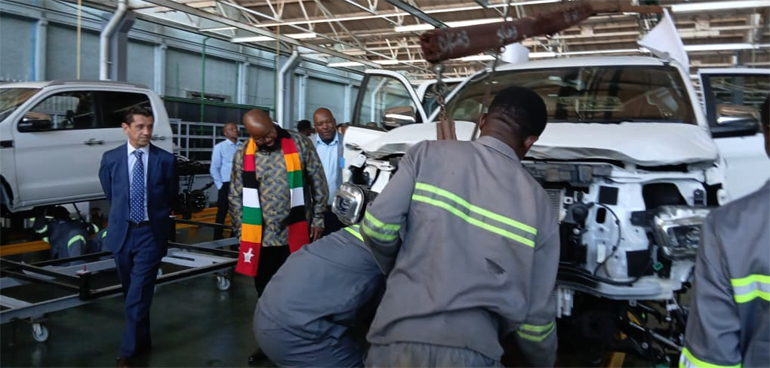
THE revival of Quest Motors in Mutare is more than just a corporate milestone; it is a symbol of resilience, industrial rebirth, and national progress.
At a time when Zimbabwe is striving to transform its economy under the Government’s National Development Strategy (NDS2) and Vision 2030, the resurgence of this local vehicle assembler is a powerful reminder that home-grown solutions can drive sustainable development.
The fact that Quest Motors has already assembled 50 vehicles, and is ambitiously targeting 1 500 units this year—an average of 200 vehicles per month—signals a new era of industrial confidence and capacity building in Manicaland and beyond.
This achievement deserves celebration because it demonstrates that Zimbabwean companies are, not only capable of reviving dormant industries, but also of aligning their operations with national priorities.
Vision 2030 envisions an upper middle-income economy, and industrialisation is a cornerstone of that vision.
By assembling vehicles locally, Quest Motors is reducing reliance on imports, saving foreign currency, and creating jobs for the people of Mutare.
Each vehicle that rolls off the assembly line is not just a product; it is a statement of national pride and a contribution to economic sovereignty.
The rebirth of Quest Motors also carries significant downstream benefits. Vehicle assembly is not an isolated activity; it stimulates demand for parts, logistics, maintenance services, and even training institutions that prepare skilled workers.
This ripple effect can energise Mutare’s economy, providing opportunities for small businesses and suppliers, while uplifting households through employment. In a city that has long grappled with deindustrialisation, the return of a major manufacturer is a beacon of hope and a catalyst for renewed confidence in local enterprise.
Yet, for this momentum to be sustained, deliberate support is required. Government departments, parastatals, and local authorities must take the lead in procuring vehicles from Quest Motors.
Public institutions are among the largest consumers of vehicles in Zimbabwe, and their procurement choices can make or break local industries.
By prioritising locally assembled vehicles, these entities will, not only be supporting a domestic company, but also reinforcing the national agenda of industrial growth.
Such procurement policies will ensure that Quest Motors achieves economies of scale, stabilises production, and expands its workforce. More importantly, they will demonstrate a tangible commitment to Vision 2030, turning policy into practice.
Supporting Quest Motors is not merely about patriotism; it is about pragmatism. Locally assembled vehicles can be tailored to Zimbabwe’s terrain and conditions, ensuring durability and suitability.
Furthermore, the cost of maintenance and availability of spare parts is likely to be more manageable when the vehicles are produced within the country. This reduces downtime for Government fleets and enhances efficiency in service delivery.
In the long run, the benefits of supporting Quest Motors extend beyond the company itself—they strengthen the entire ecosystem of Zimbabwean industry.
The rebirth of Quest Motors also sends a message to other potential investors: Zimbabwe is open for business, and local industries can thrive with the right mix of vision, resilience, and support.
It is a call to action for entrepreneurs to reimagine dormant factories, for financiers to back local ventures, and for policymakers to create an enabling environment where industrial revival is not the exception but the norm.
Mutare, once a hub of manufacturing, can reclaim its place as a centre of industrial activity, and Quest Motors can be the flagship of that renaissance.
Celebrating this achievement is therefore not optional; it is essential.
It is a moment to recognise the workers who have brought the factory back to life, the management that has dared to dream big, and the community that stands to benefit from renewed industrial activity.
It is also a moment to remind ourselves that Vision 2030 is not a distant aspiration, but a living project, unfolding in places like Mutare where factories are humming again and jobs are being created.
As Zimbabwe charts its path towards an upper middle-income economy, the story of Quest Motors must be amplified.
It is proof that industrial revival is possible, that local companies can rise to the challenge, and that national development strategies can translate into tangible outcomes.
The vehicles assembled in Mutare are more than machines; they are symbols of progress, resilience, and hope.
To sustain this momentum, Government departments, parastatals, and local authorities must step forward and support Quest Motors through procurement. In doing so, they will, not only strengthen one company, but also ignite a chain reaction of economic activity that uplifts communities, creates jobs, and drives Zimbabwe closer to its Vision 2030 aspirations.