admin
admin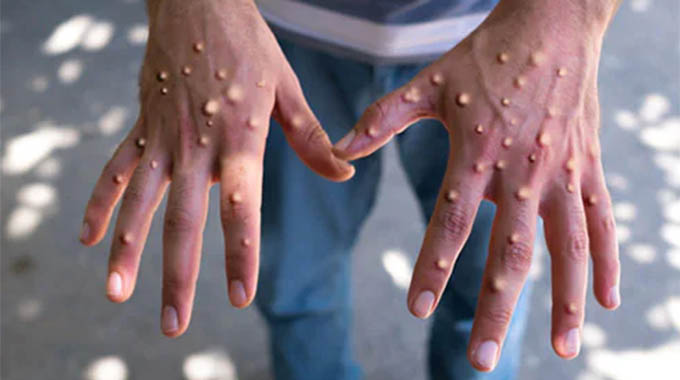
THE current outbreak of Clade Ib Mpox, with a focus in Central African rainforests but now with cases in a modest number of countries in and outside Africa, was declared a public health emergency of international concern by the World Health Organisation in the middle of this month, so it cannot be ignored.
Zimbabwe, like other responsible members of the WHO, has gone on alert, which means that the public and private health sector is aware of the disease and its fairly obvious symptoms that seem easy to diagnose, so there are unlikely to be hidden cases, at least in this country. So far no cases have been reported in Zimbabwe.
The disease is not the sort of emergency that was seen with Covid-19, since it is far harder to transmit. It appears that there has to be actual physical contact with an infected person or the scabs that form.
A previous outbreak of the West Africa Clade IIb in 2022 and 2023, which was also declared a public health emergency before being beaten back and the designation rescinded, was largely transmitted through sexual contact for example, a sign of the high level of contact that is required.
But still, the sort of lessons learned from the far worse Covid-19 pandemic, especially prompt diagnosis, a reasonable degree of precautions and the need for very good nursing as the most effective treatment, since it is a viral disease, come in useful.
Prompt diagnosis appears to be the first line of defence, so the patient can be treated and care taken to avoid contact with the infectious person without the necessary precautions. Those who have been in very close contact with an infected person can then be checked out, and if they were infected can be treated and the spread will be stopped.
Zimbabwe has taken this route by alerting the health sector and the sort of treatment required is readily available thanks to our successful efforts over Covid-19. All those specialised wards and the like are still there. So we do not have to panic but we do need, as the Ministry of Health and Child Care has made clear, to be on alert.
Fortunately, and unlike Covid, the symptoms of an infected person are fairly obvious so it is far more easy to avoid.
There is no specific Mpox vaccine, but all indications are that the smallpox vaccines are fairly effective, as the Mpox virus belongs in the same group as the now extinct smallpox virus. The dramatic success in eliminating smallpox appears to be one reason for Mpox to come to the fore in recent years. The huge smallpox vaccination drives kept the far milder Mpox at bay, but these days only older people have ever been vaccinated against smallpox, and even then that was a few decades ago.
Once again we have the need for African research into vaccines to be initiated and for vaccine manufacture to be done in Africa. Sometimes the major outside research institutes are not that fussed about African health problems, so we need to create and build the capacity ourselves.
Like several other viruses, there is a natural animal reservoir of infection, in the case of Mpox this is strongly suspected to be small rodents in African rainforests. Its original and misleading name of monkeypox arose from the first diagnosis being made in laboratory monkeys, but humans and other primates were infected by contact with the mice and squirrels before they infected each other.
But a routine WHO advice is for people to avoid eating bushmeat, and to take steps not to attract vermin, usually a reasonable precaution for almost anyone wanting a more healthy life.
While the Democratic Republic of Congo has been identified as the worse affected country, with neighbouring Burundi now coping with an outbreak, there are problems in getting data and statistics, expected since it is the eastern DRC where this outbreak is most severe, and the ongoing security emergency in that part of the country makes both data gathering and health care difficult.
That is another reason for the ongoing SADC, AU and UN peace process in DRC to be stepped up. The people forced to live with the emergency do not need the extra burden of erratic health care.
The just ended 44th SADC Summit in Harare did include the Mpox outbreak in its discussions, sensible considering that part of the region is affected and so we all have to deal with the potential risk. All states undertook to follow the best medical advice, be on the alert, and make sure the minimum level of health services were available.
The most severe cases largely occur among those whose immune systems are compromised, that is the HIV positive people who have not had that virus suppressed. Here Zimbabwe’s spectacular success in reaching and exceeding the 95-95-95 targets for those living with HIV will come in very useful if Mpox does reach this country.
Zimbabwe has been building up its public health systems under the Second Republic and perhaps most importantly the Ministry of Health and Child Care has become exceptionally active in keeping people fully informed along with solid advice on precautions.
This is how we beat back Covid-19; this is how we beat back the cholera outbreak; this is why the HIV infection rates are dropping so sharply. And those illnesses were all far worse than Mpox. Even with the “ordinary” influenza of the last winter, the Ministry did the tests, found out what was the virus, and told us how to minimise the risks.
Zimbabwe is close to the WHO, even hosting its regional headquarters, and so gets the full backing that is so useful, and follows the required advice. Mpox is not something we need to panic about, but it is reassuring that the Health Ministry is following the best advice, is on alert and has the capacity to cope when the odd case does turn up, as is quite likely. Mpox is something we need to take seriously, and we all need to be on alert, but we can now do this fairly routinely.



 Online Reporter