Online Reporter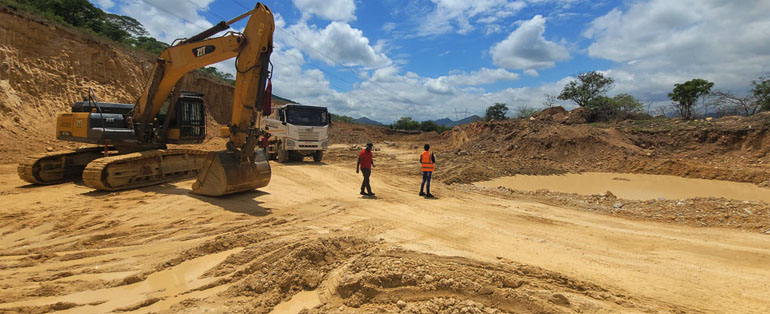
ZIMBABWE’S ongoing infrastructure and industrial development initiatives have attracted significant attention as the country pursues its Vision 2030 objective of attaining upper middle income economy status.
Several major projects in Manicaland Province, including the Christmas Pass Bypass Road, Mega Market trailer assembly plant, student accommodation developments at Manicaland State University of Applied Sciences (MSUAS), Mutare Dry Port and expansion of Forbes Border Post, illustrate efforts aimed at improving connectivity, industrialisation, trade facilitation and human capital development.
The Christmas Pass Bypass Road is expected to play an important role in enhancing transport efficiency along one of the country’s busiest routes. By reducing congestion and improving the movement of goods and people, the project has the potential to lower transport costs, improve road safety and strengthen Zimbabwe’s position as a trade corridor linking the country to regional markets. Efficient transport networks are often a critical catalyst for economic growth because they facilitate commerce and attract investment.
Industrialisation remains a central pillar of economic transformation. The establishment of Mega Market trailer assembly plant represents an effort to expand local manufacturing capacity and create employment opportunities.
Increased local production can reduce dependence on imports while fostering skills development and downstream economic activities. Manufacturing industries typically generate multiplier effects, benefiting suppliers, service providers and small businesses operating within their value chains.
Another significant development is the construction of student dormitories at Manicaland State University of Applied Sciences.
Investments in higher education infrastructure contribute to the development of skilled human capital, which is essential for innovation, productivity and long-term economic competitiveness. Improved accommodation facilities can enhance the learning environment and support increased enrolment, particularly for students from different parts of the country and the region.
Trade facilitation projects are equally important. The development of Mutare Dry Port has the potential to transform logistics and cargo handling processes. By serving as an inland gateway for imports and exports, the facility can reduce congestion at seaports and border crossings while improving the efficiency of cargo movement. Faster clearance times and lower logistical costs are often attractive to investors seeking reliable trade and distribution networks.
Similarly, the expansion of Forbes Border Post is expected to strengthen Zimbabwe’s regional trade competitiveness. As a key entry and exit point linking Zimbabwe to Mozambique and the Port of Beira, improvements to border infrastructure can facilitate smoother cross-border movement of goods, reduce delays and support greater regional economic integration. Efficient border management is increasingly recognised as a prerequisite for attracting investment and promoting export growth.
Beyond these flagship projects, broader investments in roads, education facilities, industrial infrastructure and logistics networks demonstrate the importance of coordinated development planning.
Such projects can collectively contribute to job creation during both construction and operational phases. They may also stimulate business opportunities for local contractors, suppliers and entrepreneurs.
The success of these initiatives, however, will depend on effective implementation, maintenance, sustainable financing and the ability to attract complementary private-sector investment.
Economic benefits tend to be maximised when infrastructure projects are integrated into wider strategies for industrial development, trade promotion and skills enhancement. If successfully completed and efficiently utilised, projects such as the Christmas Pass Bypass Road, Mega Market trailer assembly plant, MSUAS student accommodation complex, Mutare Dry Port and Forbes Border Post expansion can contribute meaningfully to economic growth, improved competitiveness and regional connectivity.
Their combined impact has the potential to support Zimbabwe’s aspirations for economic transformation, enhanced productivity and improved living standards as the country works towards the goals outlined in Vision 2030.