admin
admin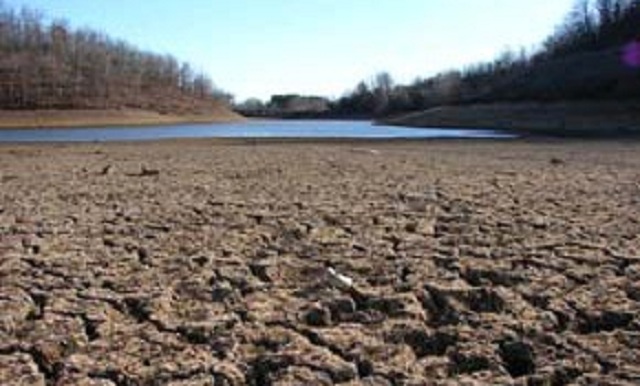
LAST week, President Robert Mugabe declared a state of disaster following the drought that has not only ravaged Zimbabwe but the whole southern Africa region due to the effects of El Nino. The Minister of Local Government, Public Works and National Housing, Cde Saviour Kasukuwere, said the declaration was made given the magnitude of the drought and its impact on the population.
More than 90 percent of the country has received less than 75 percent of the rains that they would have received by this time of the year and the President’s declaration sought to ensure that urgent priority is given to mobilisation of resources to ameliorate suffering on the part of the affected people.
The declaration also came at a time when the overall food insecure population had risen from 1.5 million to 2.44 million which is 26 percent of the country’s population. The situation is critical in Masvingo, Matabeleland South, Matabeleland North and north of the Midlands where less than 50 percent of normal rainfall has been received so far.
Following the declaration, the Government put together a special Cabinet committee supported by technical structures of Government, the private sector, faith-based organisations and development partners cascading to community levels to mobilise resources to mitigate the situation.
On Tuesday, Vice President Emmerson Mnangagwa, who chairs the committee, told journalists, senior Government officials and captains of industry in Harare that the Government requires more than $1,5 billion to feed at least three million people up to the next season as he appealed for food assistance. He said his committee’s mandate was to put in place a co-ordinated response and early recovery plan.
“The response plan is made up of emergency programmes to address food importation, vulnerable food distribution, emergency water supply, micro-nutrient feeding of the under five, emergency irrigation rehabilitation and development, school feeding, livestock and wildlife support all requiring a total of $1,572,009,953,” said VP Mnangagwa.
“I’m, therefore, appealing to the private sector, religious and civil organisations and ordinary citizens, inclusive of those in the diaspora, to rally with Government to support the emergency relief programmes in line with policy which requires that every citizen has a responsibility to avert and/or limit the effects of a national disaster.”
We commend the Government for the timely response to the situation and hope that the donor community, particularly international organisations such as the Food and Agriculture Organisation and the World Food Programme, will respond to Zimbabwe’s plea for help. This is because the situation in the country is dire. The rainfall season to date is below normal for 95 percent of the country and this has had a devastating impact on food security, water supplies and livestock pastures. The maize crop condition has been adversely affected with as much as 75 percent write off in Masvingo and 65 percent write off in Matabeleland South provinces.
At least 30 percent of the rural population, which is about three million, will be food insecure and require food assistance. The national picture of food insecurity in order of severity is as follows: Matabeleland North 43 percent, Midlands 33 percent, Masvingo 32 percent, Mashonaland West 30 percent, Matabeleland South 28 percent, Manicaland 27 percent, Mashonaland Central 25 percent and Mashonaland East 22 percent.
Dam levels are decreasing due to the poor rainfall and the national average is currently 51,1 percent. All the catchment areas are below expected levels for this time of the year except for Manyame and Mazowe. Boreholes are drying up particularly in the southern provinces and 31 percent are non-functional.
Water for domestic use and livestock watering is in critical shortage in some parts of the country. An alarm has also been sounded over the impact of the drought on various wildlife species in the national parks.
While grazing is expected to improve in areas receiving rains, livestock conditions are still poor and prices have plummeted to unsustainable levels. Cumulative livestock deaths as a result of the drought are currently at 16,681 with Masvingo province being the highest at 6,566. We therefore appeal to well wishers to provide much needed food aid to vulnerable groups.
Zimbabwe and other Sadc states need urgent assistance in feeding their populations and mitigating the effects of drought. We certainly hope their pleas will not fall on deaf ears.


 Online Reporter