Online Reporter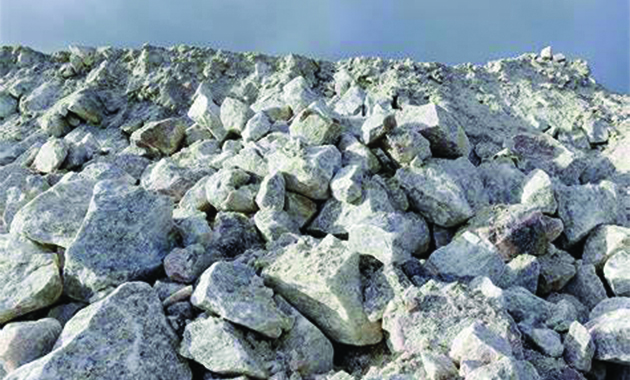
WHILE the policy to have mining companies refine the minerals they dig up to either the pure metal or the pure salt in the case of lithium and any other highly reactive metals is being intensified, new additions to the policy see more of Zimbabwean minerals being turned into the final manufactured products before sale and export.
This extension of policy also wants to see Zimbabwean industry, especially the export industries, using Zimbabwean raw materials.
This is the basis for any heavy industrial base, rather than the import substitution of local consumer goods that has led the modest industrialisation already there.
Once the right products at a fair, but competitive price and of good quality can be made almost entirely of Zimbabwean raw materials, then tens of thousands new factory jobs appear, since the limiting factor is Zimbabwe’s share of a global market, not what the local retail sector can absorb.
These new export products do not have to be 100 percent Zimbabwean raw materials, but something well over 90 percent is probably required.
A good example will be lithium-ion batteries. The major ingredient, the lithium salts, come from the miners in Zimbabwe and this is where we climb to the 90 percent.
Of the modest amounts of other inputs, chrome, nickel and even vanadium are mined locally. The only missing ingredients will be cobalt and perhaps some copper.
Fortunately, we sit close to the major global cobalt and copper producers in Zambia and the Katanga province of the Democratic Republic of Congo, so we will be a market for our neighbours and can shift the ingots south at very low transport costs.
The Government is not expecting the miners and other investors to just climb in unaided. The wide-ranging policy approved by Cabinet this week has a lot of practical incentives and support both to make the first step of processing to fully refined minerals as easy as possible, and then to encourage others to move to the second stage of building industrial plants to use these minerals.
The support includes special economic zones and state-of-the-art analytical laboratories that can certify that container loads of Zimbabwean lithium salts and ingots of metals and any other refined mineral meet the standards set in global mineral exchanges, where 99 percent plus is normal.
That will help cut the costs for the miners and the downstream industries.
Miners will be encouraged to share refineries, again to control costs, while maintaining quality, removing one the dangers of just expecting miners to figure out unaided how to meet their refining costs.
All this, with the analytical laboratories working, has the additional benefit to Zimbabwe of making it impossible to export refined products that contain other, more expensive, minerals than what is stated on the container.
These minerals are certainly a bonus for the miners and for Zimbabwe, so should be refined and sold separately.
The temporary reprieve for lithium miners to export some ore is based on rapid progress to build the processing plants, individually or shared, and in the meantime to end any dubious practices.
A system of tracking and checking is also being put in place to make sure that such cheating simply cannot occur.
While we need to build up the downstream industries, when Zimbabwe is in the top 10 or so producers for a particular mineral there are practical limits over how much can be used in even a huge leap in industrialisation, and so we will always be selling some processed output as a raw material for someone else, but we can make sure that these exports of minerals are refined.
A lot of support for both present needs and the next steps of industrialisation comes from mobilising universities to step in, effectively giving the mining companies and industrialists access to practical research as well as building up the industrial plant to start making products.
One good example of what can be done is the Manhize steelworks. When it started operations recently it was producing steel billets, the basic industrial raw material, plus a modest range of intermediate products such as construction reinforcing.
There is a carefully mapped expansion programme that sees a lot more intermediate products, crucially rolled steel sheet, and a growing range of other steels and stainless steels since the basic additives are all mined in Zimbabwe.
The steelmaker sees Zimbabwean industry as its biggest market by supplying the heavy industrial material for a large range of downstream manufacturing industries.
That is what is needed in all minerals we mine, so we get the factory jobs and value in addition to the mining. Of course we must have a reputation for quality and integrity, plus competitive pricing in global markets and to be making products everyone wants to buy.
The Government’s new policy guidelines ensure this route.