dyton mupawaenda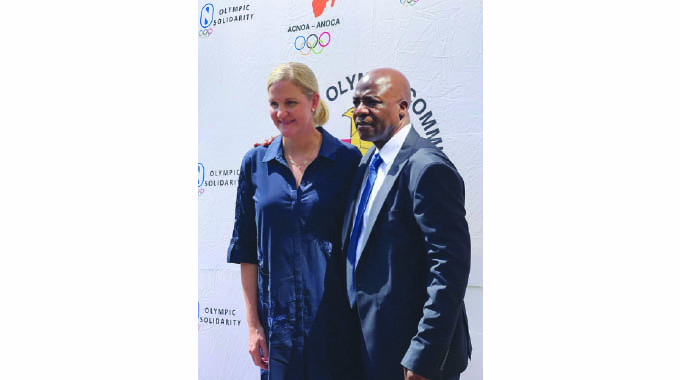
SO, the long wait and the anxious moments are over with the election of the new Zimbabwe Olympic Committee (ZOC) board led by president Thabani Gonye who was re-elected after a close battle with Ringisai Mapondera.
This year’s ZOC elective assembly, was this time was a special occasion in that it was graced by incoming International Olympic Committee (IOC) president Kirsty Coventry.
It is not every day that a national Olympic movement gets to have the global sport’s boss in the house and while we congratulate the men and women who were voted into office, we urge them to take Coventry’s presence at their indaba as a huge inspiration from which they can build ZOC.
As the dust settles on the elections and the winners and losers embrace, we believe that Gonye and his board actually have their work cut out to ensure they all put shoulders to the wheel and turnaround ZOC.
Their election into office comes at a time when Zimbabwe must not waste any further time in shifting focus to and preparing for the next Olympic games scheduled for Los Angeles in the United States in 2028.
Gonye would have to up his game as his first term of office was not the best for ZOC, as this organisation has the pedigree to do better and even produce another Olympic medallist post Coventry.
In their individual and collective capacities, the new ZOC board have the potential to turn on the corner and make Zimbabwe proud again.
When the Summer Games burst into life in Los Angeles, it will be exactly 20 years since Coventry’s last four-medal haul in Beijing, China, put both Zimbabwe and Africa on the global sporting map.
It is against this background that ZOC now need to focus on a holistic preparation programme for our elite athletes with a blend of meticulous routines, mental fortitude, and unique personal strategies in all disciplines, as we shift attention from Paris 2024 to the 2028 Olympics.
Training for the Olympics is a holistic and highly disciplined endeavour involving meticulous planning, state-of-the-art techniques and unwavering dedication and support.
And this must be ZOC’s focus from now on as the time for politicking should be put well behind everyone’s minds.
Most of our universities are now producing polished sports scientists, but these have not found their way into mainstream sport.
ZOC must now tap into this important resource and encourage all our national federations, commonly referred to as sports associations, to make use of these people.
There is a lot of reference made to the Long-Term Athlete Development Programme (LTADP), but regrettably, this has just been talk, only so far.
As a country, we now have to walk the talk and operationalise this important concept while also making use of Sports Science and Digital Transformation, as enhanced by the use of Artificial Intelligence (AI) in our Sport Development pathway to anchor our long-term high performance programmes
We also need to connect our fans to the athletes (players) and ZOC must lead the way in that quest for visibility and the vital connection.
The sporting associations must also come to the party and come in as early as now. They must not view the Olympics as a ZOC and Government venture but as everyone’s responsibility.
As nation we must all own these Games and embrace them.
As Gonye rightly alluded to, ZOC also need to prioritise athletes to be at the heart of the Olympic family and sport movement through increased support for athletes’ development based on clear strategies.
This is all meant to validate that we CAN and we HAVE sports talent in Zimbabwe.
ZOC also need to focus on a number of areas between now and the LA 2028 Olympics, key among them enhancing gender equality and harnessing innovation to improve our sport as part of the commitment made for the Games.
With the approval of some additional sport codes including squash, baseball, softball and cricket at Los Angeles, it opens up more opportunities for local national federations and already accredited Olympic sport codes to start preparing athletes and their teams in readiness for the global sports showcase.
Four years may appear a long way from now but in real sporting terms, it is actually a very short period with the next two years actually being key in identifying and supporting all the potential elite athletes.
Collectively, the ZOC leadership must enhance gender equality by promoting women’s participation and inclusion in sports, building on the commitment made to create a powerful platform for female athletes in Los Angeles.
For the first time, all team sports will have at least the same number of women’s teams as men’s teams.
This is a key consideration that Zimbabwe should ride upon when deciding on athlete quota and training for high performance as we look towards the 2028 Games.
To achieve this, would obviously need the whole sports ecosystem, which includes associations, the Olympic committee and Government, to work towards securing or creating commercial partnerships that bring sustainability in terms of funding athletes’ training, their resourcing, infrastructure upgrades and talent development monitoring systems.
Collaboration with model NOCs like South Africa and others would be critical for benchmarking progress.
Sports associations must actively be involved in running ZOC programmes and the ZOC constitution must be made clear on definition of membership to ensure that sport codes that are run like a family tuckshop are not accorded the same status in the movement as such big disciplines like athletics, football, rugby, cricket and netball, which are functional in all the country’s 10 provinces.
The new ZOC have the pedigree to make the new IOC president, Coventry and the country at large proud come 2028 and the time to start building on that Olympic dream is now.



 Online Reporter