Online Reporter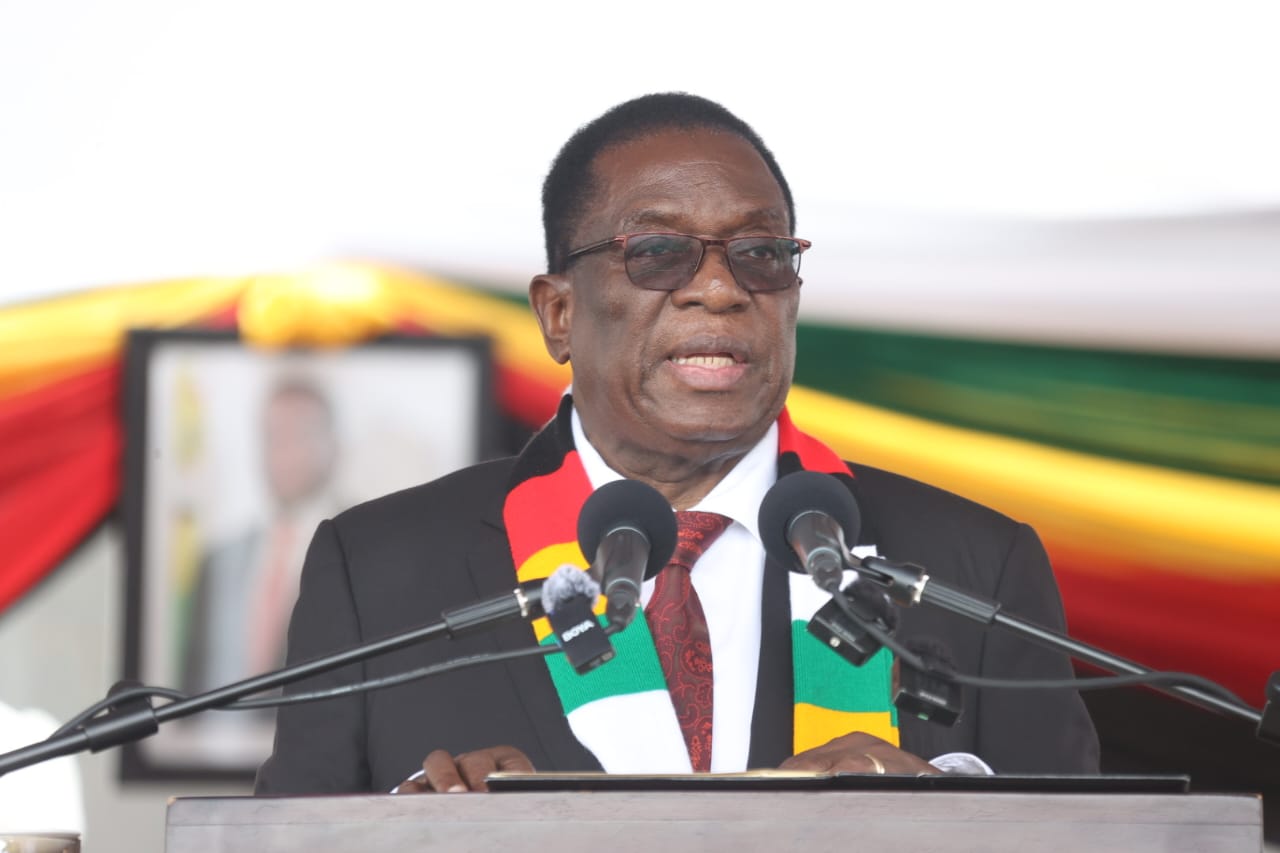
AS Zimbabwe commemorated National Youth Day yesterday, the words of President Mnangagwa at the burial of Brigadier-General (Retired) Samuel Mpabanga on Wednesday resonate with profound clarity and purpose.
The President drew a powerful parallel between the generation that waged the armed liberation struggle and the one that must now fight a different kind of war — a war for economic independence, driven not by guns, but by science, technology and innovation.
The late Brig-Gen (Retd) Mpabanga, like many of his comrades, was forged in the crucible of colonialism.
He was part of a youth cohort for whom schools were “political hotbeds” and “sources of consciousness”.
They looked at the injustice around them — the Land Apportionment Act, the Native Land Husbandry Act, among many other injustices by the racist regime — and made the crucial decision to take up arms.
Their revolution was about reclaiming the land and the sovereignty of a people.
Today, we honour their sacrifice.
But, as the President rightly asserted, we cannot live in the past.
We must be inspired by it to build the future. The torch has been passed.
The new revolution is upon us, and it is one that will be won or lost in our classrooms, our laboratories and our workshops. For too long, our education system operated under colonial templates that produced job seekers rather than job creators.
The introduction of the Heritage-Based Education 5.0 model is the ideological shift that aligns perfectly with the Second Republic’s vision.
This model moves beyond the old dichotomy of teaching and research; it adds innovation, industrialisation and modernisation to the mandate of our institutions.
President Mnangagwa challenged educational institutions to “rise to the occasion and produce young people who can effectively drive the development, prosperity and growth of our nation”.
This is the core mandate of Education 5.0.
It demands that a student of agriculture does not just learn about soil chemistry but develops drought-resistant seed varieties.
It requires that an engineering student designs and fabricates machinery to reduce our import bill.
It insists that a young information and communication technology (ICT) enthusiast develops the software and platforms that will digitise our economy.
This is problem-solving at its most essential level.
Our youth must look at the challenges facing Zimbabwe — energy deficits, water shortage, infrastructure deficit, food sovereignty issues — not as insurmountable obstacles, but as opportunities to innovate.
They must be the ones to perfect our solar grid systems, to revolutionise our irrigation schemes and to build the data ecosystems that power a modern state.
This is how we honour the legacy of our heroes: by building the prosperous, modern and industrialised nation they fought to make possible.
However, a nation cannot industrialise on theory alone.
The President’s push for vocational training centres is a critical piece of the puzzle.
As we push the boundaries of science and innovation at our universities, we must also fortify the backbone of our industrial revolution: the skilled artisan, the technician and the practical engineer.
Vocational training colleges are not an alternative path; they are an equal and vital partner in this national project.
The “knowledge-driven economy” President Mnangagwa speaks of requires not only PhDs in laboratories but also the welders who will build our steel structures, the electricians who will wire our solar farms and the mechanics who will maintain our agricultural machinery.
These institutions are the engines that will empower our youth in every district, ensuring that the mantra of “leaving no one and no place behind” becomes a tangible reality.
These colleges must be centres of excellence where the youth acquire tangible, marketable skills.
They are the link between the classroom and the factory floor, between innovation and production.
By equipping our young people with these skills, we are directly feeding into the national vision of modernisation.
We are ensuring that Zimbabweans are the ones building Zimbabwe.
The President also reminded us that we Zimbabweans are a sovereign people, with the right to chart our own destiny.
That destiny is articulated in our quest to achieve an empowered upper middle-income society.
The youth are not just the leaders of tomorrow; they are the drivers of today.
As we commemorate National Youth Day, let us move beyond rhetoric.
Today’s youth must face the challenges of a globalised, technologically advanced world. Their courage must be in their creativity. Their weapon must be their intellect.
The Second Republic is scaling up policies to support them.
From devolution funds that develop their communities to the establishment of innovation hubs, the infrastructure for the new revolution is being put in place.
It is now up to the youth to occupy these spaces.
The revolution has changed.
The enemy is now poverty, underdevelopment and technological dependence.
The new heroes will be the young coder who builds a billion-dollar app, the young agronomist who doubles national yields and the young artisan who manufactures world-class goods.
Let us ensure our education system, from the vocational college to university, produces them in abundance.
That is the legacy our heroes deserve.
That is the Zimbabwe we all want.