Online Reporter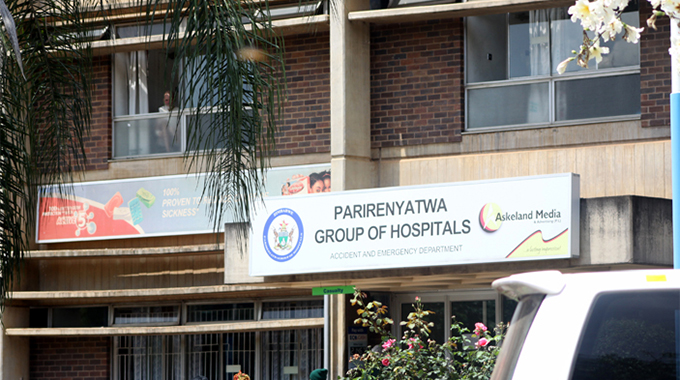
ONCE revered as a cornerstone of healthcare excellence in Southern Africa, Zimbabwe’s medical system has faced profound challenges over decades of economic hardship.
Now, the extensive refurbishment of Parirenyatwa Group of Hospitals — the country’s largest referral facility — represents far more than a mere infrastructure upgrade; it symbolises a national commitment to restoring dignity, hope and quality healthcare for all Zimbabweans. This ambitious renovation comes at a critical juncture in the nation’s history.
The significance of the phased programme extends beyond the physical structures — it embodies Zimbabwe’s determination to reclaim its position as a regional leader in healthcare delivery while offering a blueprint for sustainable medical infrastructure in resource-constrained settings.
Parirenyatwa Group of Hospitals has long stood as a monument to Zimbabwe’s healthcare aspirations. Named after the first black Zimbabwean medical doctor, Tichafa Samuel Parirenyatwa, the institution once attracted patients from across the region seeking quality medical care unavailable elsewhere.
Yet years of underinvestment, economic challenges and demographic pressures reduced the facility to a shadow of its former self — grappling with deteriorating infrastructure, unreliable utilities and outdated equipment that compromised patient care and staff morale. The current refurbishment project addresses these systemic challenges head-on through substantial infrastructural and technological investments.
The installation of a 100-kilowatt solar power unit with advanced battery storage and eight solar-powered boreholes represents a transformative approach to healthcare sustainability — ensuring uninterrupted power and water security regardless of grid reliability.
These improvements acknowledge that world-class healthcare cannot be delivered without foundational infrastructure that supports consistent service delivery.
The refurbishment extends far beyond superficial improvements to address core healthcare delivery needs.
The establishment of a 21-bed renal dialysis unit and a dedicated paediatric operating theatre will significantly enhance specialised care capabilities, reducing the need for external referrals and keeping critical healthcare within reach of ordinary Zimbabweans.
For a country that has seen many of its medical professionals seek opportunities abroad due to challenging working conditions, these upgrades signal a commitment to creating an environment where clinical excellence can thrive. Equally important are the improvements to educational facilities.
The complete rehabilitation of the Adlum Hostel for student nurses — with new electrical systems, plumbing, tiling and finishes — addresses the crucial link between infrastructure and human resource development.
This investment in future healthcare workers demonstrates an understanding that Zimbabwe’s healthcare revival depends not only on equipment and buildings but also on attracting, training and retaining talented medical professionals.
The Parirenyatwa refurbishment does not exist in isolation but forms part of a coherent strategy to rebuild Zimbabwe’s healthcare system comprehensively. The Government’s collaboration with NMSI on the US$200 million “Built to Care” programme has already delivered tangible results across the country.
This initiative has seen the construction of multiple health centres — including the Stoneridge Health Centre in Harare, the Cowdray Park Health Centre in Bulawayo, the Mataga Health Centre and the Runyararo Health Centre. These investments share a common philosophy: creating therapeutic environments with low energy footprints that require minimal maintenance while allowing for future expansion. The facilities are designed to be fully self-supporting in off-grid locations through solar panels and boreholes — a crucial consideration for ensuring healthcare access in remote areas, in line with President Mnangagwa’s philosophy of “leaving no one and no place behind”. This strategic alignment between different projects demonstrates a thoughtful approach to health system strengthening that addresses both urban referral centres and rural access points.
The concept of “world-class healthcare” often conjures images of expensive, technology-dominated medical centres in wealthy nations. However, Zimbabwe’s approach to healthcare renewal offers an alternative vision — one that balances advanced medical capabilities with appropriate, sustainable and accessible care. Rather than simply importing foreign models, the country is developing a contextually relevant system that addresses its unique challenges and opportunities.
In particular, the installation of new diagnostic equipment at Parirenyatwa, including CT scanners and digital X-ray machines, reflects this commitment to technological modernization, while adopting a phased approach that minimises disruption to hospital services. While Zimbabwe’s approach differs in scale and methodology, it places patients’ needs above other considerations.
Beyond the obvious health benefits, investments in medical infrastructure offer substantial economic returns.
A healthy population forms the foundation of economic productivity and development.
The World Health Organisation estimates that for every 10 percent increase in life expectancy at birth, economic growth increases by approximately 0,3-0,4 percent per year — a significant multiplier effect in a developing economy. Moreover, Zimbabwe’s approach to healthcare renewal demonstrates how strategic infrastructure investments can stimulate local economies through job creation and skills development.
The Parirenyatwa project has likely generated substantial employment opportunities during construction and will continue to support jobs through ongoing operations and maintenance. The emphasis on using locally sourced materials and labour in parallel projects like the NMS Infrastructure health centres further enhances this local economic impact.
Despite the exciting progress, significant challenges remain on Zimbabwe’s path to healthcare renewal. The infrastructure investments must be matched by commitments to human resource development and retention, as well as ensuring equitable access across urban and rural divides. This highlights the need for continued investment in decentralised healthcare infrastructure that brings quality care closer to communities.
The integration of technology presents both challenge and opportunity.
While the installation of advanced diagnostic equipment at Parirenyatwa represents significant progress, maintaining and optimally utilising this technology requires ongoing technical support, training and resources.
Overall, the refurbishment of Parirenyatwa Group of Hospitals transcends political symbolism to represent something far more profound: a national commitment to healing, dignity and the fundamental right to quality healthcare.
Its significance should also be understood not merely in terms of physical infrastructure but as a catalyst for broader systemic renewal.
It creates a foundation upon which Zimbabwe can rebuild a healthcare system that blends international standards with local realities.
The true measure of success will include improved health outcomes, reduced medical referrals abroad and, most importantly, the restoration of trust between citizens and their healthcare system.
The journey to healthcare excellence continues, but with Parirenyatwa’s revival, Zimbabwe has taken a monumental step in the right direction.