admin
admin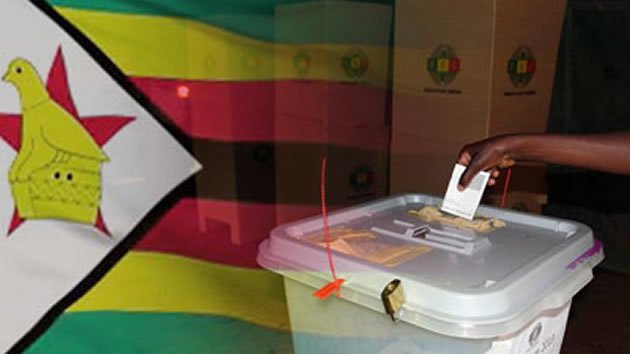
It’s been a hectic week for Manicaland Province as two crucial events unfold.
First, the Nomination Court sat on Wednesday to accept applications from candidates who qualify to contest for National Assembly and local authority seats in the upcoming harmonised elections.
At law, all prospective candidates must go through a sieve to determine their suitability to contest an election.
Nominations of parliamentary, party lists for Senate, women and youth quotas as well as those for provincial councils were received at the provincial court in Mutare.
Those for local authority candidates were received at the respective council chambers using new delimitation boundaries.
With that done, the ruling ZANU PF will tomorrow have its national campaign launch in Chipinge.
These two events mark the official start of the race for the August 23 harmonised elections.
Indeed, election season is upon us, and Manicaland is in election mode.
The nominations went on smoothly as aspiring candidates under political parties and those that are independent took heed of ZEC’s call to submit their nomination papers early so that they would get time to rectify any challenges such as missing or incorrect documentation.
As a result, most candidates lodged their nomination papers successfully.
It was also a marvel to see aspiring candidates across the political divide hugging, shaking hands, smiling and exchanging pleasantries.
Some even had lunch and drinks together.
Such communion must be commended.
There was no polarisation. It was all cordial from 10am till sunset.
That spirit of oneness should cascade to the grassroots.
Since all political parties have a good blend of experience and new blood, they should cultivate a culture of tolerance and co-existing.
We need politics that does not polarise the grassroots, antagonise communities, break bones and spill blood.
We hasten to emphasise that election to public office is neither a do or die affair.
It’s not about winning power at any cost or using any means possible.
It’s not about character assassination, cyber bulling, inciting one group against another, hate speech or indecent language.
It is a battle of ideas to win hearts and minds of the electorate. It is about selling a genuine vision, programmes and policies to better the lives of citizens.
Hence, elections must be conducted in a free, fair and peaceful manner.
There is no need for violence during the campaign period.
It exacerbates tension, fear, trauma, withdrawal and collective depression.
Violence creates resentment and a desire for revenge, thereby leading to community implosion.
Emotions may run high but we should not allow them to get the better of us.
We should remain guided and respect the sanctity of human life.
Those who may feel aggrieved must follow due processes in seeking redress.
Nobody’s ambition is worth spilling the blood for.
No politician is worth killing or dying for.
Politicians and their supporters should avoid extremism and violence.
Previous elections have been marred by political violence, but President Mnangagwa has called for free, fair and peaceful elections.
He has also implored police to play a pivotal role in ensuring a peaceful environment before, during and after elections.
The police should be firm, fair and not be seen to be siding with any party.
They should display professional conduct and mediate fairly without being attached to the apron strings of any party or politician.
Effective policing presents an important domestic guarantee for election security.
At the end of day, we want an acceptable outcome where the winners and losers join hands to build our country so that we bequeath to future generations a prosperous Zimbabwe.


 Online Reporter