Online Reporter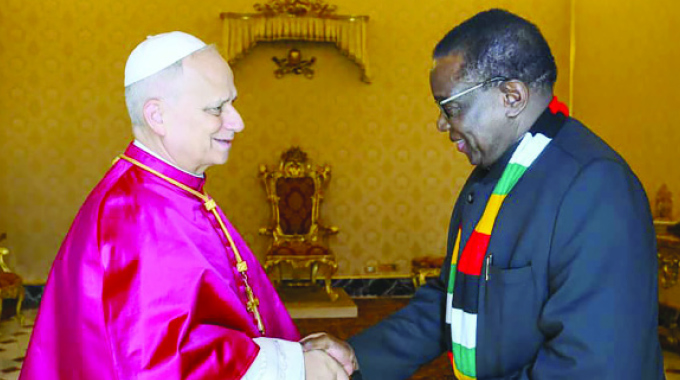
ZIMBABWE as a country has no official State-sponsored religion and no church has representation within Parliament or other State institutions.
But Zimbabwe guarantees freedom of religion to all citizens and residents and does not only allow all churches and religious institutions to operate, but positively welcomes the contribution so many have made to the country’s social development.
At times in the colonial era when so little came from the settler authorities for the majority, the churches stepped in and when we look at the founder leadership of the national movements in Zimbabwe almost all came through a church school and other church programmes.
Many of the earlier rural hospitals were set up by medical missionaries.
Even today, when the State has taken on so much more, the churches are still active in their social sphere as well as their religious teaching, with schools, hospitals, several universities and many other contributions to the development of Zimbabwe and they combine the practice of their teachings in the secular world.
The Catholic Church has always been the largest of these contributors over the decades and insists on the practical application of its Christian teachings in the everyday life of its communicants, that religion is not just a Sunday morning service, but something that must be lived 24/7 and applied to all areas of endeavour.
On other practical issues the Catholic Church runs one of the most effective diplomatic networks in the world.
While its nuncios and pro-nuncios and other diplomats have the function of connecting the local bishops and church institutions in each country to the headquarters of the Holy See in Rome, the fact that they are there and are backed means that they can also have dealings with the host governments and are able to offer information and advice.
For all these reasons, President Mnangagwa was delighted to accept the invitation for a personal audience with Pope Leo XIV over the weekend and substantive talks with the top Vatican officials who administer the Holy See and its diplomatic services.
The President is not a Catholic, although is a Christian, but the talks were centred on the social works done by the Catholic Church in Zimbabwe, and its general moral teaching, hence the very positive recognition of Zimbabwe’s move to ban the death penalty last year, converting a two-decade moratorium into the renunciation of this barbaric punishment.
The church obviously seeks to see its social teaching become the norm in secular societies.
Having just finished his one-year stint as the SADC Chairperson during the detailed efforts to put together with the East African Community a workable and practical programme to bring peace to the eastern Democratic Republic of Congo, the President was also able to brief the Pope on progress.
Since almost everyone involved in the troubles in the eastern DRC is at least a nominal adherent of the Catholic Church, and some are a lot more committed than that, including many who have suffered from the violence, the Catholic Church obviously backs the secular State moves to restore peace and will almost certainly need to use its own influence behind the scenes to help keep everyone on track and willing to implement what they have promised.
The audience also reflects the progress made by Zimbabwe under the Second Republic to build bridges diplomatically and be a friend of all and an enemy of none. The practical steps taken to make sure that diplomatic ties are not just talk was part of this process.
Modern Zimbabwean ambassadors are expected to be very active and practical in their work and to seek closer relationships with everyone, regardless of past disputes or ties.
Pope Leo XIV, as an American missionary, as a bishop in remote Peru and as head of the Holy See department that deals with bishops around the world, as well as a stint as the global head of his Augustinian order before he became Pope, showed a very strong desire for the Catholic Church to be involved with the poor and outcast and make sure that all are brought into the centre of church life.
It is clear that he is willing to use the full range of resources of the Catholic Church in his efforts to see a more just world, and that includes building on what the church has done in so many countries over the decades and the positive good it has done and is doing through example and its own diplomacy.
So inviting President Mnangagwa was part of that process of building up ties with Africa.
This in many respects is assessment that Zimbabwe’s President is a practical person who wants results and is willing to work to get those results.
The praise for the ending of the death penalty is, if nothing else, a recognition of a practical change for the better in Zimbabwean law, and a conversion of a set of ideals into something written into the stature book.