
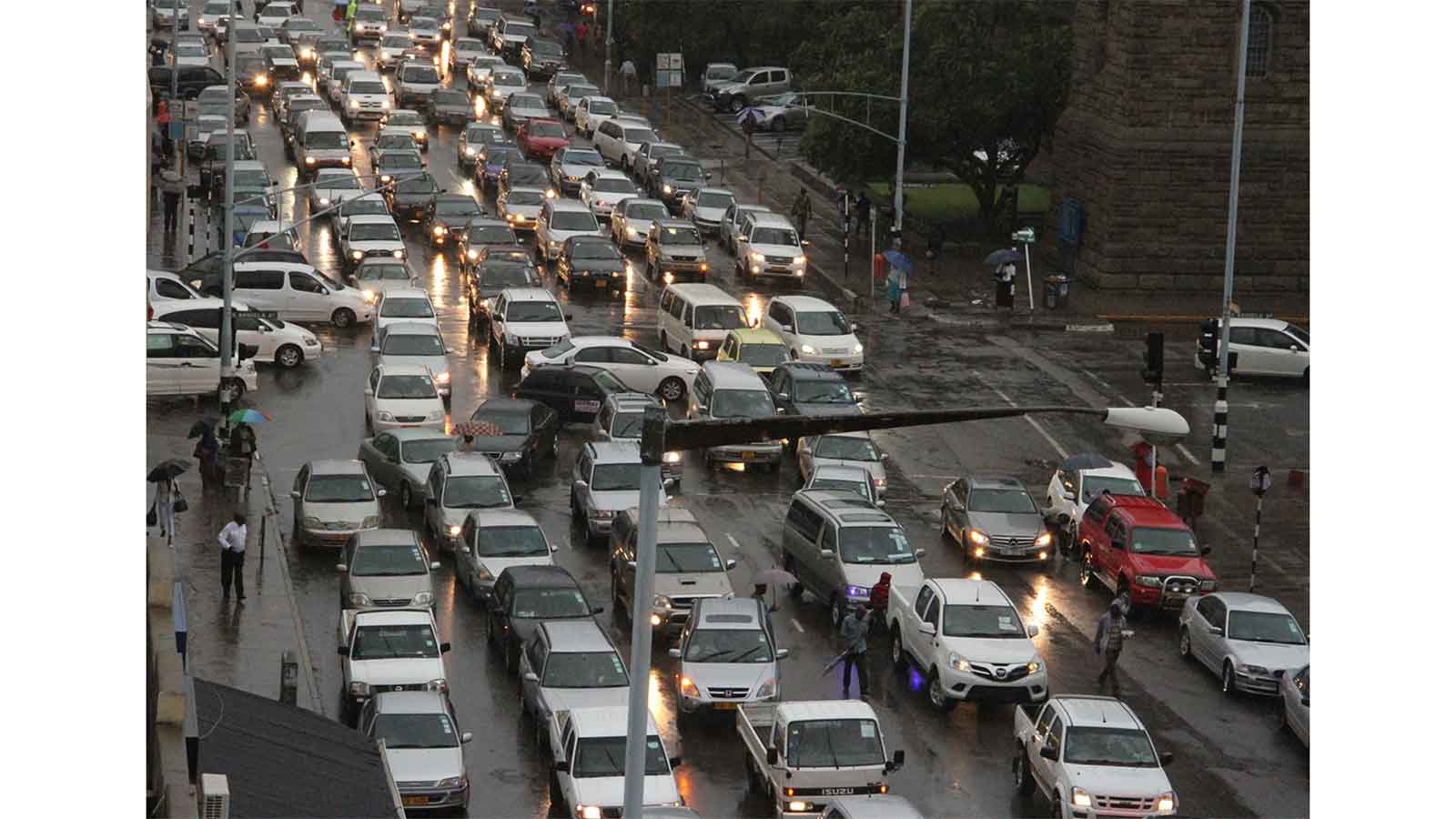
THE traffic mayhem particularly in Harare is nothing new.
For decades, residents of the capital have endured daily chaos on the roads — congestion, unsafe journeys, the proliferation of mishikashika (illegal taxis) and a reliance on inefficient informal transport operators.
Despite the Government’s best efforts to craft interventions, the congestion only worsens.
The root cause is plain: a burgeoning city population, coupled with an almost total dependence on roads for public transport.
Against this backdrop, the approved US$3 billion Harare Light Rail Project is not merely an ambitious urban beautification scheme — it is the only sustainable remedy for the madness on the roads.
The 2022 census placed Harare’s population at 2,43 million, or 16 percent of the national total, most of which is served by an informal transport system — almost exclusively road-based.
It is believed that low-income households spend more than 25 percent of their monthly income on transport, which, to all intents and purposes, is a structural tax.
The underlying problem is simple: Road capacity has an upper limit, but the city’s population does not.
No number of buses and no degree of enforcement can transcend the physical constraints of road space.
The recent procurement of 700 new buses by private operators, facilitated by the Government, is laudable.
However, even if the new buses were deployed, they would still be a drop in the ocean against Harare’s swelling commuter demand.
Buses still get stuck in the same traffic jams, wait at the same traffic lights and crawl through the same intersections.
The light rail project is, therefore, potentially transformational because it tackles the issue fundamentally.
Unlike buses that grind through mixed traffic, light rail runs on dedicated corridors, immune to road congestion.
Electric trains carry far more passengers than buses, with lower energy consumption, fewer emissions and greater reliability.
All these are essential upgrades that Harare desperately needs.
According to the City of Harare, the envisaged light rail project will be rolled out in five phases.
Phase one will connect the central business district (CBD) with Kuwadzana, while subsequent phases will extend to Chitungwiza, Mabvuku-Tafara, the Robert Gabriel Mugabe International Airport and the new city in Mt Hampden.
Once complete, the rail network will form the backbone of Harare’s future transport master plan, integrating seamlessly with an expanded urban bus network — buses feeding the “last mile” to rail stations, while rail moves large volumes over longer distances.
This is not without precedent.
Harare once operated an extensive commuter rail system linking the city centre with Ruwa, Tynwald, Dzivaresekwa, Norton and other surrounding communities during the 1980s and much of the 1990s.
However, years of underinvestment, ageing infrastructure and operational challenges led to its gradual collapse.
History teaches us that rail is a necessity for any large city to function.
The productivity benefits of an efficient mass rail system are far-reaching.
For the individual, a commute slashed from two or three hours to a few dozen minutes means more rest, more family time and more opportunity for learning and self-improvement.
For businesses, punctual employees and reliable goods delivery translate to lower operating costs and higher customer satisfaction.
For the city, the productivity losses, fuel waste and environmental damage caused by chronic congestion amount to an economic black hole of incalculable proportions.
So, the light rail is not merely a transport project; it is critical infrastructure for urban competitiveness.
The US$3 billion price tag may seem steep, but the cost of inaction is far higher.
Traffic congestion has become one of Harare’s biggest developmental obstacles.
To let it fester would mean mounting socio-economic costs — lost productivity, damaged public health and a crippled economy.
Investing in rail is a bet on the future — and a correction of past neglect.
Harare’s transport problem is clearly a structural challenge that demands a paradigm shift.
The granting of National Project Status to the US$3 billion light rail scheme signals that policymakers have finally recognised the irreplaceable role of rail.
But approval is only the first step.
Success hinges on securing funding, executing construction to high standards and ensuring sound operational management.
Harare once had rail, and then it lost it.
Now, the city has a chance to regain it — in a more modern, greener and far more efficient form.
This is a story about how a city chooses its future. Choosing rail means choosing a tomorrow where Harare is no longer stuck in traffic.