Online Reporter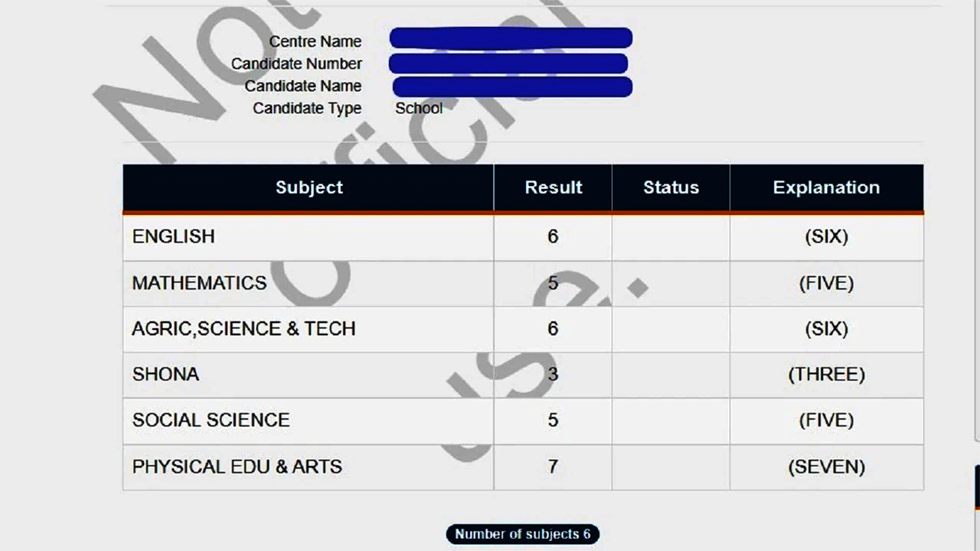
THE transition from primary to secondary school is one of the most defining stages in a child’s educational journey, and it often begins with the release of the Grade Seven results.
For many parents, this moment is filled with anticipation, pride, and sometimes anxiety. Yet, it is crucial to remember that results, whether outstanding or modest, are not the final verdict on a child’s potential.
They are simply a reflection of performance at a particular stage, influenced by many factors—academic readiness, emotional maturity, and even circumstances beyond the child’s control.
Parents must therefore approach these outcomes with acceptance, understanding, and a constructive mindset.
Dwelling on disappointment or comparing children to others only breeds discouragement. Instead, parents should focus on encouragement, helping their children see results as a stepping stone rather than a stumbling block.
Guidance at this stage is vital. Children need reassurance that their worth is not defined by grades alone, and that secondary school offers fresh opportunities to grow, discover talents, and build resilience.
Parents can play a supportive role by engaging in open conversations, listening to their children’s aspirations, and fostering confidence.
Practical steps include helping them adjust to the new demands of secondary education—such as managing heavier workloads, adapting to different teachers, and balancing academics with extracurricular activities.
Creating a stable home environment where discipline, study routines, and emotional support are emphasised will ease the transition and set the foundation for success.
Discipline within the home does not mean harshness or rigidity, but rather the establishment of clear boundaries and expectations.
Children entering secondary school face increased independence, and without guidance, they may struggle to balance freedom with responsibility. Parents who instill discipline through consistency and fairness help their children develop self-control, respect for rules, and accountability for their actions.
This discipline extends beyond academics; it shapes character, teaching children the importance of time management, honesty, and perseverance.
A disciplined home environment ensures that children understand the value of effort and the consequences of neglect, preparing them to meet the challenges of secondary school with maturity.
Emotional support is also an important pillar of a stable home environment, and perhaps the most vital during the Grade Seven transition. Children at this stage are, not only adjusting academically, but also socially and emotionally.
They may face fears of failure, peer pressure, or uncertainty about fitting into new environments. Parents who provide encouragement, listen attentively, and validate their children’s feelings create a sense of security. Emotional support helps children build confidence, resilience, and a positive self-image. It reassures them that setbacks are part of growth and that they are not alone in their journey. A child who feels emotionally supported is more likely to embrace challenges, seek help when needed, and remain motivated even in the face of difficulties.
Equally important is the choice of a Form One placement. This decision should be guided by careful consideration rather than prestige or societal pressure. Parents should prioritise schools that align with their child’s strengths, interests, and personality. A school with strong academic support, balanced extracurricular programmes, and a nurturing environment often produces better outcomes than one chosen solely for its name or reputation.
Financial sustainability must also be considered; enrolling a child in a school beyond the family’s means can create unnecessary stress and instability. On the other hand, parents should avoid making choices based on convenience alone, such as proximity, without assessing the quality of education offered. They should also resist the temptation to impose their own unfulfilled dreams on their children, as this can lead to frustration and disengagement.
In short, the journey from Grade Seven to Form One is, not about chasing perfection, but about laying a solid foundation for growth.
Acceptance of results, coupled with thoughtful guidance and wise school selection, ensures that children enter secondary education with confidence and hope.
Parents who embrace this responsibility with patience and foresight, not only help their children succeed academically, but also nurture them into well-rounded individuals prepared for life’s broader challenges.