AS Zimbabwe intensifies efforts to attain sustainable food security and climate-smart agricultural production, Manicaland has a unique opportunity to position itself as the country’s rice production hub.
Long associated with tea, coffee, bananas, timber and horticulture, the province possesses natural advantages that can make rice one of its most strategic agricultural commodities.
Anchoring rice production in Manicaland is not merely an economic proposition; it is a national development imperative with far-reaching benefits for farmers, industry and the country’s food security agenda.
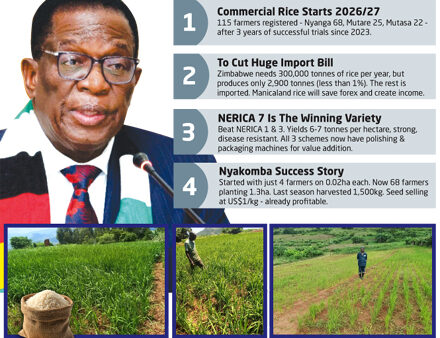
Zimbabwe continues to spend significant amounts of foreign currency importing rice to satisfy local demand. Rice has firmly established itself as a staple in many households due to changing dietary patterns, urbanisation and its convenience as a food source. Yet despite the growing demand, domestic production remains insufficient.
This supply gap presents a golden opportunity for Manicaland’s farmers and investors to participate in a lucrative value chain while reducing the nation’s dependence on imports.
What makes Manicaland particularly suitable for rice production are its unique environmental characteristics. The province receives some of the highest rainfall levels in the country, especially in districts such as Chimanimani, Chipinge, Mutasa and parts of Mutare Rural.
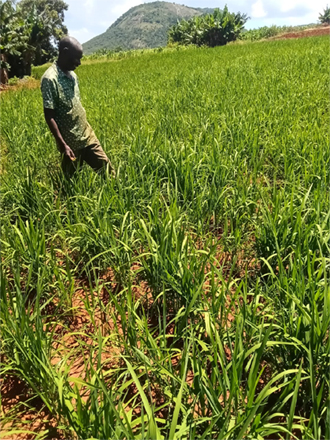
Unlike regions that depend heavily on expensive irrigation infrastructure, many parts of Manicaland enjoy reliable water availability through rivers, streams, wetlands and dams. Rice, being a water-intensive crop, thrives under such conditions.
The province is also endowed with fertile alluvial soils found along river valleys and low-lying areas. These soils are capable of sustaining high rice yields when managed properly. Combined with relatively moderate temperatures and extended growing seasons, Manicaland possesses the natural ecological ingredients needed to support commercial-scale rice production.
Importantly, rice production aligns well with climate adaptation strategies. As weather patterns become increasingly unpredictable, diversification of agricultural enterprises becomes vital.
Rice can be integrated into existing farming systems, allowing farmers to spread risk while increasing incomes. Smallholder farmers already producing maize, bananas and horticultural crops can introduce rice as an additional enterprise, creating multiple income streams throughout the year.
The economic advantages of expanding rice production in Manicaland are equally compelling.
Rice is among the most commercially attractive food crops due to strong and consistent market demand. Unlike some agricultural commodities whose prices fluctuate sharply, rice enjoys relatively stable consumption levels. This offers farmers greater income predictability and confidence to invest in production.
A thriving rice sector will also stimulate employment across the value chain. Opportunities will emerge, not only in cultivation, but also in seed production, irrigation development, harvesting, milling, packaging, transportation and marketing. The establishment of rice processing facilities within the province will create additional jobs while ensuring more value remains within local communities.
Furthermore, anchoring rice production in Manicaland can spur industrial growth.
Rice bran, a by-product of milling, can be utilised in livestock feed manufacturing, while rice husks can be used as biomass fuel and in various industrial applications.
Such linkages will strengthen agro-industrialisation and contribute towards the province’s broader economic development.
Beyond economic gains, increased rice production has significant implications for national food security.
Zimbabwe’s food security strategy has traditionally focused heavily on maize. While maize will remain an essential staple, overreliance on a single crop exposes the country to risks associated with droughts, pests and disease outbreaks. A diversified food basket built around multiple staples provides greater resilience.
Rice offers an important alternative source of carbohydrates and nutrition. Increasing local production will help ensure food availability during seasons when other crops perform poorly.
It will also reduce pressure on foreign currency reserves that are currently used to import rice.
In a world where global food supply chains are often disrupted by conflicts, climate shocks and economic uncertainty, strengthening domestic rice production becomes a matter of national security.
However, the success of a rice-driven transformation will depend on deliberate planning and investment.
Government, research institutions, agricultural extension services and private investors must work together to develop improved seed varieties, expand irrigation infrastructure where necessary and provide farmers with technical support.
Contract farming arrangements, access to affordable financing and guaranteed markets will also be critical in encouraging wider participation.
The province can draw valuable lessons from successful rice-producing countries and adapt proven technologies to local conditions. Mechanisation, water management systems and modern agronomic practices can significantly boost productivity while ensuring environmental sustainability.
Manicaland has often demonstrated its ability to pioneer agricultural innovations that benefit the entire nation.
The province’s favourable climate, abundant water resources, fertile soils and entrepreneurial farmers provide a solid foundation for a vibrant rice industry. By embracing rice production as a strategic agricultural priority, Manicaland can help strengthen Zimbabwe’s food sovereignty, create employment, generate rural incomes and reduce import dependency.
The opportunity is clear. The resources are available. The market already exists. What remains is the collective determination to transform Manicaland into Zimbabwe’s rice basket.
Such a vision will, not only enrich local farmers, but also make a lasting contribution to the nation’s quest for food security and economic prosperity.