

 Online Reporter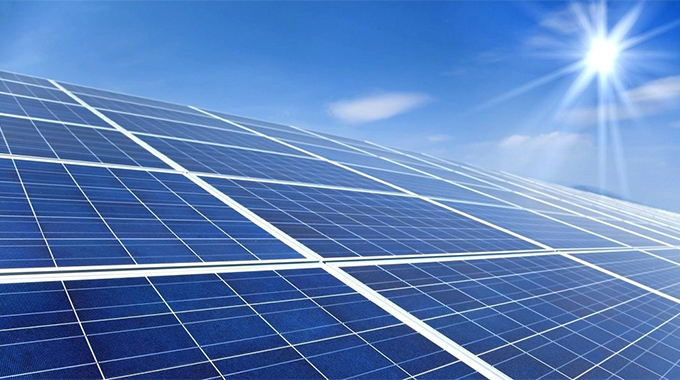
SOLAR energy has reached a stage where large power stations are commercially viable and profitable in suitable climates, and Zimbabwe being in the tropics with most cloudy days in summer, when sunshine is most concentrated, is definitely in place to move forward rapidly.
Already, capital requirements for solar stations are lower than the equivalent coal stations, the falling prices for solar panel arrays and battery storage in recent years having pushed down the costs, and with less heavy equipment in a solar power station, there are fewer expensive additions to the bill.
Hydropower, while potentially having very low running costs, has the need for some very expensive large dams across major rivers, driving up the initial capital costs and making it impossible to develop a power station in phases, as a solar or coal station can be commissioned.
A dam has to be built up front to completion before even a single kilowatt can be generated. But like hydro, solar has very low running costs, just maintenance of equipment and a replacement cycle after a few years of use.
Coal and gas stations need to factor in the cost of fuel, so even when capital costs are lower there is still that far higher running cost, and usually a great deal more maintenance is needed, especially with gritty coal that can abrade metal parts.
The other major renewable, wind power, is now also cheaper than coal thermal when all costs are brought into account in the user tariffs, but Zimbabwe does not have the sort of winds needed.
This sudden financial changeover is what is now driving the global move away from generating greenhouse gases along with electricity, and market forces now operating in support of renewables, greenhouse gas emissions are starting to fall. This fall in the capital costs of solar stations has made them competitive in the market place without subsidies.
That is very good news for Zimbabwe, which despite upgrades to the Zesa output is only just coping and which needs to expand output considerably as we industrialise a lot more fully and move away from petroleum fuels in transport and other sectors.
So when major energy companies start taking an interest in investing in large Zimbabwean solar installations, we are definitely open for business, especially as it is quite possible for Zimbabwe to be building its own stations in phases to supplement what a major external investor might be putting in place. We will need both.
There have been several expressions of interest once the Second Republic put in place the new investment policy, but changes on the investor side as well as the financial costing is only now making the new stations practical.
A basic 6 percent annual economic growth rate does guarantee that Zimbabwe will have a market for new power sources and will be needing large power stations ever more frequently to meet this sort of demand.
The main investor in the United Arab Emirates, and one of the largest global players in energy is Masdar Abu Dhabi Renewable Energy Company, combining the previous three largest energy investors in the UAE, as it flexes its muscles.
This company sent a high-powered delegation this week to meet President Mnangagwa on the side-lines of the World Governments Summit in Dubai.
What really impressed the Zimbabwean team was the confidence expressed by Masdar that it will almost certainly beat the 16c a kilowatt hour that it costs Zesa to generate across its range of thermal and hydro stations, a sign that the falling capital costs of solar are now able to compete with older technologies.
Masdar is also willing to consider investment in the distribution network, and that will also need upgrading as electricity demand and supply both increase at fast rates to power the economic expansion, especially as upgrades to agriculture are centred on irrigation and industrial expansion means a lot more factories.
Since the Zimbabwean industrial expansion will be founded on a far larger heavy industrial base, power demand will rise even faster as the industries have higher energy requirements. The falling price of a kilowatt hour will also make them more viable.
Zimbabwe could also become a regional hub for the spread of these new systems, as well as being able to export power. Being in the centre of SADC and thus of its Southern African Power Pool, gives the country the geographical advantage in this sort of business.
We need to use all our advantages, including positioning our proven investment policy that has already been attracting major investors in the last few years since the Second Republic took the bit between its teeth and decided that the most critical need for Zimbabwe was to build up economic growth, while spreading the fruits of that growth widely so Zimbabweans became better off.



