admin
admin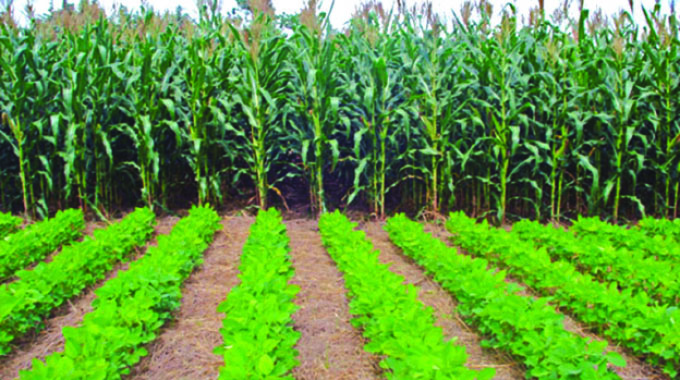
ACCORDING to projections from the Ministry of Finance and Investment Promotions, in light of the exponential growth being witnessed in the agriculture and mining sectors, Zimbabwe’s economy could grow by six percent this year, better than the previous forecast of 3.8 percent growth.
With the agricultural sector being the largest employer in Zimbabwe and the country’s second largest source of exports earnings, Zimbabwe is now targeting a US$13.75 billion agriculture economy by 2025 after it surpassed the US$8.2 billion target set last year.
This is against a weakening global economic growth outlook and all thanks to a strong performance by the agriculture sector, anchored by Government programmes that are bolstering the sector.
The Second Republic continues to make bold strides in consolidating the country’s food security and poverty reduction, with the country now an exporter of wheat.
President Emmerson Mnangagwa, recently re-elected for a second term, has adopted policies to attract both the old and the young, as well as the educated into farming.
Among the initiatives being rolled out is Pfumvudza/Intwasa, the Presidential Input Scheme, the Presidential Community Fisheries Scheme, the Presidential Rural Poultry Scheme and the Presidential Rural Goat Pass-on Scheme, among many others.
The Presidential Input Scheme is a social safety net where the Government distributes agricultural inputs — seeds and fertiliser — to small-scale farmers free of charge to support grain production and ensure food security.
The scheme has been scaled up significantly, and this season the Government is targeting to distribute inputs to 3.5 million households countrywide.
Pfumvudza/Intwasa is a climate-proof concept that leverages conservation farming techniques to make the most of small pieces of land.
In a cabinet statement early this year, the Government said it expected to harvest 2.3 million tonnes of maize this year, a 58 percent jump from the previous season and triple the 2020 harvest.
The country is also on course to put 350 000 hectares under irrigation to insulate the country’s agriculture against climate change induced weather infatuations.
Under the Accelerated Irrigation Development and Rehabilitation Programme, the sector has to date realised 204 000 hectares under irrigation, up from 173 000 hectares in 2020.
In the livestock sector, the meticulous implementation of the Livestock Growth Plan has led to the growth of the sub-sector.
The national dairy herd increased by 11.39 percent from the 2021/2022 season to 53 250 in 2022/2023; while total milk production increased by 15 percent to 91.4 million litres in the 2023.
Social media has also come in with some glamour for the agricultural sector.
Inspirational Twitter and Instagram photos of young Zimbabwean graduates in the mud, in boots, farming acres of onions, tomatoes and carrots, have seen more young farmers flocking into the lucrative sector to make big bucks.
This can only be the beginning as the agriculture sector leapfrogs the country’s economic development in pursuit of Vision 2023.


 Online Reporter