Online Reporter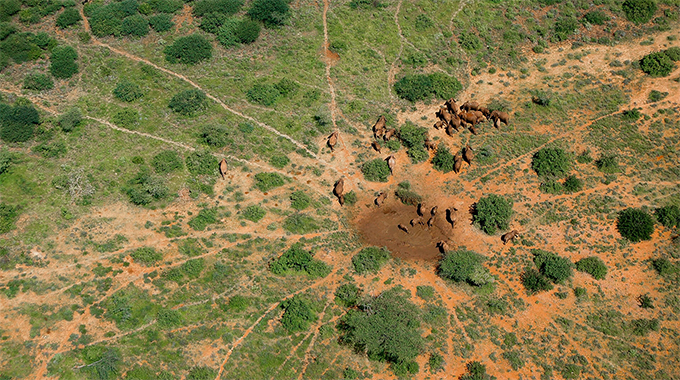
SADC countries have a good reputation of setting aside large areas for full conservation of natural resources, plus additional areas where people and wildlife and protected forest can co-exist.
A lot has been done over the last quarter century to combine and integrate these areas where this makes sense, but there is still a lot to make the vast transfrontier conservation areas a practical reality.
Hence this week sees the Sadc Transfrontier Conservation Areas International Conference and Summit of Heads of State and Government, a highly specialist summit preceded by meetings of officials and then responsible ministers in typical Sadc style to achieve practical outcomes.
The need for a workable common policy is important for economic and development reasons, as well as pushing forward the work of conservation and implementing our responsibilities.
Many of the national conservation areas are in the less desirable areas for human settlement, although not all, areas where intensive agriculture is generally very difficult or impossible, which is fair enough as we strike a balance in land use.
In any case vulnerable and marginal lands usually have fragile ecologies and are often much better left for conservation rather than turned into desert by bad farming.
Since so many borders within SADC are along non-navigable rivers or cutting through more arid areas, we have the curiosity that much of our total bulk of conservation areas are along or near borders and in a significant number of cases similar conservation areas are on both sides of such borders.
This started ecologists, conservation specialists and political leaders at the beginning of the century thinking about combining suitable national parks and stretches of conservation areas into giant transfrontier national parks.
On the science side, there are many good reasons for making the functional conservation area as large as possible. It allows traditional wildlife migration routes to be re-established and avoids the serious problems of inbreeding within very small genetic pools.
It also to a degree helps to cope with climate change by creating a more varied range climatically for the protected flora and fauna.
From the point of view of national leaders it creates a far larger attraction for tourists, and even more importantly it helps in getting tourists to spend more time in a particular area, rather than just flying in, ticking the box, and flying out.
So economically it improves both the total tourism contribution to gross national product, and helps upgrade the lives and incomes of those who live with wildlife, making conservation a plus for them rather than creating a nuisance.
There has been a growing problem of over-intensive concentration of tourists, seen for example at the single largest regional attraction, the Victoria Falls, with a lot of visitors flying into Zimbabwe or Zambia for a day trip or just one or two days at most. The same sort of need can be seen in Botswana with its unique Okavango delta.
Already the Kavango-Zambezi (KAZA) transfrontier conservation area, one of the more advanced in its process of integration within SADC, has been changing both the ranges of the wildlife and the tourism potential.
Large blocks of national parks and safari or other conservation areas set aside in Angola, Botswana, Namibia, Zambia and Zimbabwe surrounding the confluence of Kavango and Zambezi Rivers have been linked, sometime using those dual-use areas, and migration corridors re-established.
This huge natural area is home to the largest concentration of elephants in the world, as well as the specific attractions like the Victoria Falls and unique ecologies like the Okavango Delta.
Cooperative management by the conservation specialists has already seen significant gains and on the tourism side more joint marketing is bringing in some of the money and jobs the surrounding communities who have to live with the wildlife deserve.
There are other areas, with Zimbabwe involved in six of the 18 transfrontier SADC conservation areas. These 18 joint areas comprise around half the land and ocean areas set aside for conservation within SADC and so are exceptionally important for most countries.
Establishing a transfrontier conservation area goes far beyond just drawing a boundary on a map, although that has to be the starting point.
If the area is to become more than just a coloured line on a paper map there will be need for extra resources before game fences or other boundary barriers and markers are removed.
That has been seen as a difficulty that exists, although it can be overcome and is being overcome as countries align their policies and programmes.
There is also, fortunately, a great deal of interest from development partners, who see such huge areas important for both upgraded conservation and for the development of the people who live within and around these areas.
After 25 years there is obviously need for Heads of state and government to take a good hard look at what has been done, what needs to be done, and how the concept can be expanded.
This will cover a wide range of scientific research and advice plus more mundane practical aspects like working out how a visitor can explore such a conservation area on either a single visa where this is required or in visa-free travel where this is possible.
It will also require some thought on connecting infrastructure like roads, air routes and joint use of nearby airports.
The summit will need to look at all aspects of these transfrontier areas, both from the scientific aspects and from the economic aspects. The two are not in conflict, but do need to be connected.