admin
admin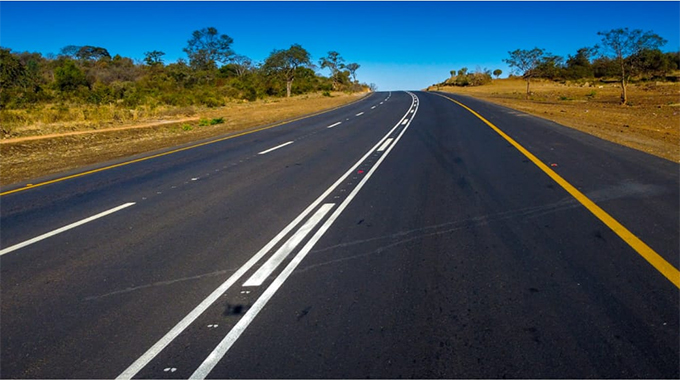
THE major Government programmes to upgrade highways, rebuild highways and repair highways have been universally greeted with approval and thanks as trade is enhanced, travel made easier and wear or damage to vehicles minimised.
But there is one downside, created by those drivers who think that because they can now drive very fast on a decent road, they should drive fast, far faster than the speed limit allows or even common sense should suggest.
We have not so much seen an increase in accidents, although this is possible, as an increase in fatal accidents. Just a week ago there were three fatal accidents in a single day along the Harare-Masvingo Highway, a road that has been the centrepiece of the whole roads programme.
All this suggests accidents are occurring at higher speeds. We need to remember that doubling your speed increases the energy that must be dissipated in an accident increases four fold.
Even a 10 percent increase in speed equals a 21 percent increase in the energy, and a 50 percent increase in speed more than doubles the energy.
So crashing at higher speeds must lead to more damage, more injuries and more deaths. This is one reason why head-on collisions are normally the worse.
The collision speed is twice the speed of hitting a brick wall, so there is four times as much energy.
Higher speeds also mean there is more risk of not being able to negotiate a curve, so running off the road, and more risk of overturning if you do run off the road. So generally speaking excessive speeds can be a killer, and excessive means anything that can be unsafe in the circumstances.
The maximum speed on Zimbabwean highways was set at 120km/h for good reasons. The engineers who designed the roads, when setting the radius of the curves and the like, were setting their engineering parameters to take into account the maximum permitted speeds with a modest safety factor.
Even when a highway is rebuilt, it follows the course of the old highway, so a lot of the engineering parameters remain the same.
It has also been found with experience that this maximum speed gives most drivers enough time to react when an emergency occurs to minimise or avoid that emergency.
This is why in almost every country that has progressed to dual-carriageway freeways, the maximum speed has remained at around 120km/h.
The main difference for a freeway is that there are no head-on collisions and since they skirt towns and other similar areas, there is no need for the lower limits on ordinary highways where there could be side traffic or pedestrians.
The Ministry of Transport and Infrastructure Development has taken a number of steps to ensure safer driving and the keeping of speed limits.
It is now a requirement for owners of truck and bus fleets to fit satellite tracking, which most had in any case for their own reasons.
This allows instant monitoring and almost always allows the fleet owner to see which drivers are speeding, or have been speeding, and to take appropriate action.
Making the fleet owners responsible for what their drivers do has certainly changed the way most buses are now driven and far more than lip service is now given to the rules of the road and as a consequence buses are a lot safer.
The closing of eyes to unsafe driving that might result in more accidents, but would bring in more money, was common at one stage. But these days few bus owners want to take the risk that they will suddenly lose their route permits.
It increasingly looks as though we need more resources to enforce speed limits, and enforce the drinking and driving laws, since excessive alcohol consumption along with speed and impatience are easily the biggest killers.
Highway patrols are the traditional means, but the required vehicles are expensive to buy and operate and the Government, quite correctly, has been placing far more emphasis on making sure every police station and every police district has at least the minimum mobility by more useful and less expensive multi-purpose vehicles.
But the technology now exists, along with the communication infrastructure, for relatively inexpensive automated speed traps that photograph the vehicle speeding and allowing a follow up quickly via the computerised records at the Central Vehicle Registry.
The problem of drivers who do not display registration plates has already been addressed by refusing them passage through any tollgate. These are common in many parts of the world.
Vandalism might be a problem, but presumably something like a CCTV camera that switches on and transmits details of a vandalism attempt while it is in progress would help deter.
In fact it should be possible for one of those university innovation hubs to design and produce a simple and fairly inexpensive device with an anti-vandalism camera plus a mobile phone transmitter that entities like Zesa could use to guard their substations and other equipment.
If the police have the mug shots of the culprits they can first track them down and then have the proof for a court conviction.
The automatic speed traps would also ensure that potentially corrupt police officers have no temptation to fall into.
A lot has been done to eliminate police corruption over the last five years, but we can keep the risks low and still enforce traffic laws. These days it should be possible, for example, to have cameras at all traffic lights to take and transmit the required shot of someone shooting a red light.
These sort of automatic devices detecting breaches of the traffic regulations would also have the advantage that the tax avoidance problems of people selling cars without changing the ownership would now expose the old owner to too many risks.
There is probably a lot more that could be done, with only very modest resources, to make our new and much better roads not just a lot better but also a lot safer, so we get all the advantages without people taking advantage of the improvements to break a whole lot of traffic laws.



 Online Reporter