

 Online Reporter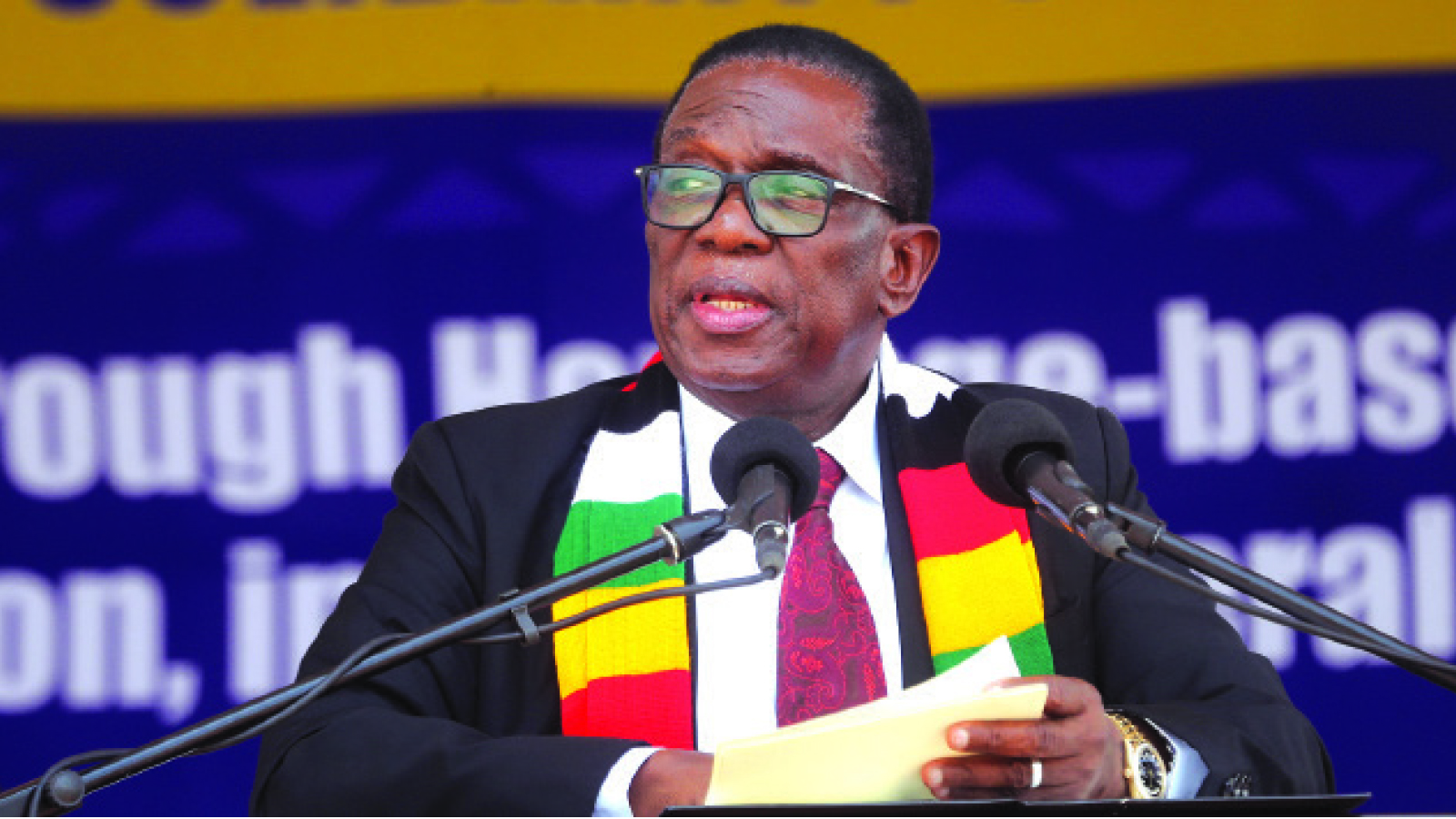
ILLEGAL sanctions imposed on Zimbabwe by the West early this century have had the major effect of denying the country access to global financial markets and agencies, rather than the trivial effects of the so-called targeted restrictions against some individuals.
However, the effects of the sanctions have not been totally negative, especially over the last few years under the Second Republic when active steps were taken to circumvent the measures that cut off global finance by mobilising local resources and building up self-reliance, accepting the responsibility of moving forward regardless of the restrictions.
The success of this determination to push forward despite sanctions has been evident in the rapid expansion and rehabilitation of infrastructure, as well as the introduction of a range of special government programmes that have empowered millions of Zimbabweans, providing them with the finances, inputs, and equipment needed for development and creating families and communities capable of adding value and generating wealth.
While access to global financial structures would accelerate progress, it is no longer essential for achieving some of the fastest economic growth in the world.
This growth stems from Zimbabweans undertaking their own development properly and establishing the policies and programmes they need.
This will be crucial when sanctions are fully lifted, and there is progress in that direction, although there is still a long way to go.
Zimbabweans will understand the true value of a sanctions-free world—not just that— it makes development possible, but that, when properly applied, it can enhance the effectiveness of home-grown solutions.
This will restore much of the high-morale attitudes that drove significant social and economic reforms after independence.
Zimbabweans had won a liberation war, and while they received support, they did the fighting and dying, achieving their own victories.
In the 1980s, there was a sense that nothing was truly impossible and that all that was needed was to maintain drive and unity.
Development aid and development partners were useful additions, but Zimbabwe was never dependent on them.
This independence allowed for a range of reforms, including land reform, to be implemented, reversing and correcting structural injustices inherited from the colonial era, which had led to the imposition of sanctions.
While there was some window dressing over targeting, there were more honest voices who made it clear that they wanted Zimbabweans to suffer until they reversed land reform and other social changes, preferably under new leadership.
Zimbabweans were invited to retreat into subjugation, but this failed.
The Second Republic effectively rose to the challenge.
Constitutional provisions for a general settlement of compensation for improvements were translated into practical details on one side, while a comprehensive range of development programmes was assembled using a reformed system of national finances on the other.
In his address on SADC Anti-Sanctions Day this year, President Mnangagwa was able to discuss the dual policy: how Zimbabweans, far from being defeated by sanctions, were making progress while simultaneously demanding a total end to sanctions rather than a gradual elimination. He highlighted the positive nature of overcoming sanctions and other pressures.
“The arduous journey we have walked, including during our liberation struggle, has given us valuable lessons. We are now stronger in our conviction that, through unity of purpose, peace, focus, hard work, resilience, and innovative pursuits, any obstacle, in whatever form, can be overcome,” he stated.
This is significant, as it means Zimbabweans can and must decide their future; we do not have to be dependants, although we can and should collaborate with everyone who shares our goals.
Our economic and development success is also critical for the rest of SADC.
Geographically, Zimbabwe is centrally located, so SADC needs a functioning and fast-growing Zimbabwe, as well as a commitment to social justice through the elimination of sanctions.
Both practical and ethical considerations drive the SADC response to sanctions against Zimbabwe.
The President acknowledged the progress made in recent years, with the European Union and its members largely withdrawing from sanctions and the United States beginning that process, though the timeline remains uncertain.
However, the objective is still elimination rather than merely amelioration.



