Online Reporter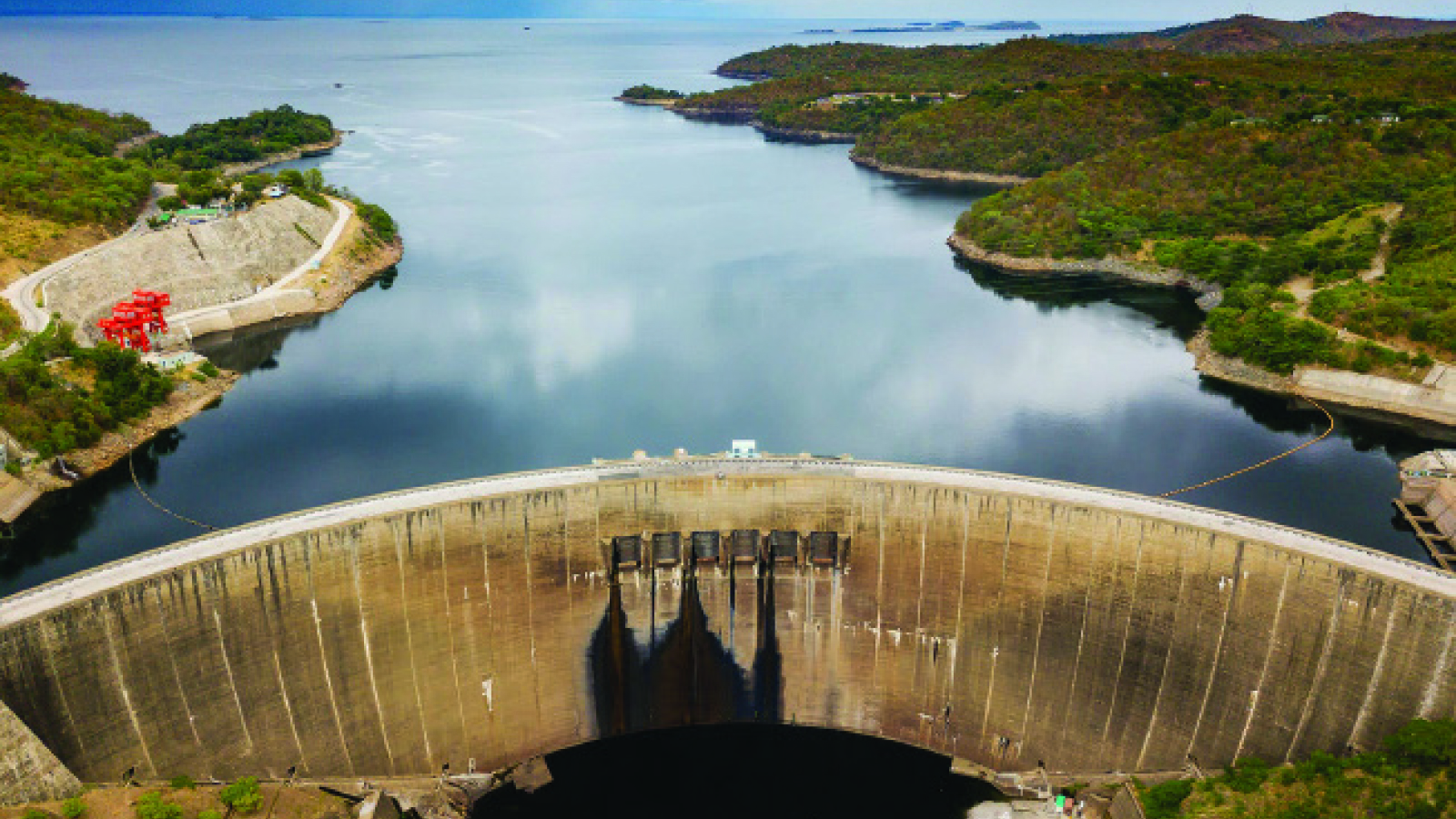
Martin Kadzere
The Zambezi River Authority has warned that the excessive use of water at Kariba Dam by Zambia’s power utility ZESCO for hydroelectricity production could lead to the “exhaustion” of usable water, potentially resulting in the generation of electricity from the reservoir being halted.
ZRA, the joint body of the Zambian and Zimbabwean governments responsible for managing the Kariba Dam, said in its 2025 Hydrological Outlook and Water Utilisation report that ZESCO had exceeded its 2025 water allocation and must scale back generation immediately.
ZESCO operates the north bank power plant, which has a designed capacity of about 1 080 megawatts, while Zimbabwe’s power utility ZESA Holdings has a generation capacity of 1 050MW at the south bank.
This year, the ZRA initially allocated 27 billion cubic metres for both Zimbabwe and Zambia, which was later increased by 1BCM in October 2025, resulting in a 14BCM allocation for each utility.
While Zimbabwe had a significant balance of 3,63BCM remaining on its allocation and plans to remain compliant, Zambia exhausted its 14BCM on October 15, 2025.
By October 19, ZESCO had utilised 0,31BCM of water above its allocation, representing a 2,2 percent over-utilisation.
The ZRA has warned that the uncurbed water consumption by Zambia has serious implications for the reservoir’s closing storage going into 2026.
Hydrological simulations projected a closing storage of 4,4BCM for 2025, assuming both utilities utilised water within their allocations.
However, ZESCO’s ongoing over-utilisation means the actual closing storage will be less than 4,4BCM.
“Engagements with ZESCO Limited during the tripartite Joint Technical Committee meetings indicated that ZESCO Limited was in the process of implementing measures to ensure that it scaled down power generation at Kariba Dam to minimise the ongoing utilisation of water above allocation at Kariba North Bank Power Station that if left unchecked could lead to the complete exhaustion of usable water (live storage) at Kariba dam which would result in the shutdown of both Kariba power stations,” said the ZRA report.
Analysts say Zimbabwe has been able to stick to its allocation levels because of huge investments in alternative energy sources, such as thermal and solar power, which have lessened the pressure on hydropower, even though power rationing is still being implemented.
The country has also seen massive private investment in on-site solar generation by businesses and homeowners.
This proactive shift towards self-sufficiency has been highly effective in reducing reliance on grid power during rationing periods, thus significantly alleviating the load on the national system.
In 2026, the ZRA has allocated 30 billion BCM of water, with generation expected to be capped at 250 megawatts for each country during the first two months of the year.
The ZRA said each of the two national power generation utilities will utilise a total of 15 BCM of water for the year, a slight increase from 14BCM allocated for each utility this year.
The allocation follows hydrological simulations premised on a normal to below normal conservative inflow projection, estimated to yield about 37,5BCM of gross inflows to the lake in 2026.
“The cap on water utilisation or power generation at Kariba during January and February 2026 shall be reviewed in March 2025 with the possibility of lifting it so that the average combined generation moves to 800MW with higher water levels being recorded at Kariba dam,” ZRA said.
The persistently low water levels at the Kariba Dam are partly due to the escalating impacts of climate change.
The Zambezi River Basin, which feeds the reservoir, has experienced an increase in the frequency and intensity of droughts, exacerbated by climate-driven phenomena like El Niño, which cause severe mid-season dry spells.