admin
admin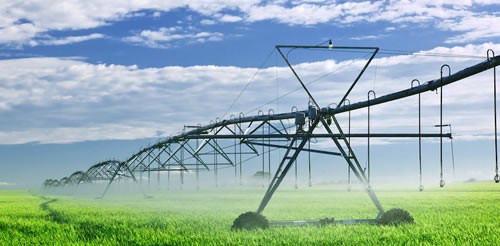
One of the major changes brought about by the Second Republic, probably the largest when you factor in the number of people whose lives have been changed significantly for the better, is expressed in the change of a single word in the name of a committee.
On Tuesday, Cabinet changed the name of the Zimbabwe Vulnerability Assessment Committee to the Zimbabwe Livelihoods Assessment Committee, reflecting the fact of five years of spectacular progress we are not seeing whole communities needing food aid, but rather becoming more aware of how we need to move forward to continue raising the income of the smallholder farming sector.
There are, obviously, people who might still go hungry or who need assistance. But very largely these are those who will always need help, the very old, some of those with serious disabilities that are still difficult to overcome, orphans and the like. In other words, those whom every society needs to plan to assist.
What has changed dramatically is the spectre of whole communities, entire districts, who have to be helped because they simply do not have enough food or any income to buy some more.
This sort of problem arose from several sources, but most obviously from a combination of poor climate, such as drought, plus lack of access to inputs, plus lack of access to serious advice.
So we had a committee that would each year assess each district in the country and make detailed estimates of what sort of assistance would be required, in other words calculate the vulnerability of the population in some detail. This work has been going on for years and Zimbabwe became proficient, even in the worst periods, of making sure no one starved.
But the Second Republic took a whole new approach. It started off with working out how to improve agricultural production so that there was food security, at both household and national levels.
That is that almost every farming family could grow its own basic food and that the farmers combined could grow enough to feed everyone else.
That programme started early in the Second Republic, with the pilot scheme for the smallholder conservation farming now known as Pfumvudza/Intwasa, and a major clean up of the whole system to remove corruption and side marketing so that investment gave value, not a few rich thieves.
There was also the interesting calculation that it would be much cheaper to provide a family with basic inputs and let them grow their own food than buy grain from more successful farmers and give it away as food aid.
By 2021, we were self-sufficient in maize and traditional grains once again and wheat imports were falling fast. Record tobacco crops were coming through, in other words the new largely contract system was producing more than the old plantation farms broken up in land reform, and everything was starting to look a lot better.
We even had maize reserves which we had to dip into last year when the harvest fell a bit because of a long dry mid-season spell, but we did not import.
At the same time, the Ministry of Lands, Agriculture, Fisheries, Water and Rural Development was fine tuning the inputs support, making sure farmers on the schemes had the correct inputs for the correct crops, which largely means not wasting money and effort to try and grow maize in natural regions four and five, where you might get some sort of crop one or two years out of five but nothing in the other years. Smart farming means traditional grains, which can cope with African weather being indigenous crops, and the GMB will swop a tonne of these grains for a tonne of maize if the farmer wants both grains.
Wheat production moved into surplus last year, we now raise our own meat and eggs, are gradually cutting back on dairy imports and have pushed oil seed production forward fast once we realised that building up the cotton industry also meant there was a lot more cotton seed, and that sunflower was an ideal smallholder crop that could replace a lot of necessary soya beans.
All this has, by this year, meant that more than one million smallholder farmers had two linked bank accounts, one for local currency and one for US dollars, a necessary move because they were earning money from selling crops, surpluses of grain plus the cash crops of tobacco, cotton and oil seeds. Vegetable farming was improving fast.
That progress will continue, at least under the present Government, with another big jump in the Pfumvudza scheme expected this year, with more farmers growing their own food and because the programme encourages farmers to add more plots each year, more farmers earning some decent money.
The Ministry expects some increase in area under crops, but is now stressing productivity, how to get more off each hectare planted.
The upshot of all this five years of progress has seen the major shift away from food security and reducing community vulnerability. Food security is basically guaranteed these days and most communities have far lower vulnerability. The stress is now on continually improving the incomes of farmers, and making sure they have access to better services, such as irrigation and electricity with mechanisation the next goal.
We have moved from averting famine to seeing how quickly we can convert the smallholder sector to middle-income families.
Land reform gave a basis for this, but until the Second Republic we tended to have very poor families on adequate land not able to use more than a small portion of that land for subsistence farming. One word change came about with the renaming of the Agriculture Ministry. The list of its responsibility used to end with “Rural Resettlement”, a process largely accomplished in the first few years of this century.
The change came with the dropping of “resettlement” and changing this to “Rural Development”. Since most of the rural population then, and still now, are farmers that meant upgrading farming, and this has been perhaps the major accomplishment of the Second Republic.
The amazing growth in mining, an almost a five-fold increase, has meant that exports are now high, but even with the huge accompanying growth in employment we are still only talking about thousands of new mining jobs, important, but not making that big a dent in the total population, a useful addition but a lot more is needed..
The change in agriculture was not so much in national food security, which could be achieved with a return to a plantation system, but the spread of that agriculture development to millions of people, all now earning an income as they switch from subsistence farming to building up decent small farms producing a range of products. This is how you develop a country with a large rural population.
When we talk about an US$8 billion agricultural industry, we need to break that down a bit. There are inputs and the like, but if about half that money is money in the bank accounts of farmers, and the number of bank accounts is in the millions, we are talking about both a major creation and major distribution of wealth.
And the non-farming population, both in the rural villages and in the big cities wins big as well. Those farmers will buy things and that is what creates the tens of thousands of new factory jobs, and this new urban and rural industry workforce, added to the middle income farmers, is what is converting Zimbabwe to an upper middle-income country.
So we need to now worry more about rural livelihoods, now we have beaten back the spectre of famine and want.


 Online Reporter