Chronicle Editor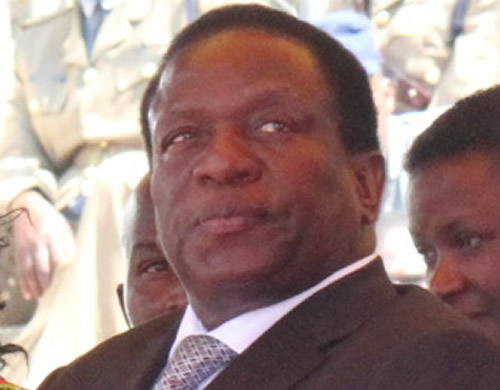
We want to applaud Government’s initiative to reintroduce the food for work programme for people affected by this year’s ravaging drought. Acting President Emmerson Mnangagwa said last week that the food for work programme had already begun in Mashonaland West Province and that it would soon spread across the country.
Acting President Mnangagwa made the remarks in an address to villagers during a tour of Nandi Estates run by the Agricultural Rural Development Authority in Chiredzi, Masvingo Province.
The El Nino-induced drought has caused widespread food shortages in the entire Southern African region. It is estimated that as many as 4 million people might require food assistance in Zimbabwe alone, prompting President Mugabe to declare the drought a state of national disaster for the nation to be able to mobilise local and international relief efforts to avert mass starvation.
Acting President Mnanganwa told the gathering that Government was also engaged in efforts to reduce the country’s dependency on rain-fed agriculture and migrate to irrigation in view of the frequency of droughts in the country as a result of climate change.
We support the food for work programme for two main reasons. The first is that there are many able-bodied people who should be able to work to fend for their families. We believe it is bad practice to get people used to free food handouts simply because there has been a drought. This creates a dependency syndrome.
It is enough that Government has acknowledged a state of national disaster and is working on modalities to minimise suffering among the most vulnerable sections of the community by bringing food to their localities. Those who can work must be given the chance to do so.
The more important reason is that people are being given an opportunity, while getting food, to improve their localities. There are cases where roads are barely passable in the dry season but become impassable during the rainy season, meaning people can’t be assisted in times of need because the place is inaccessible. Those could be the sick, women in labour requiring emergency transportation to hospitals.
We have also had cases where trucks carrying food have had challenges accessing some areas. This causes a great challenges to the elderly living alone who can’t travel long distances.
Also, food for work programmes allow the able-bodied to provide much needed labour in the construction of infrastructure such as classroom blocks at schools or accommodation for hospitals. That means Government or other well-wishers can provide other materials while locals mould bricks and offer construction labour in exchange for food. These are more creative ways of dealing with a crisis situation than giving people food for free as if they were disabled.
The sheer numbers of people estimated to be in need of food aid is staggering at 4 million. It is too huge a task to give free food to so many people when they can be engaged more productively.
Government has gone a step further. This is not the first nor is it the last drought Zimbabwe experiences. If anything, indications are that droughts will become more frequent going forward. It is for this reason that we applaud the decision to anticipate this reality by embarking on a nationwide programme to build more dams and to install irrigation infrastructure.
Drought situations are phenomena beyond our control at the moment. But advancements in science have made it possible for man to more accurately forecast the forthcoming season and plan accordingly. These scientific advances have also made it possible for man to better harness and manage his natural environment better before.
With sufficient dams and irrigation infrastructure, it is possible to grow enough crops of the right type according to soil type and average rainfall patterns to feed the nation even in years of drought. We can no longer be helpless victims of malevolent nature in the 21st century. What is required is to think, adapt and plan ahead.



 Online Reporter