admin
admin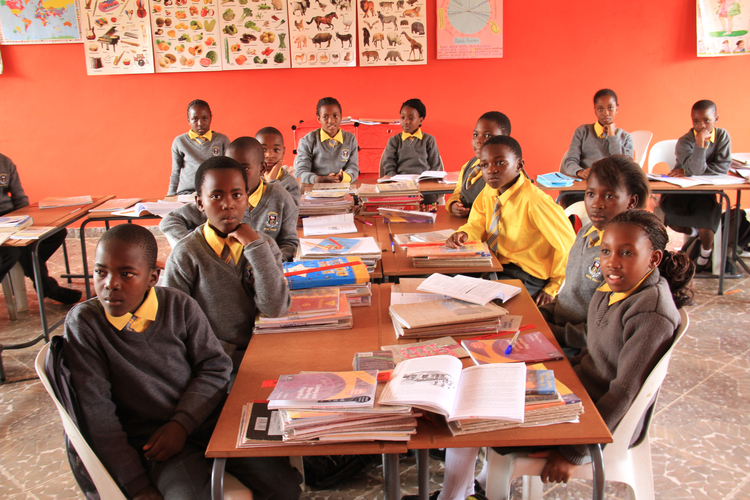

Since the attainment of Independence in 1980, Zimbabwe has recorded incredible milestones in the education sector.
According to the United Nations, Zimbabwe has got one of the highest literacy rates in Africa. Tunisia used to hold the pole position for years, with Zimbabwe coming second on the continent and number one in Sub-Saharan Africa.
Senior Government officials and independent analysts have attributed the increase in literacy levels to Government’s heavy investment in education over the years.
Government has promoted conventional and open distance learning in its quest to achieve education for all.
According to the latest UNDP Digest statistics, Zimbabwe’s literacy rate jumped to 92 percent, up from 85 percent while Tunisia remained on 87 percent.
This achievement is despite the country’s education sector suffering brain drain and lack of resources for the past decade.
Immediately after wrestling power from the Ian Smith regime, President Mugabe declared education as a basic human right.
Efforts were made to make sure that access to education for previously marginalised blacks was increased.
From the early 1980s and up to the late 90s, primary education was for free as the country sought to achieve the education for all goal.
The Ministry of Primary and Secondary Schools could, however, not readily provide information on the number of schools that were registered with the Ministry at Independence.
However, according to a Unesco document, Education For All 2000, “The most dramatic achievements in providing education for the majority of Zimbabwe were made during this first decade of the country’s Independence. The formal sector of the education system was expanded to unprecedented levels. The number of primary schools increased from 3 161 to 4 504, an increase of 42,48 percent.
“Secondary schools increased from a paltry 197 in 1980 to 1 502 in 1989, a sharp increase of 662 percent. Enrolments increased by over 200 percent across the whole system.
“Primary school enrolments jumped from about 820 000 in 1979 to 2,08 million in 1990, an increase of 154 percent. The corresponding increase in the size of the teaching force was equally remarkable as the force registered an increase of 229 percent from 18 483 in 1979 to 60 886 by the end of the decade.”
The number of teachers’ colleges also increased significantly during the first decade after independence. By 1990, there were 15 teachers’ colleges in the country, 10 of which trained primary teachers while five trained secondary teachers. 2 500 teachers are produced annually.
Other African countries produce between 200 and 400 teachers annually on average.
“Innovative approaches to the training of primary school teachers were adopted to augment teacher supplies from the conventional colleges. Pre-service teacher training in four of the 10 colleges which trained primary teachers combined short residential training (a duration of about one year) with extended teaching practice in the schools (a duration of about three years). This approach to teacher education was/is called the Zimbabwe Integrated Teacher Education Course (Zintec).”
However, the re-introduction of school fees and other levies in both primary and secondary schools impacted negatively on access to education, particularly by children from impoverished rural, mining and farming communities.
To counter this, Government introduced the Basic Education Assistance Module (BEAM) which caters for the educational needs of disadvantaged families.
BEAM provides for both boys and girls from disadvantaged backgrounds since the Education Act provides for equal access to both boys and girls.
According to a 2014 survey conducted by the Zimbabwe National Statistics Agency (ZimStat), the country has made great strides in terms of access and school completion rate, both in primary and secondary schools.
Mr Reza Hossani, the United Nations Children’s Fund (Unicef) representative to Zimbabwe, whose organisation offered technical support to ZimStat, highlighted the strides made so far.
“Since 2009, school readiness, the percentage of children in first grade of primary school who had attended pre-school during the previous year increased from 75 percent to about 86 percent while secondary school attendance ratio increased about 13 percentage points between 2009 and 2010,” Mr Hossani said during the launch of the report.
Strides have been made in higher education, with a number of universities being opened by both Government and the private sector.
At Independence, Zimbabwe had a single State university – the University of Zimbabwe. 35 years later, it now boasts of 12 such institutions, with the Harare Institute of Technology being the latest addition.
To meet the growing demand for tertiary education in the country, Government has approved the establishment of three new State universities in Manicaland, Mashonaland East and Matabeleland South.
Temporary structures are being constructed at the main Fern Valley campus for the Manicaland University of Applied Sciences on land donated by the Mutare City Council.
For the Mashonaland East and Matabeleland South Universities, old structures at Dozemery Training Centre and Epoch Mine, respectively, are earmarked for temporary use.
Mashonaland East and Manicaland Universities are currently enrolling students, whilst Matabeleland South University will commence in 2015.
Private institutions are complementing Government’s efforts by setting up private universities.
While presenting the 2015 national budget, the Finance Minister Patrick Chinamasa highlighted that Government will also mobilise resources for the construction of additional primary and secondary schools for newly resettled farmers.
Speaking to the media, President Mugabe – a former teacher himself – highlighted the country’s commitment to the education sector.
“Since Independence, we have been addressing every child’s rights in terms of education. Because of the sanctions, some of our standards have gone down somewhat but we remain a leader in making education accessible to the majority,” he said.


 Online Reporter