


 tawandamusarurwa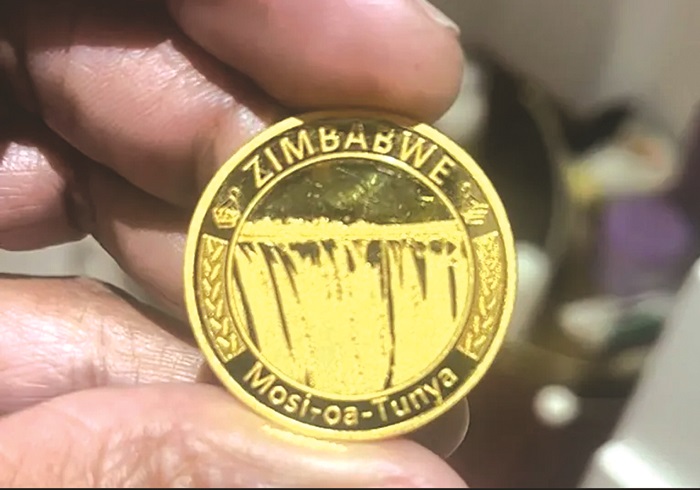
Persistence Gwanyanya
THE recent announcement by the Reserve Bank of Zimbabwe (RBZ) that it will soon be introducing gold-backed digital tokens has sparked debate about the efficacy of the measure to stabilise the Zimbabwe dollar.
Clearly, increased demand for the US dollar as a store of value and for transactions calls for a viable alternative to the greenback.
The dominance of the US dollar in the economy, where it now accounts for 70 of all transactions, is cause for concern as it has serious implications on the stability of the local currency, and, as such, needs to be dialled back.
Increased demand for the US dollar comes against the backdrop of low confidence levels in the local unit, which can be traced to historic losses dating back to Black Friday (November 14, 1997) and the hyperinflationary era that climaxed in 2008, among others.
It is often argued that the effects of a currency crisis are very difficult to cure due to the psychology of money, which revolves around confidence and trust.
No wonder the saying “money is trust and confidence, and trust and confidence are money”.
Financial crises tend to be long and intensive.
The 2007-2008 global financial crisis is instructive.
Recovery from the crisis has been very slow and elongated (“slowbalisation”).
The case of Germany, where the effects of hyperinflation of the 1940s are still reflected in high demand for cash, makes another good example.
As such, in the current circumstances, there is need for more effective measures to restore confidence in the Zimbabwe dollar to boost its demand and counter the dominance of the US dollar.
Redollarisation will be costly.
I cannot think of any commodity or asset other than gold that can viably compete with the US dollar, especially as a store of value.
This could be the reason RBZ’s Monetary Policy Committee (MPC) has opted for gold instruments, starting with physical gold coins and then the gold-backed digital tokens to stabilise the local currency.
The current high demand for physical gold coins attests to the confidence and trust in gold, which, over time, has proved to be a far better value preservation product than fiat (paper) currencies.
Out of the 31 866 gold coins sold as at March 10, 2023, only a negligible amount was redeemed upon vesting, and banks are overwhelmed by demand for the product, as the market seeks to store value.
Commendably, we managed to restore stability from gold coins worth $26 billion.
This is what could have motivated the introduction of digital gold coins, which, unlike the physical gold coins, are highly divisible to cater for different needs of the market.
Just like with mobile money, it is possible to transact any amount through the e-gold wallets or e-gold cards, which removes the headache of change being experienced in cash transactions.
This divisibility gives digital gold tokens a competitive edge over cash US dollars and make them more accessible to the market.
Even smallest amounts of Zimbabwe dollars can find home in digital gold tokens, which, in the second phase, we will be able to transact with.
The digital gold tokens are not only ideal for the retail end of the market as wholesale customers can also derive significant benefits from them.
The wholesale segment of the market comprises high-value corporates and individuals who hold significant Zimbabwe dollars, such as Government contractors.
The velocity of money is high for this constituency of the market and every time they receive the Zimbabwe dollar, they tend to offload it into US dollars and drive the depreciation of the local unit.
This is our main problem as a country, not excessive money supply growth rates, as many analysts believe.
Of late, Government has been paying significant amounts of US dollars to contractors — sometimes up to 80 percent — to support them to meet their import requirements and minimise the effects of currency depreciation.
However, despite significant payments of invoices in foreign currency, some contractors seem to be offloading the few Zimbabwe dollar payments they get to preserve value.
This only strengthens the case for digital gold tokens.
Now, like any currency, the key issue is about confidence.
Our confidence in the digital tokens derives from the fact that they will be backed by gold, which is being accumulated from royalties in physical form.
For the past couple of months, RBZ has been accumulating royalties of special minerals in minerals.
Clearly, given the low confidence levels in the economy, the central bank is expected to put in place adequate measures to assure the market about the adequacy of the gold to back the digital tokens all the time.
Because both gold coins and gold-backed tokens are going to be limited to the gold reserves, we see the products as restraining Zimdollar supply, which supports the current tight monetary policy stance.
There are some market concerns that these gold-backed products are instruments of arbitrage, as the gold coins and tokens are traded at the interbank rate (currently around US$1:ZW$1 020), plus a margin of 20 percent, which is lower than the parallel market rate (currently US$1:US$1 900).
I, however, take the view that this arbitrage is currently the biggest attraction of the gold-backed products and is seen as supporting the demand for the Zimbabwe dollar.
As such, we expect the exchange rate gap to narrow faster as everyone seeks to take advantage of the current arbitrage.
Importantly, as the digital gold-backed tokens boost demand for the Zimbabwe dollar, it reduces its volatility, with the concomitant effect of stabilising it.
There is also need to clear the misconception by the Zimbabwe Coalition on Debt and Development (ZIMCODD) that RBZ has been making losses on gold coins.
It is important to understand that the source of forex used by RBZ to buy gold is the interbank market (mainly export surrender funds), and not the parallel market.
As such, the question of loss does not arise as that gold is also sold at the interbank rate.
It is also interesting to note that the quantum of money that has been giving us headaches is a small amount of less than $150 billion (US$150 million at US$1:ZW$1 000), being excess reserves (including what RBZ has been mopping up through non-negotiable certificates of deposits.
Excess reserves are the most liquid and volatile component of money supply, being the money banks keep on their RTGs platform and what RBZ has mopped up from the banks through non-negotiable certificates of deposits but depositors have access to when they want to transact.
While l have confidence in the digital gold coins, it is important to underscore that it takes more than one policy measure to achieve durable stability.
Therefore, there is need for everyone to chip in and work towards permanent stability.
Persistence Gwanyanya is a member of the Monetary Policy Committee of RBZ. He is also the managing director of Bullion Group. For feedback: WhatsApp +263773030691



 Bongani Ndlovu
 Online Reporter