Sidumisile Mabena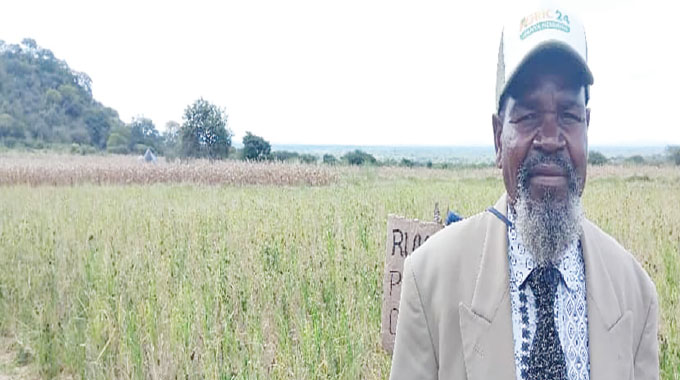
Patrick Chitumba, [email protected]
AT an age when many slow down, 70-year-old Mr Titus Mhlanga of Mazvihwa in Zvishavane District, Midlands Province, continues to defy expectations, transforming his fields into a thriving model of productivity and resilience through climate-smart farming.
Defying both age and the challenges posed by increasingly erratic weather patterns, Mr Mhlanga is on course for a bumper harvest this season after fully embracing the Pfumvudza/Intwasa Programme, a Government-backed initiative that is reshaping smallholder agriculture across Zimbabwe.
Introduced under the Second Republic as part of broader efforts to build climate resilience and ensure national food security, the Pfumvudza/Intwasa concept promotes conservation agriculture techniques such as minimum soil disturbance, mulching, and precise planting. The programme has gained widespread traction in Midlands Province, where farmers are increasingly recording improved yields despite climate variability.
Mr Mhlanga has placed six hectares under maize and small grains using these methods and is projecting yields of at least five tonnes per hectare — a notable achievement that is expected to improve both household income and local food supplies.
“I am a farmer based here in the Mazvihwa area in Zvishavane District and a fan of the Pfumvudza/Intwasa farming method. I managed to plant maize and some small grains and I believe we are having a great season,” he said.
Mr Mhlanga attributes his success to the technical support and hands-on training he received from Agricultural and Rural Development Advisory Services (Ardas) officers, which enabled him to adopt and refine conservation agriculture practices.
“Through this Pfumvudza/Intwasa programme, I now know when to dig the planting holes and how to mulch properly. It saves water, time and effort in the field,” he said.
In recognition of his achievements, a field day was recently held at his homestead, attracting fellow farmers, Government officials, and extension officers who toured his well-maintained plots. The event highlighted the growing impact of the programme at grassroots level and served as a learning platform for other farmers.
Mr Mhlanga’s success story is not isolated. Other farmers in Zvishavane District are also reporting positive outcomes. Ms Mary Nkomo said the programme has significantly improved her yields and encouraged more farmers to adopt small grains, which are better suited to drought-prone conditions.
“For a serious farmer, Pfumvudza is the way to go. I encourage others to venture into small grains farming and practie this concept. It has proven to be a game changer in the face of climate change, and we fully support it,” she said.
Zvishavane-Runde legislator and Mines and Mining Development Deputy Minister Freddy Moyo said the Pfumvudza/Intwasa programme continues to deliver tangible results and remains key to achieving national food self-sufficiency.
He urged farmers to adopt resilient agricultural practices to mitigate the effects of climate change and improve productivity.
“As a country, we need to produce enough for our own consumption and eventually generate surplus for export. That is why the Government introduced programmes like Pfumvudza and Command Agriculture. We also need women to take leading roles in feeding the nation,” said Deputy Minister Moyo.
He added that Mr Mhlanga’s achievements should inspire other farmers to adopt modern, climate-smart techniques.
“At an age when many consider retirement, he is leading by example and showing that with the right techniques, training and determination, productivity has no age limit,” he said.



 Online Reporter