admin
admin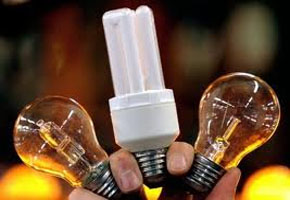
The new tariff means it will now cost almost a cent an hour to burn a 100W bulb, and almost 10c an hour to run a one bar heater.
Cooking a meal on an electric stove could cost anything between 10c and 40c depending on how many hot plates are used and whether these are turned down to simmer food once water has boiled.
ZERC maintains that Zesa’s request for a tariff rise was justified and that Zimbabweans are sill paying less than any others in Southern Africa.
ZESA AND RELATED TOPICS
- Load-shedding to intensify: Zesa
- Zesa system disturbance plunges city into darkness
- Hats off to Zesa for taking bull by its horns
- Zesa to give free energy-savers
In an interview yesterday, ZERC Administrator Mr Peter Mufunda said: “We are still the cheapest in the Sadc region because in other countries the charges range between USc13 and USc14 per kilowatt a hour.
“People have to appreciate that Zesa like any other company is affected by the economic pressures.
“As electricity consumers, we are the owners of Zesa and if we want electricity there is need for us to capitalise the company by paying for the service,” he said. Mr Mufunda said consultations had since been conducted for the new tariffs to be effected.
“The new tariffs were approved at Government level because they went through the Parliamentary committee and Cabinet.
“During the consultations we also called in the CZI (Confederation of Zimbabwe Industries) and other stakeholders,” he said.
In a statement yesterday, Mr Mufunda said the tariff review was in line with the Electricity Act.
“In the determination of the electricity tariff levels, the Commission noted the improvements in the economy over the period 2009 to date, local tariffs compared to regional tariff levels, the state of local electricity supply infrastructure, as well as revenue requirements of the utilities,” he said.
The increase would enable the power utility to recover operating costs.
“The tariff adjustment should enable the utilities to improve on the delivery of electricity in terms of increased and more reliable electricity production levels, correct meter reading, timeous production of bills, more connections as well as embark on energy efficiency and demand side management activities.
“The commission will continue to monitor operations of the utilities with the expectation of improvement in service delivery and introduce stiff penalties where inefficiencies are observed as provided by the law,” Mr Mufunda said.
He said new tariffs will not be applied retrospectively, meaning that what people use up to Tuesday will still be at the old price, and bills will now be solely based on actual consumption, rather than estimates.
DISCUSS THIS STORY ON FACEBOOK
Tariffs in the region are projected to increase by over 50 percent in the coming four years and Zimbabwe’s electricity is also likely to become more expensive, especially considering that the country imports some of its power from South Africa, Mozambique and the DRC.
Much of the rise is due to the need to build new power stations. For some time Southern Africa had a surplus of generating capacity, which all countries benefited from through the power pool, but not plans are being implemented to build new stations, hence the rise in tariffs as utilities raise cash for this.



 Online Reporter