Online Reporter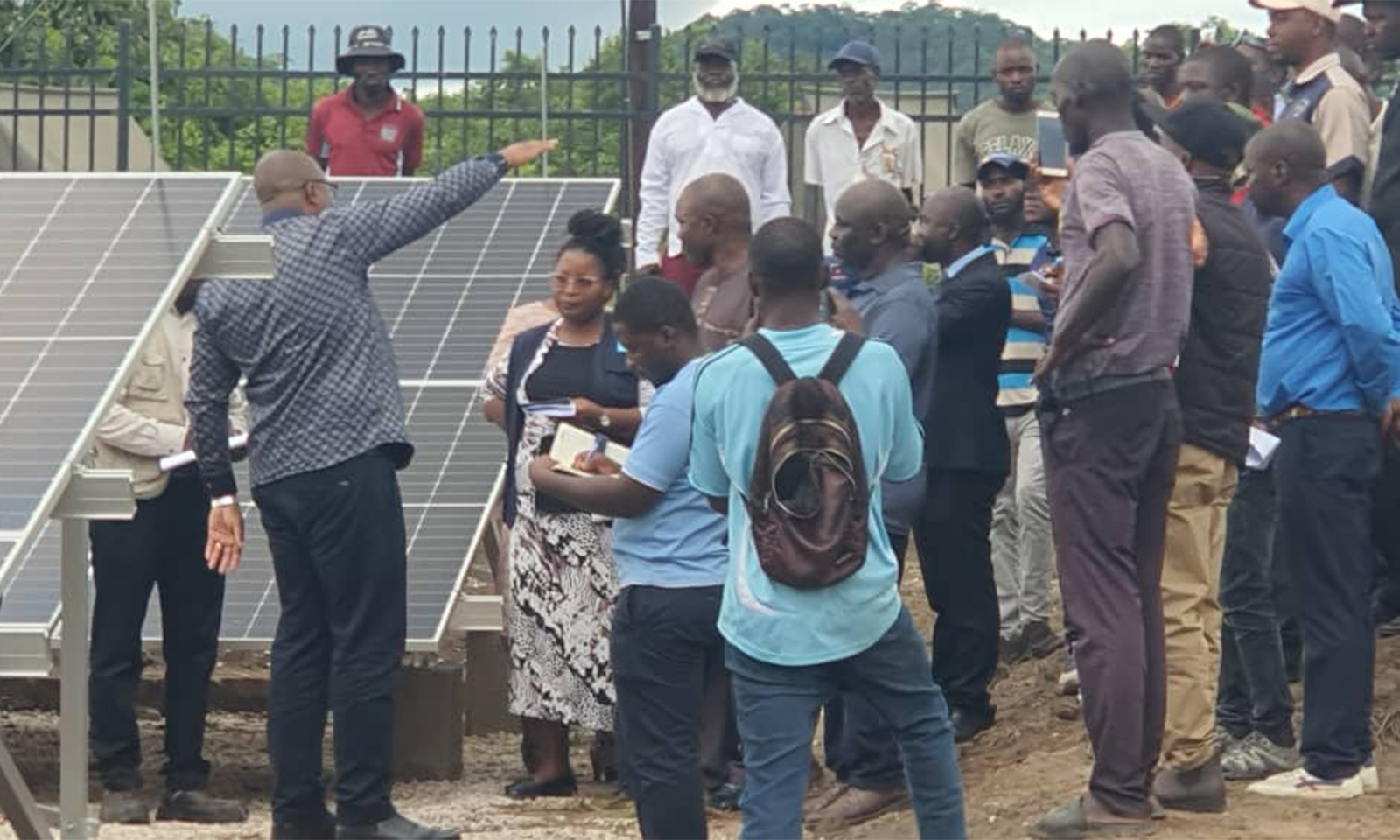
Ivan Zhakata in Dete, HURUNGWE
The availability of electricity in Dete, Hurungwe, has unlocked opportunities for the local villages, some who had never used it before.
Dete is now experiencing a wave of economic transformation following the installation of a 120-kilowatt solar mini-grid, a project spearheaded by the Government in partnership with the United Nations Development Programme (UNDP).
Speaking after touring the mini-grid, Secretary for Presidential Affairs in the Office of the President and Cabinet, Engineer Tafadzwa Muguti said access to electricity has unlocked economic potential in rural communities.
“Once there is energy, the economy of those villages will begin to accelerate,” he said.

“What we are witnessing here is massive transformation. Businesses that were previously limited by the lack of electricity—such as welding shops, hair salons, bakeries and clothing manufacturers, are now flourishing.”
Engineer Muguti said Kazangarare Growth Point, which had never had electricity since Independence, is now fully powered, thereby bringing new economic opportunities to the local community.
“We are happy that through the wisdom of President Mnangagwa and the decision to partner with the UNDP, we are now seeing projects like these,” he said.
“People are excited, they can now enjoy cold drinks, fresh meat, and even local biltong. More importantly, they can now grow their businesses and improve their livelihoods.”
The mini-grid, which is expected to connect five villages, has so far linked two, with the remaining three set to be electrified within three weeks.
The project was funded by the UNDP and Government.

UNDP Resident Representative, Dr Ayodele Odusola said such projects are significant in achieving Zimbabwe’s broader development goals.
“This initiative is not just about electricity but economic empowerment,” Dr Odusola said.
“When communities have access to reliable power, they can engage in more productive income-generating activities.
“We have seen that this project has already created opportunities—people are sewing clothes, running businesses, and improving their overall living standards.”
Dr Odusola urged the community to safeguard and maintain the infrastructure.
“This project belongs to the people. It is up to the community to ensure its sustainability by maintaining and securing it,” he said.
Kazangarare village head, Mr Zhakata Maendaenda expressed gratitude and said the electrification of the area is a life-changing development.
“This electricity has empowered us in ways we never imagined,” he said.
“Our businesses are thriving, our children can study at night, and our local clinic is now fully operational with electricity. We are truly grateful.”